In March this year we made a 3 week trip, with my brother Mike and his wife Marg, to explore the red centre and the south eastern part of Australia. We had spent the first months of the year in New Zealand, mostly in our house near Whangerei. The trip was made possible because Ursula had a sabbatical this year, and this gave us the extra time to visit Australia.
We flew from Auckland to Sydney to begin our visit and on to Uluru (aka Ayers Rock). From there we drove to Alice Springs, then flew to Adelaide before driving to Melbourne and finely flying back to Switzerland, Mike and Marg returning to NZ.
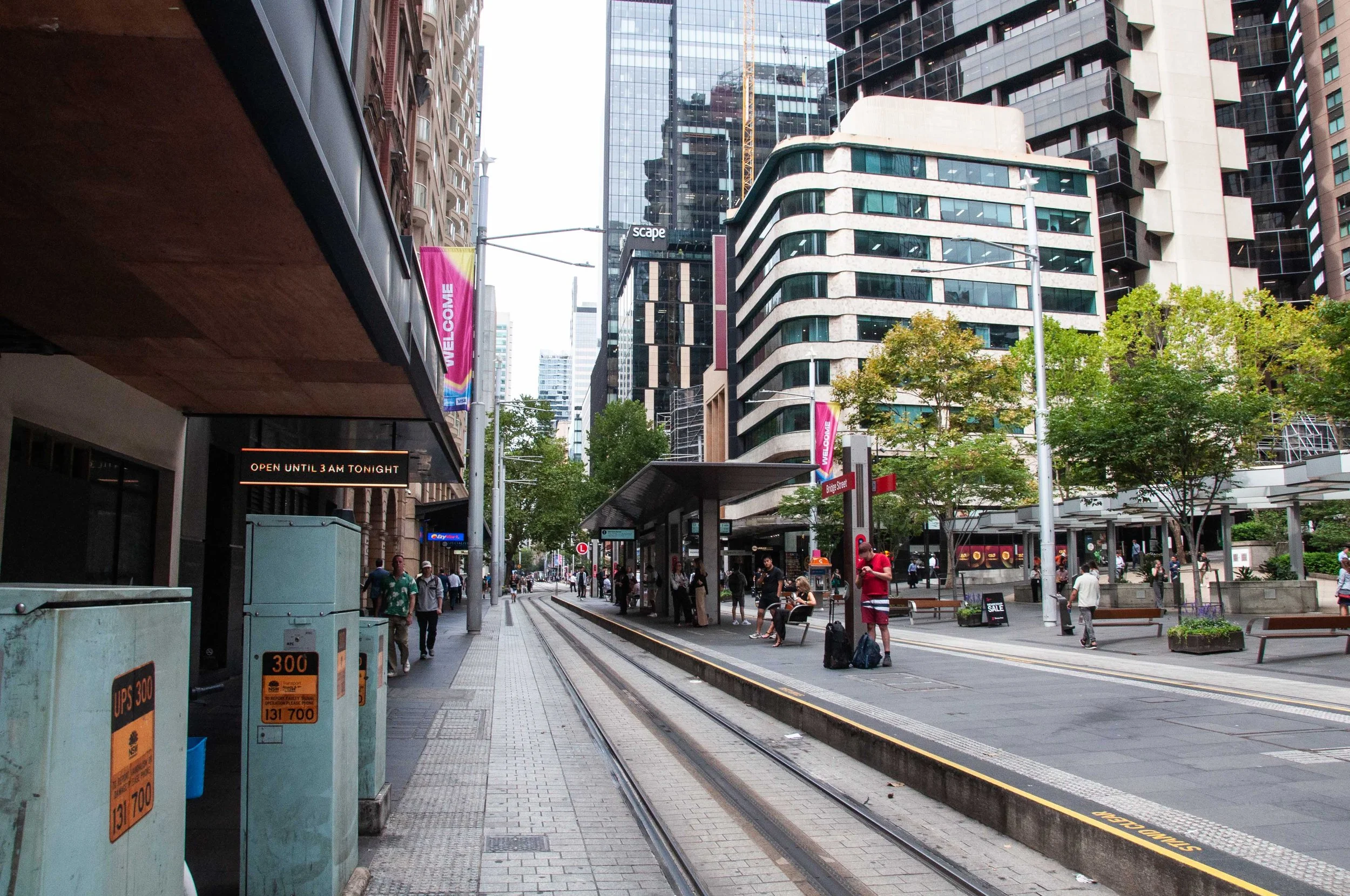
1. Tram stop conveniently siuated right outside our hotel
In Sydney we stayed for a few days at a hotel near the city centre. Fairly typical of big cities anywhere, a lot of high-rise, but with really good public transport right outside the hotel. This was something we were discovering throughout our trip; the excellent public transport in the cities we visited.
Of course, if you go to Sydney you have to see the opera house. Like every other visitor we viewed and photographed it from many angles, but this is the one I liked the best, taken from the Sydney Harbour Bridge, famous in its own right.
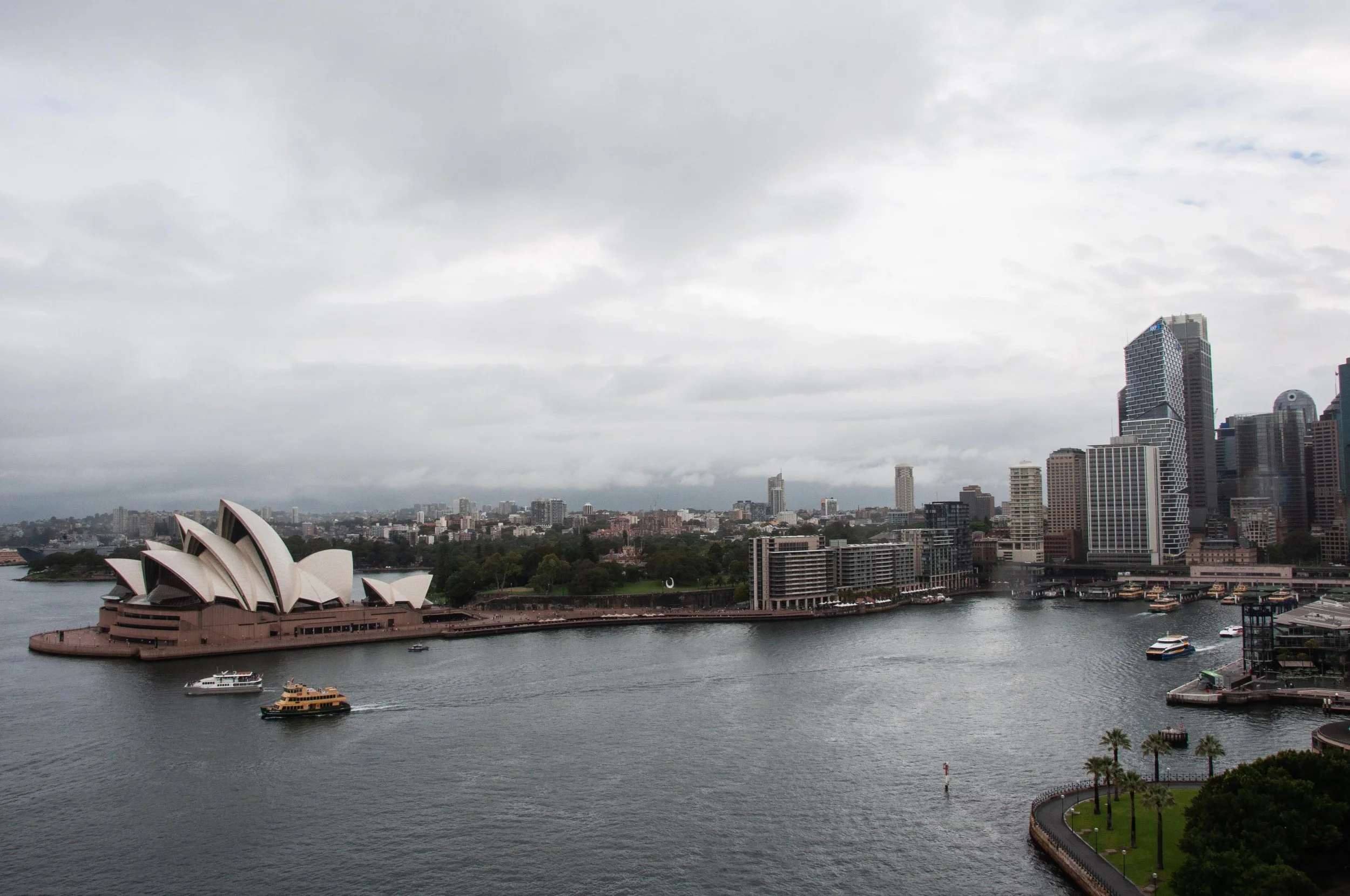
2. Sydney and the opera house from the harbour bridge
Many of the photographs of the opera house that I have seen seem to detach it from the city, making it seem like some isolated colossus. In reality it is fully integrated into the city. While we were there the opera house was lit-up at night in an impressive light show.
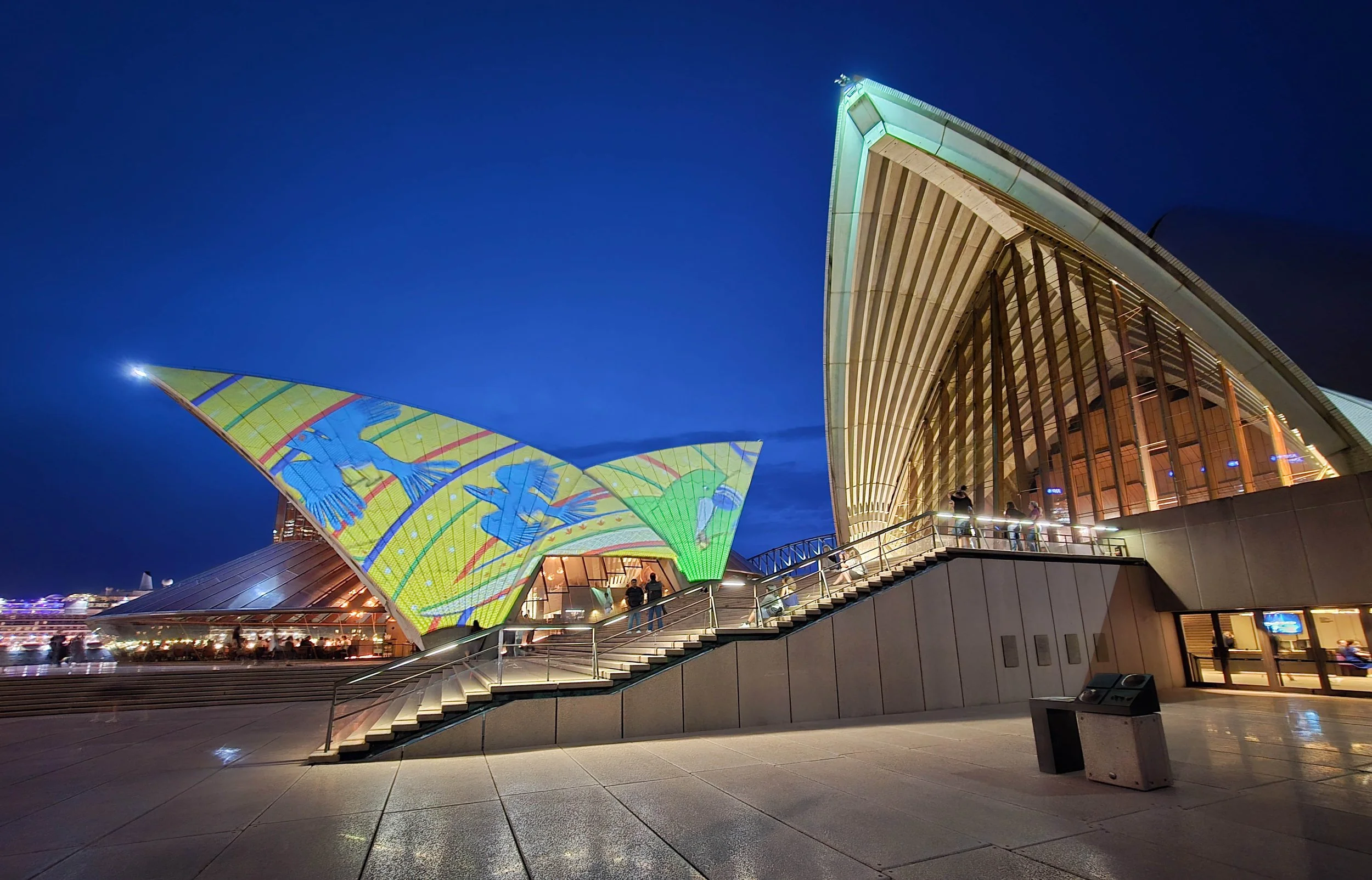
3. The opera house at night lit up by the light show
But Sydney is much more than the opera house. It is a huge city sprawling out to the west and north is built and centred around the Sydney harbour. A large estuary of bays and inlets, beaches and small boat harbours. The preferred method of travelling between these are the water taxis where possible and we took a ferry to Watson’s Bay giving us a view of the imposing harbour bridge
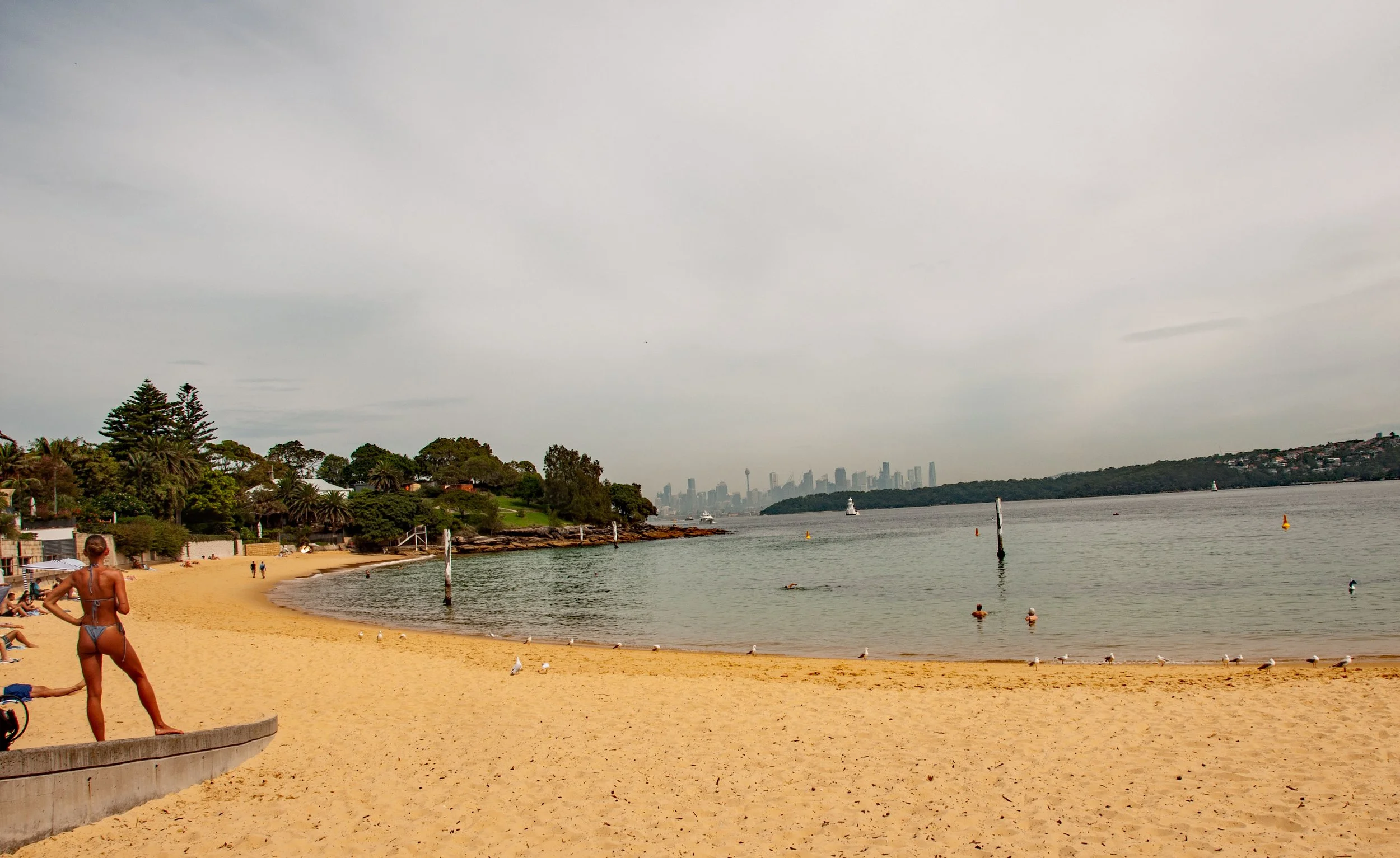
4. Watson’s bay looking back to the city centre
Walking the streets and municipal gardens of Sydney I was surprised to see what we initially took to be Sacred Ibis scavenging around dustbins. A little research revealed them to be the Australian White Ibis (T. Molucca), related to the Sacred Ibis (T. aethiopicus).
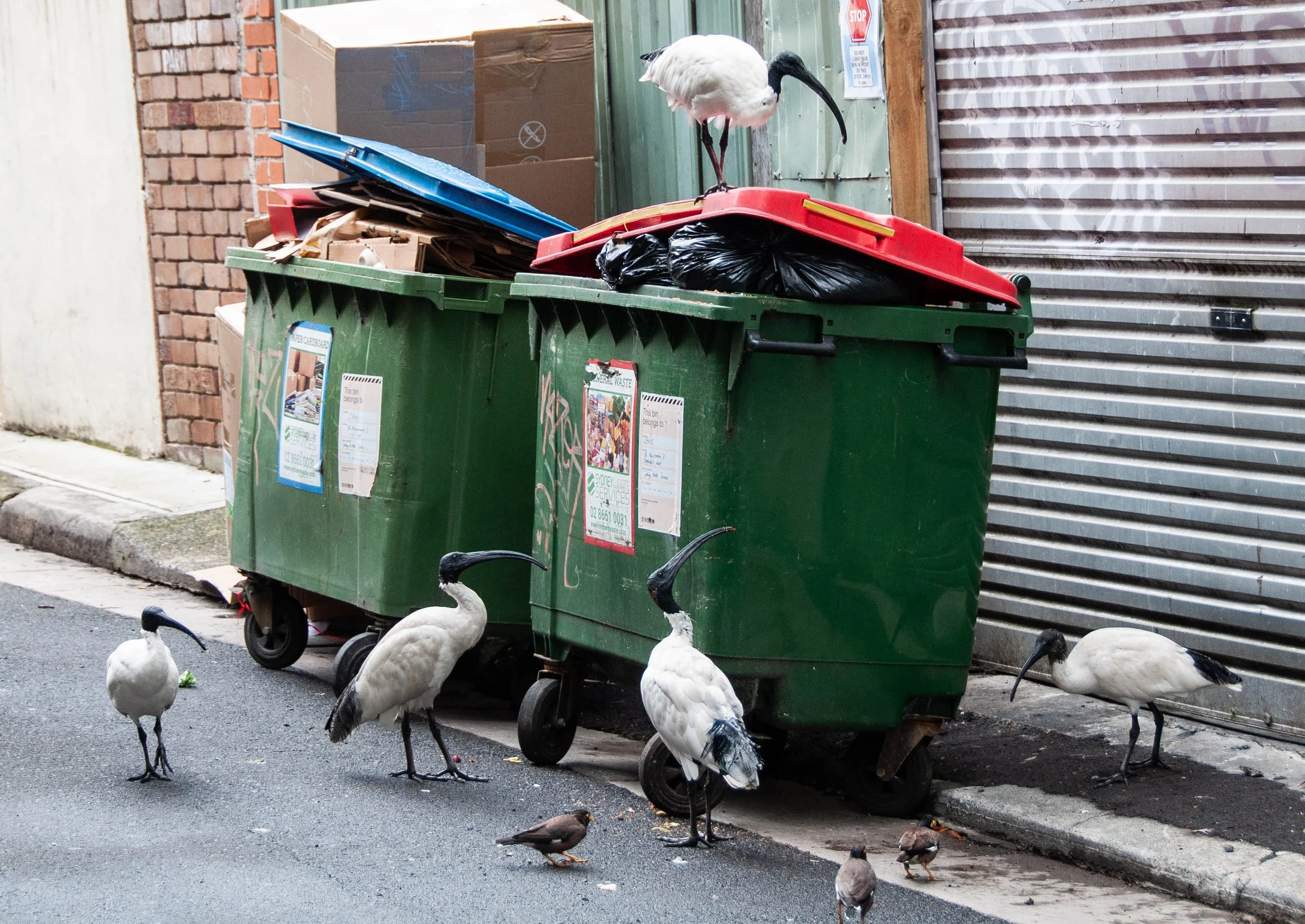
5. Also disparagingly known as Bin Chickens and Dumpster Ducks, the Australian white Ibis is common in Sydney
We visited the state art gallery, the first of the visits we would make to the art galleries in Victoria and South Australia. We were impressed, particularly at the display of art indigenous to Australia. We spent the better part of an afternoon there and could easily have continued, but the gallery closed at 5pm.
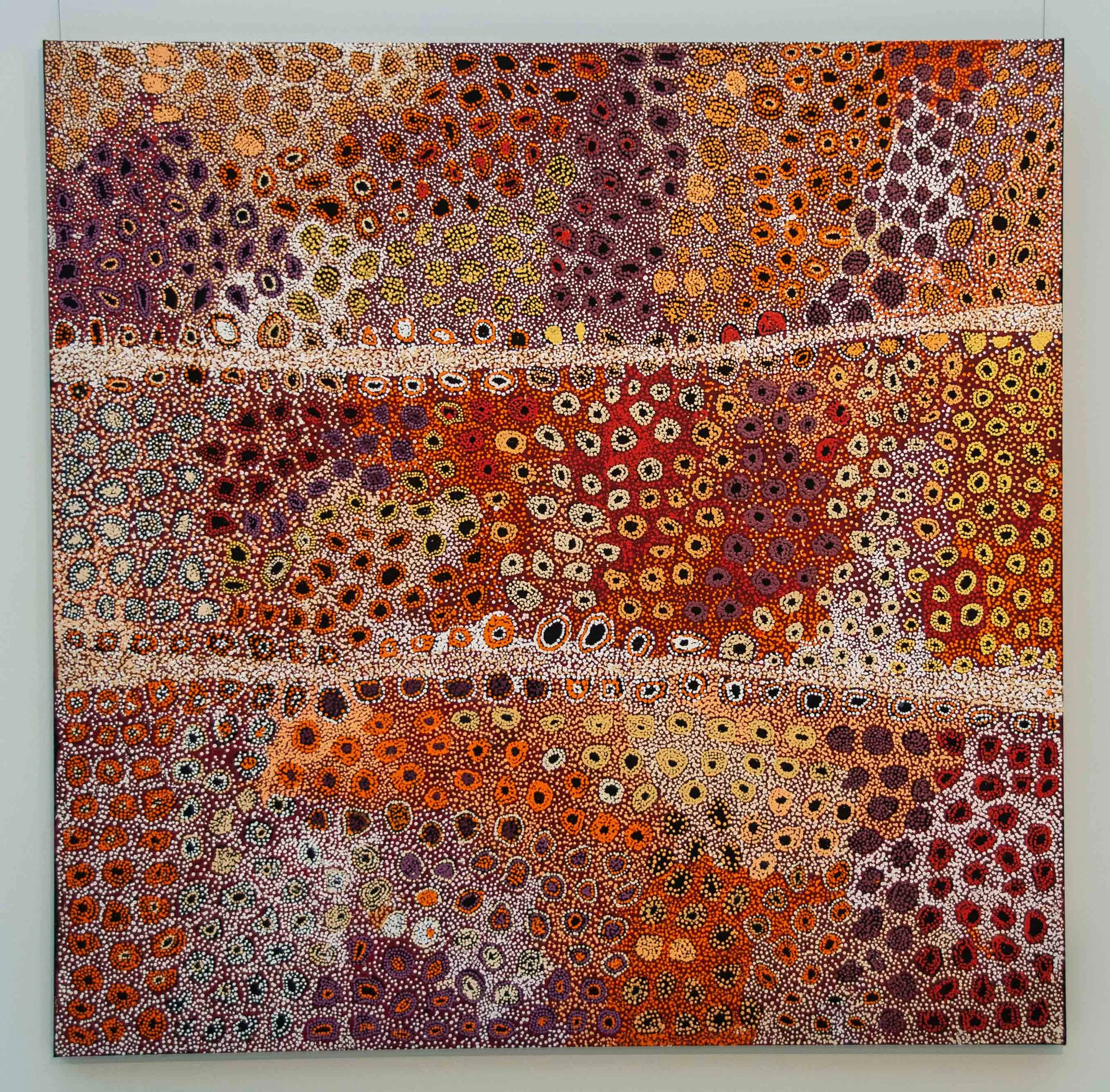
6. boriginal art was prominently displayed, but to properly appreciate it you need to understand the cultural context in which it was created.
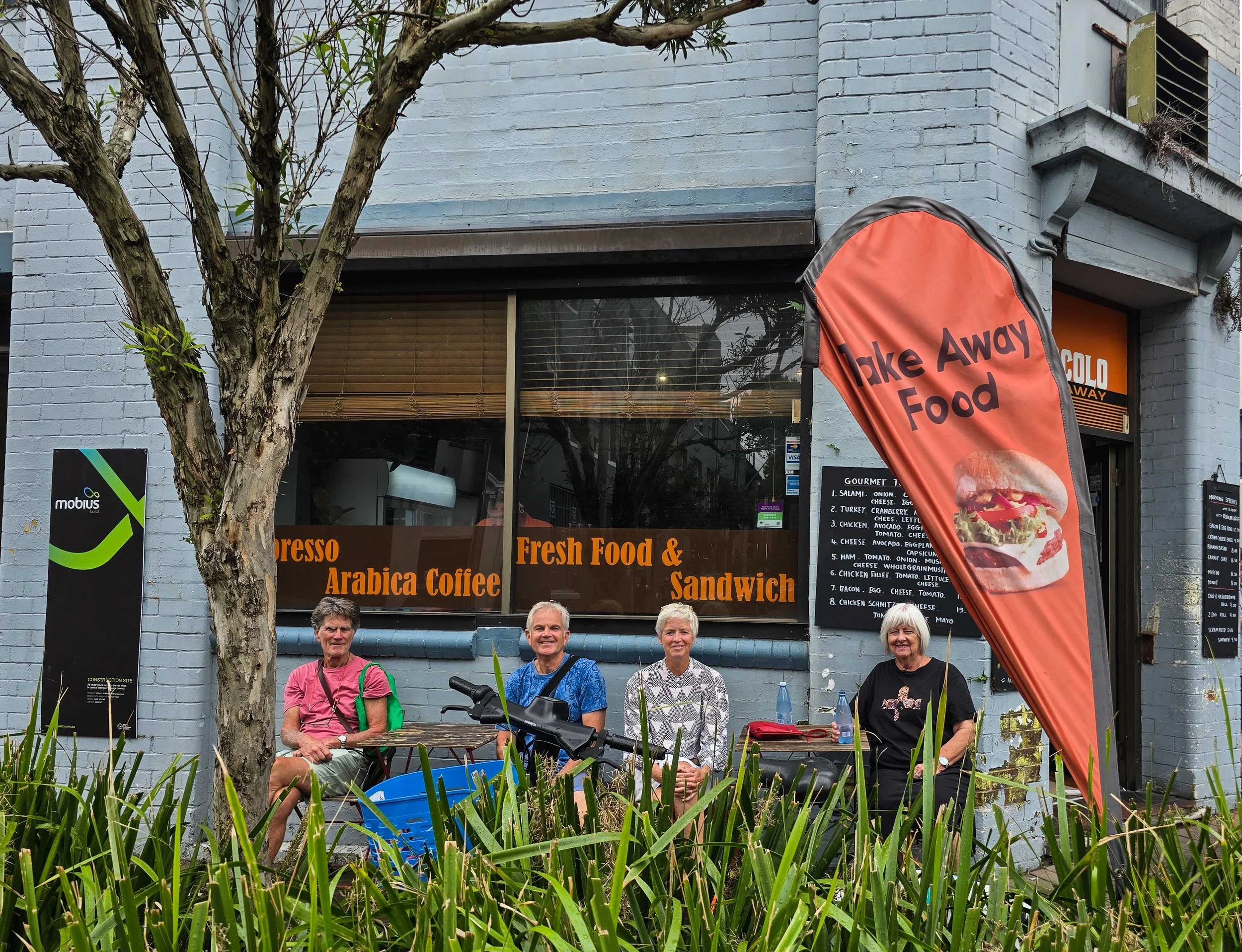
7. Taking a lunch break between galleries. From left, Chris, Mike, Ursula and Marg
ULURU
From Sydney we flew to Uluru, formerly known as Ayers Rock; Well, what can one say about Uluru. It is a rock, a very large rock; about 3km in length and 2 km wide. The trail around it is 10km in length. Like an iceberg, there is far more of Uluru below ground than above. It has been estimated that Uluru extends down about 6km below the surface.
Uluru is considered a holy mountain by the Aboriginal people, and particularly holy places on the rock are off limits to the public, and photography is prohibited in these places.
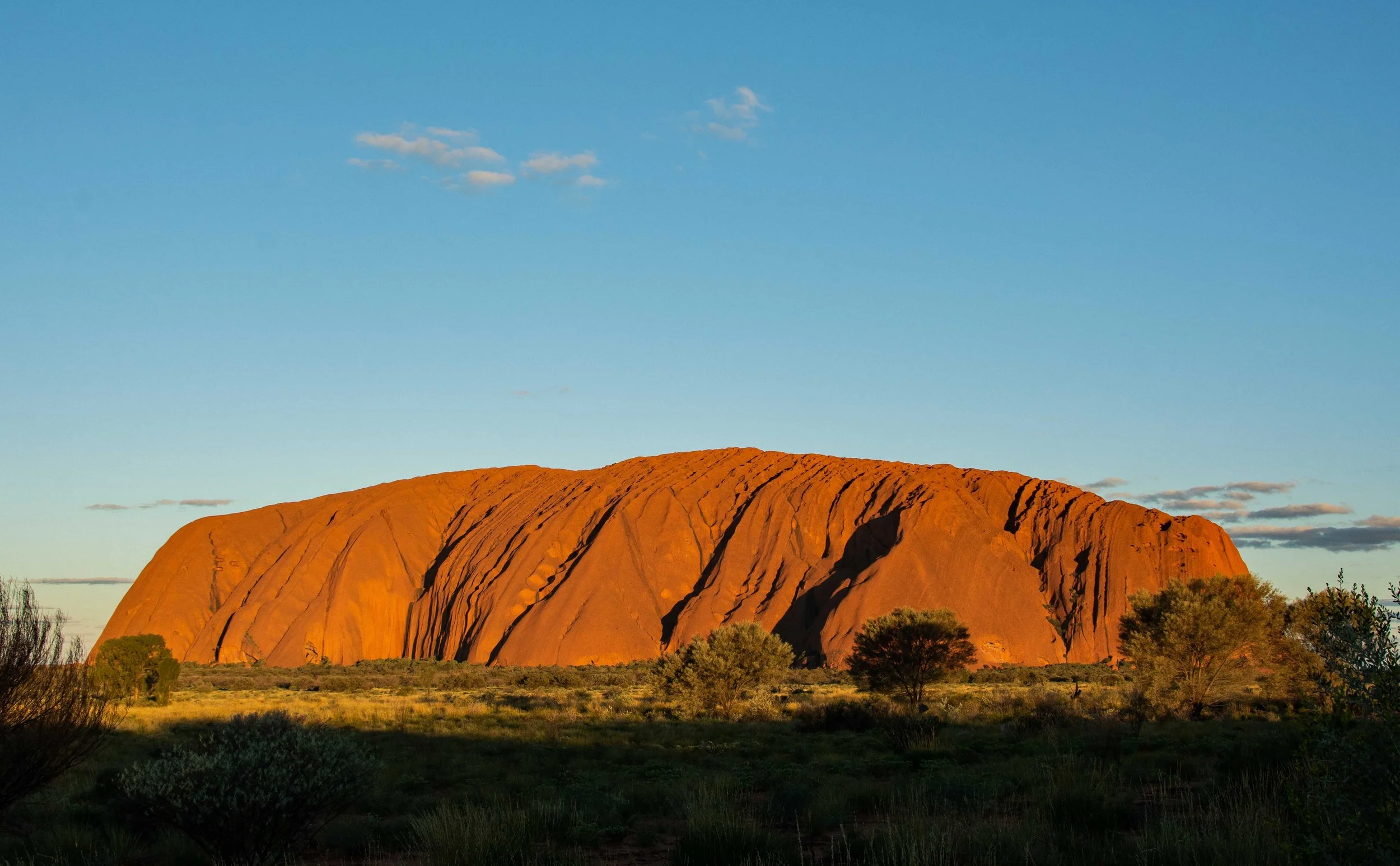
8. Massive, it lies like a sleeping giant in the desert.
The week before we arrived, it had rained, and this had brought the desert to life, and everywhere it was green, with water standing in pools. The downside was that this brought out the flies. In their millions, and we were forced into wearing black funereal veils over our heads. (Black was the only colour available). Without this protection, being outside would have been almost impossible.
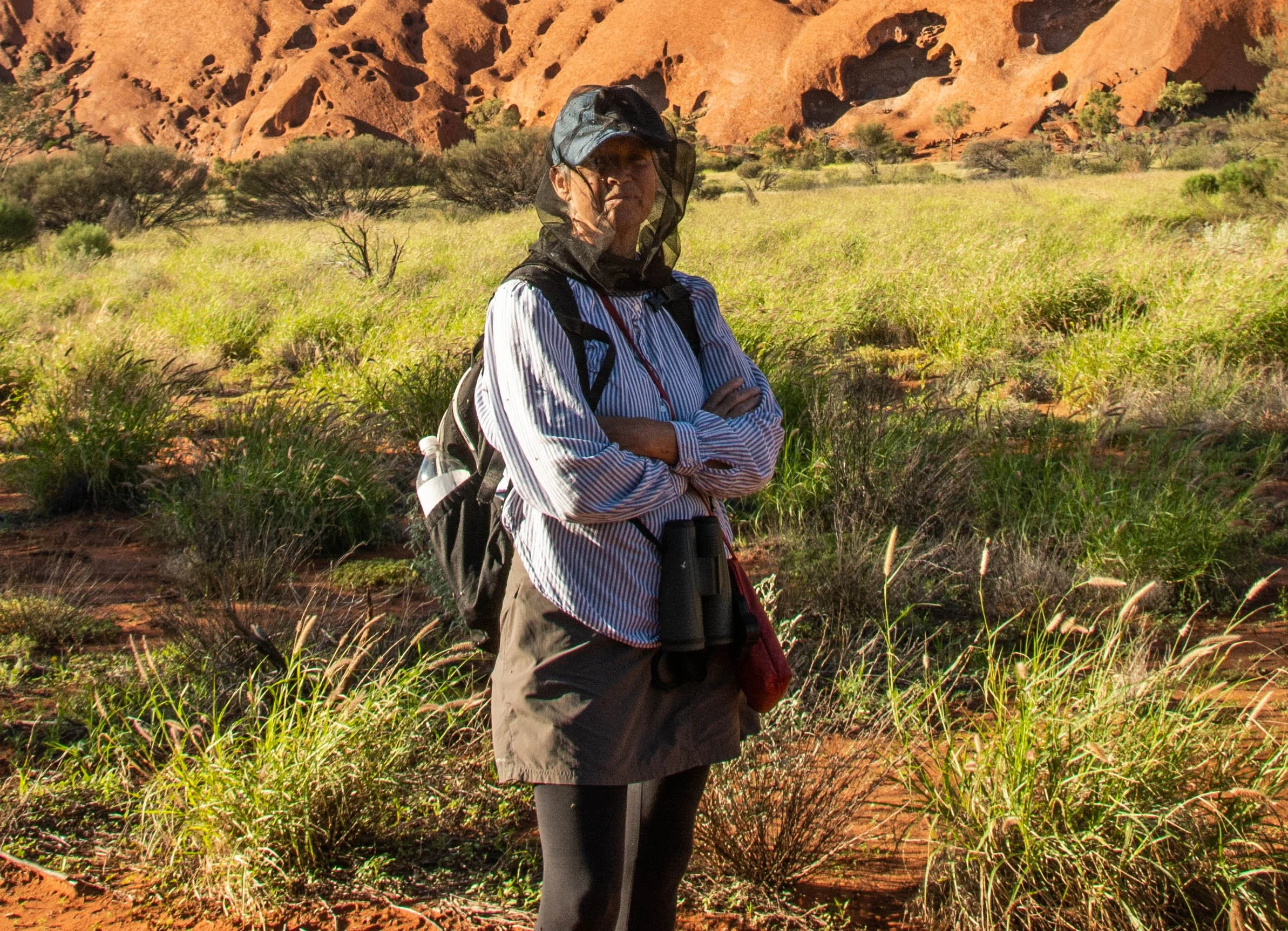
9. Ursula modelling her veil
But back to the Rock. It is indeed impressive that, spectacularly, seems to change colour during the course of the day, from grey at dawn, to brown to ochre and red and finally to an almost purple as the sun sets. We had intended to walk around it, but the flooded paths and mud prevented that.
Photographs had not prepared us for the sheer size of it. But these same photos always seem present it as a beautifully rounded rock. What we found was wonderfully eroded rock of spectacular caves and overhangs and streams running down water smoothed undulations.
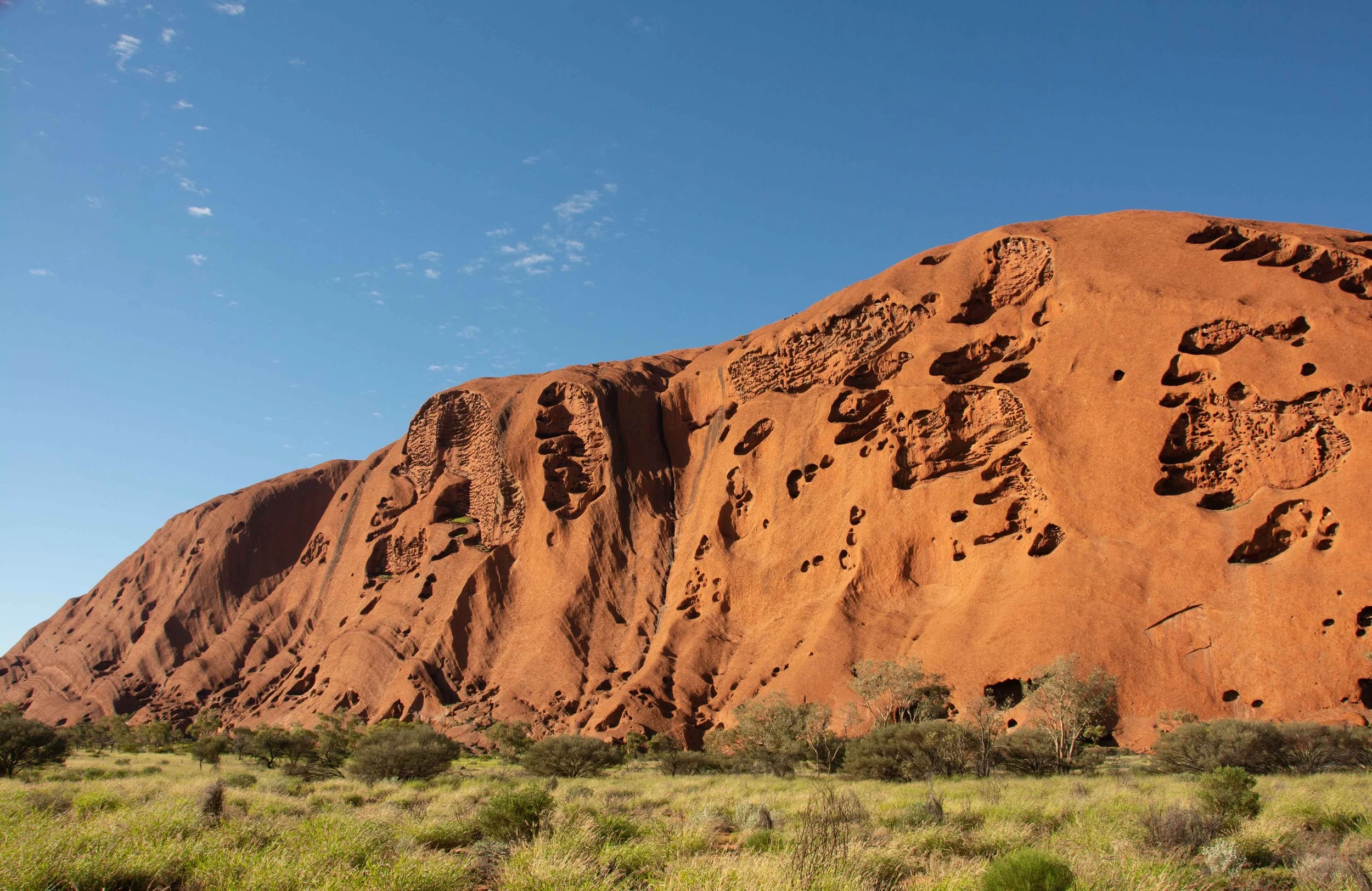
10. The erosion creates a nesting/ roosting opportunity for birds in an otherwise almost featureless desert landscape
But, to us there was something we found almost as impressive. KATA TJUTA. This is an enormous rock formation rising out of the desert about 30 km from Uluru.
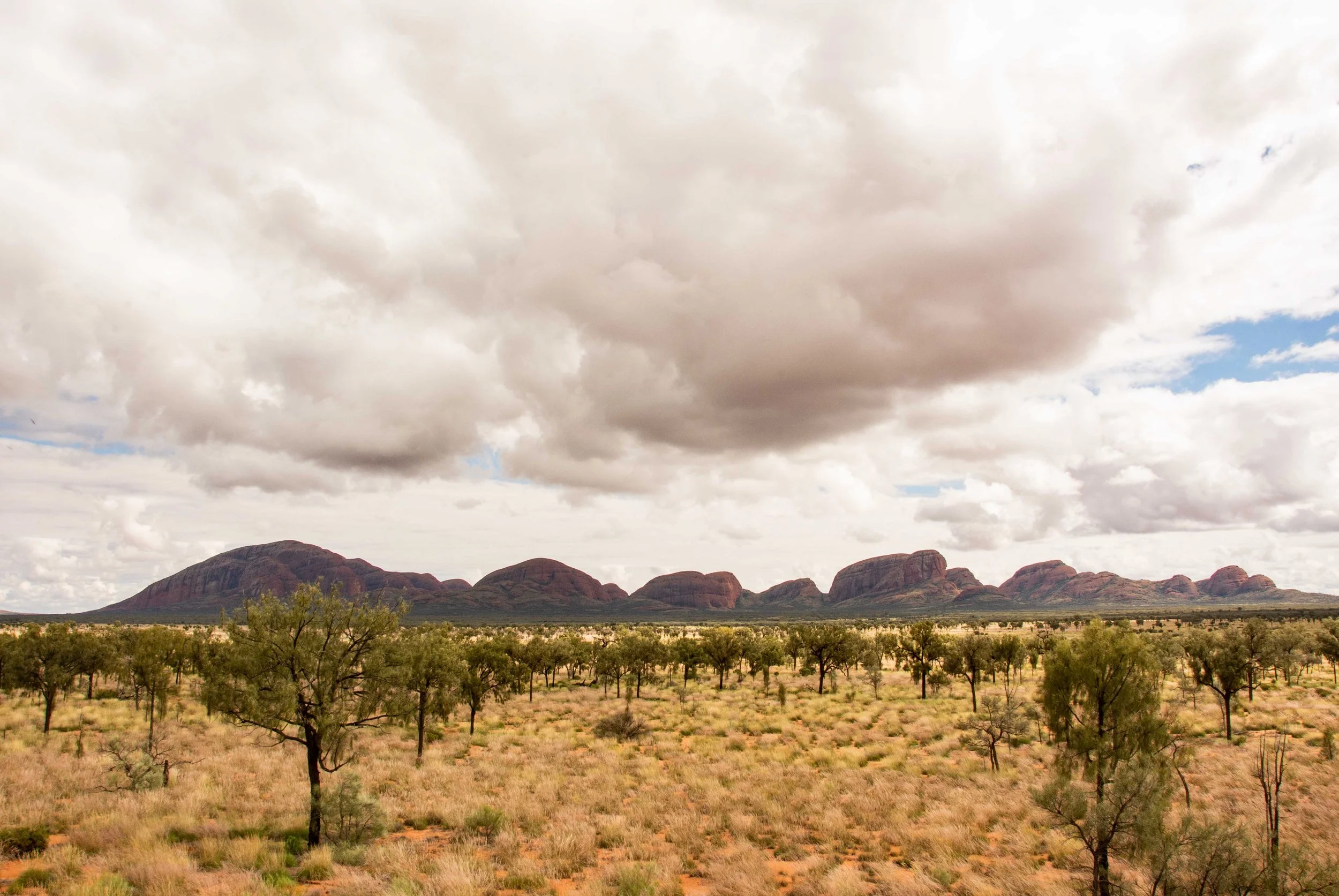
11.Kata Tjuta
We were able to walk a trail between these rocks, feeling dwarfed by these massive monoliths. Everywhere was green and we had to splash through streams and puddles in places.
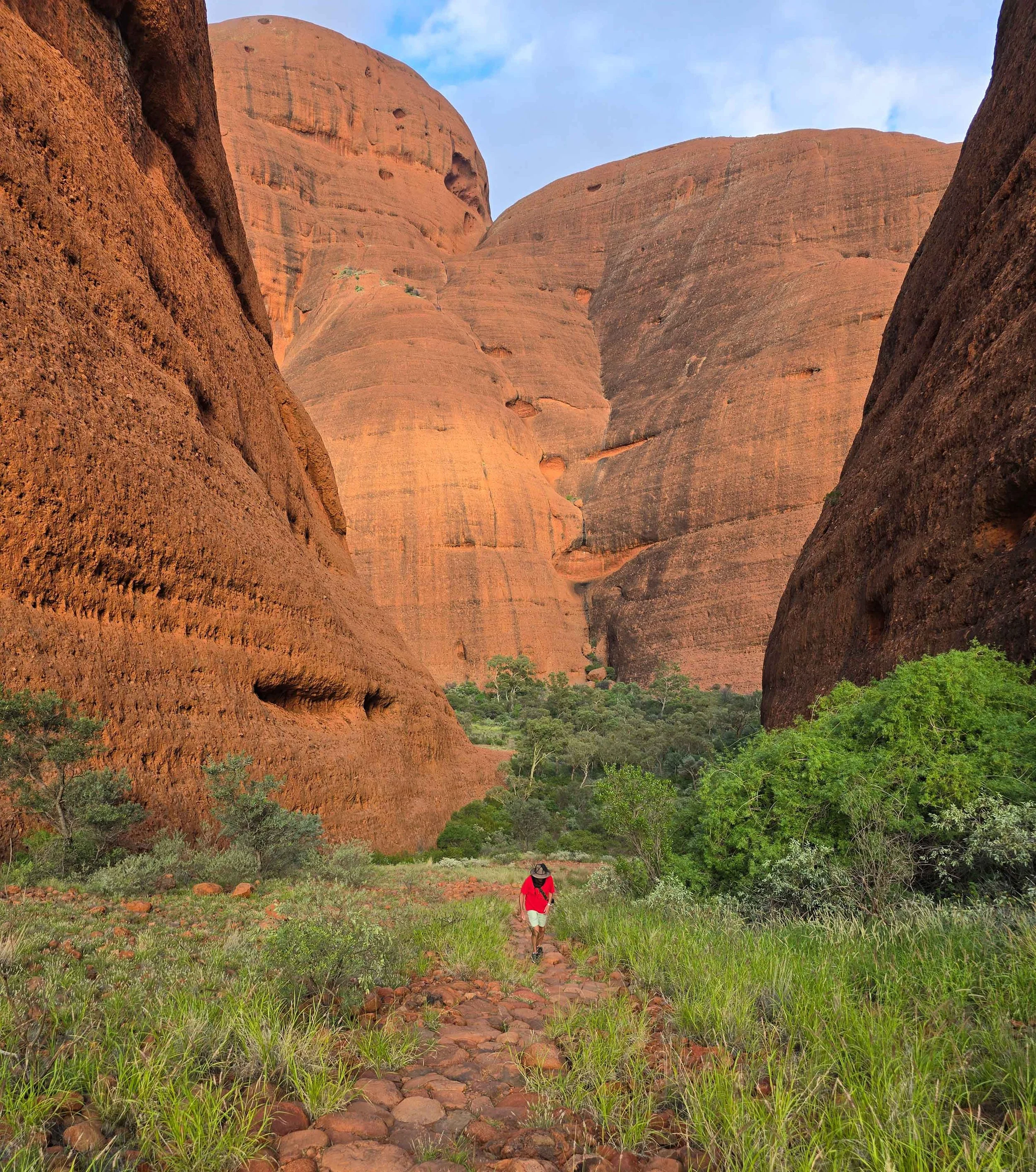
12. Chris, head down, walking in Kata Tjuta. Don’t be fooled by the green. This is usually a dry desert.
Rising out of the red earth that stretches flat to the horizon in all directions, it is easy to understand the awe which they inspired in Aboriginal culture and mythology.
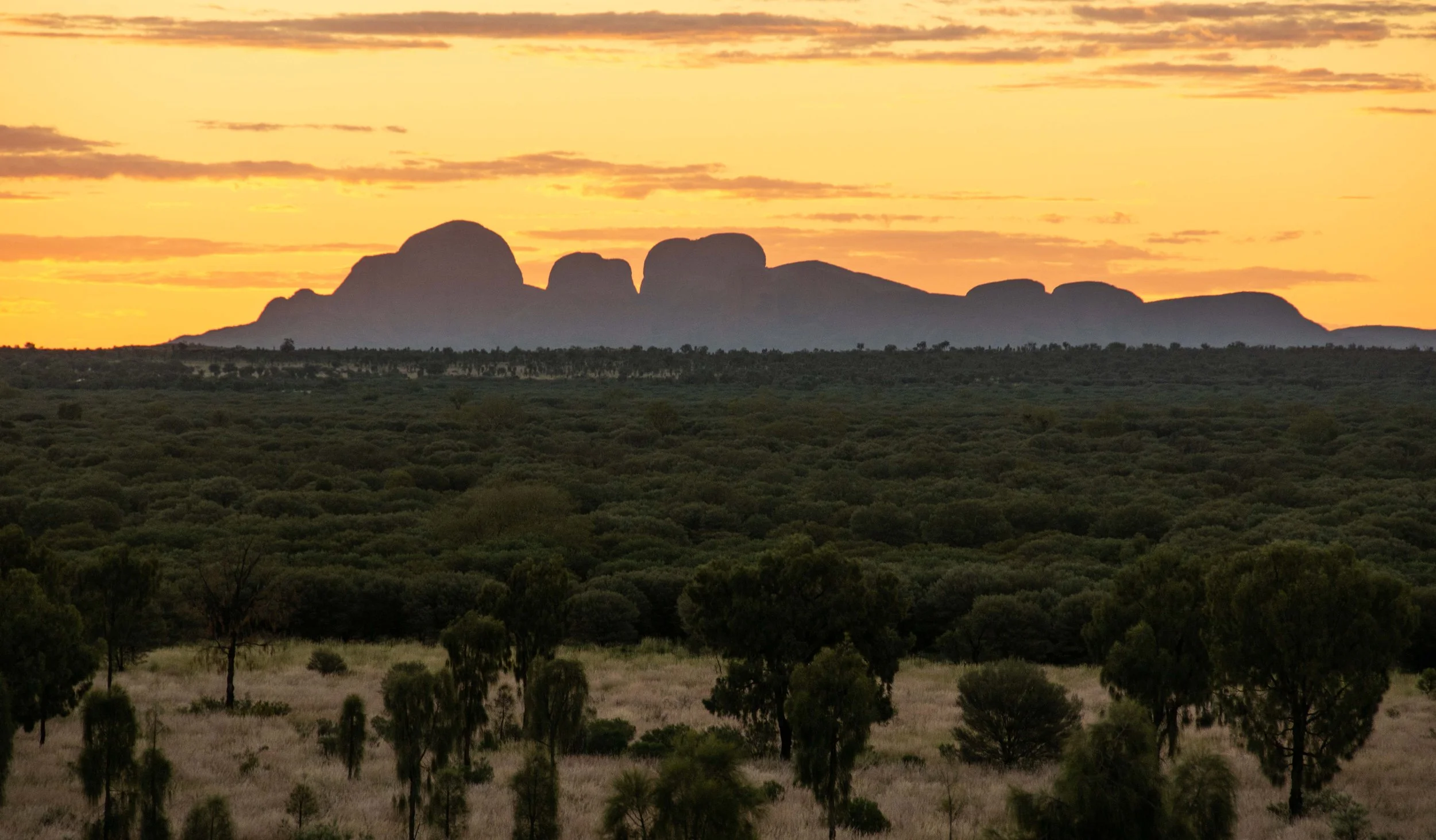
13. Kata Tjuta at sunset
From Uluru we drove in our hired car the 400 or so kilometres to Alice Springs, a drive through what is known as the Red Centre of Australia.
ALICE SPRINGS
Alice Springs lies roughly at the geographical centre of Australia and the road there, the Lasseter Highway, goes through some of the flattest landscape I have ever seen. As at Uluru, the rains had turned the desert green and we found shallow pools and lakes all along the road.
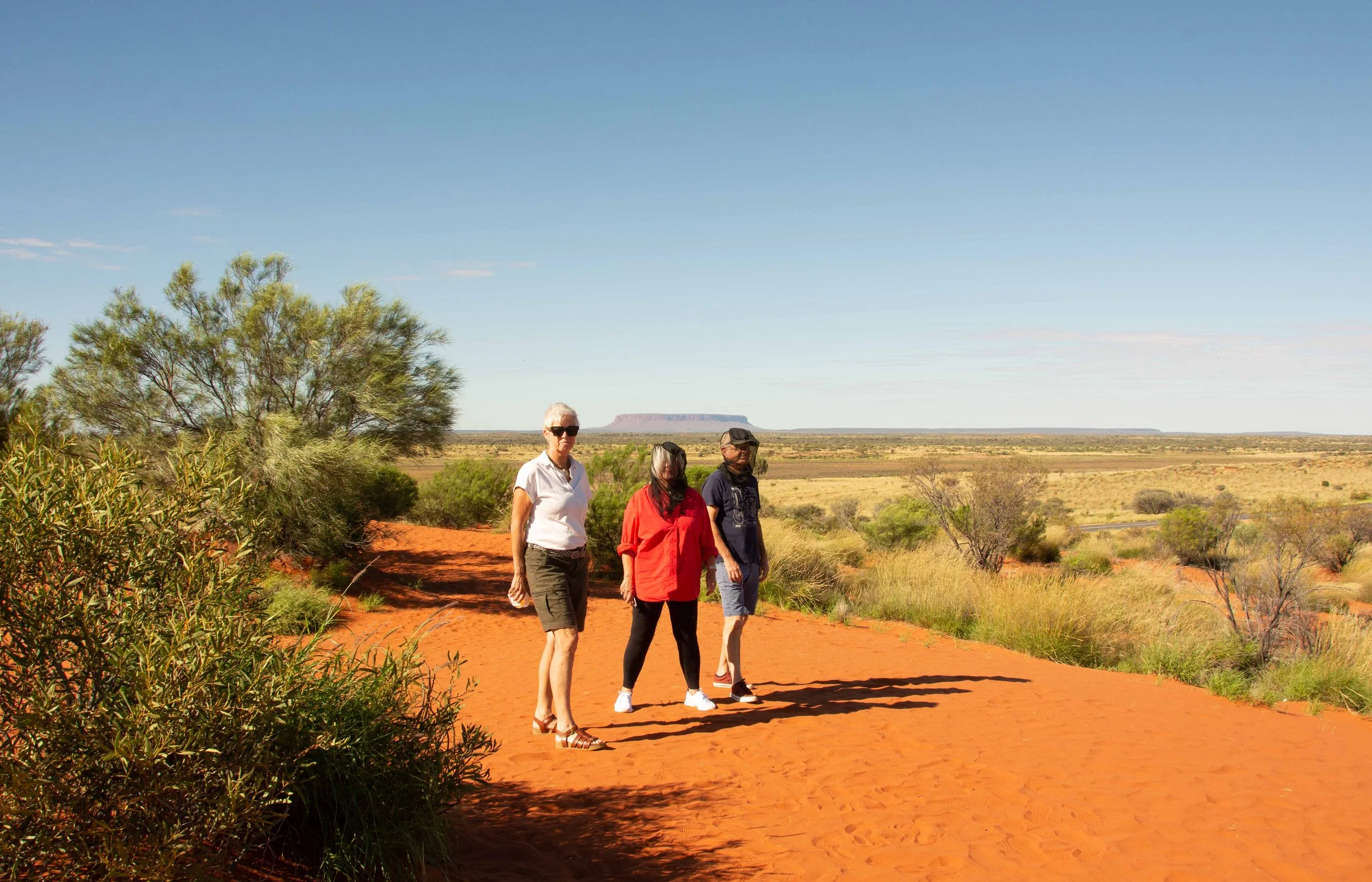
14. Ursula without her veil, braving the flies, the others not so brave. In the distantbackground is the flat-topped Mount Connor.
Alice springs itself is a fairly non-descript sort of town (sorry Alice Springs) but I really liked it; a laid-back town it nevertheless seemed to exude an air of quiet confidence. One claim to fame is that it is the base of the Flying Doctor Service.
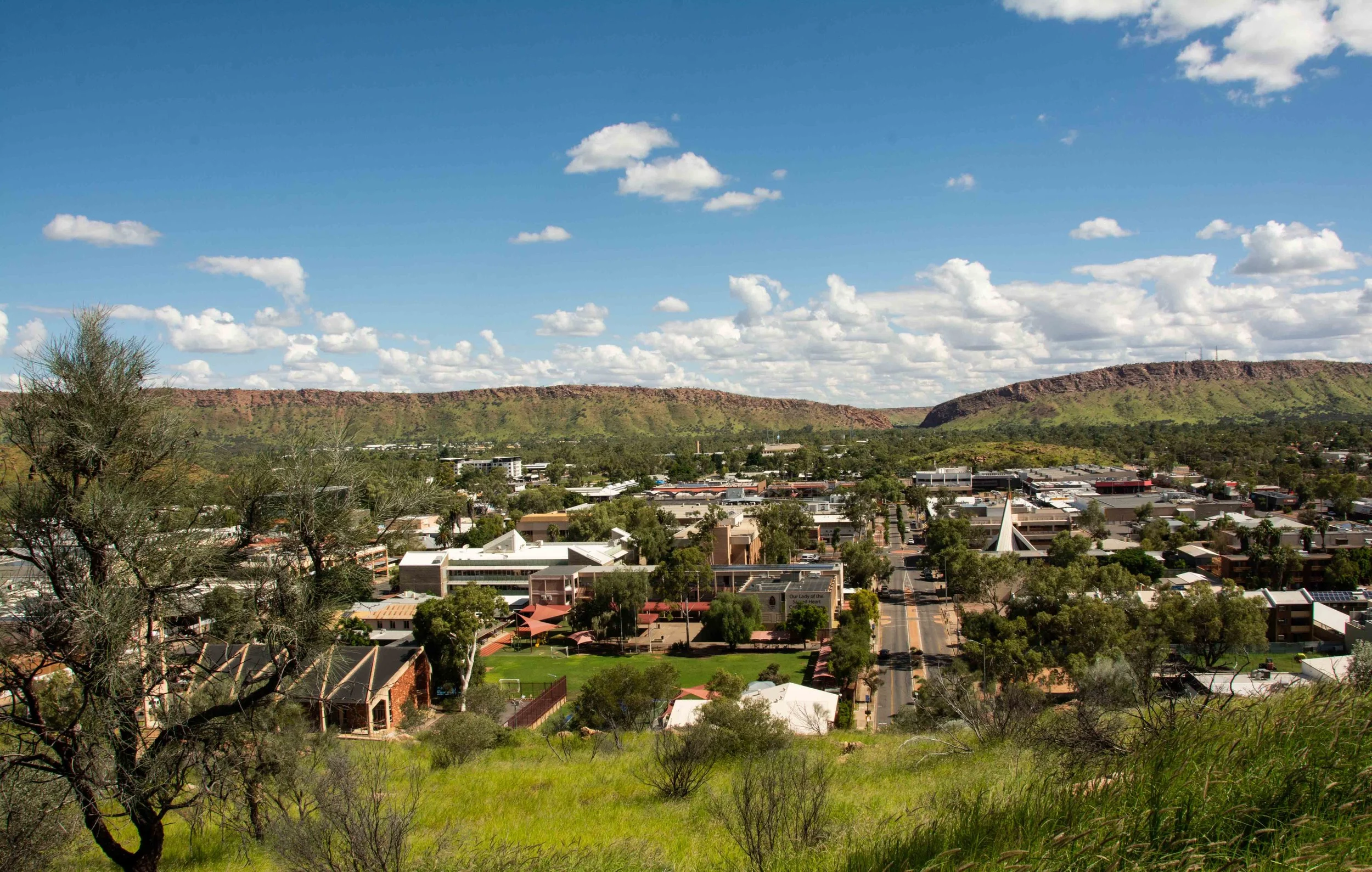
15. Alice Springs looking toward the Heavitree Gap
The usually dry Todd river cuts through the town and the heavy rains had damaged roads and bridges closing some of these to through traffic.
The MacDonnell mountains runs East to West, just South of the town. This very old mountain range, over 600km long, is pierced by a number of gaps, one of which is the Heavitree Gap (the aboriginal name is Ntaripe) through which the road and rail link to the south, and the Todd river run)
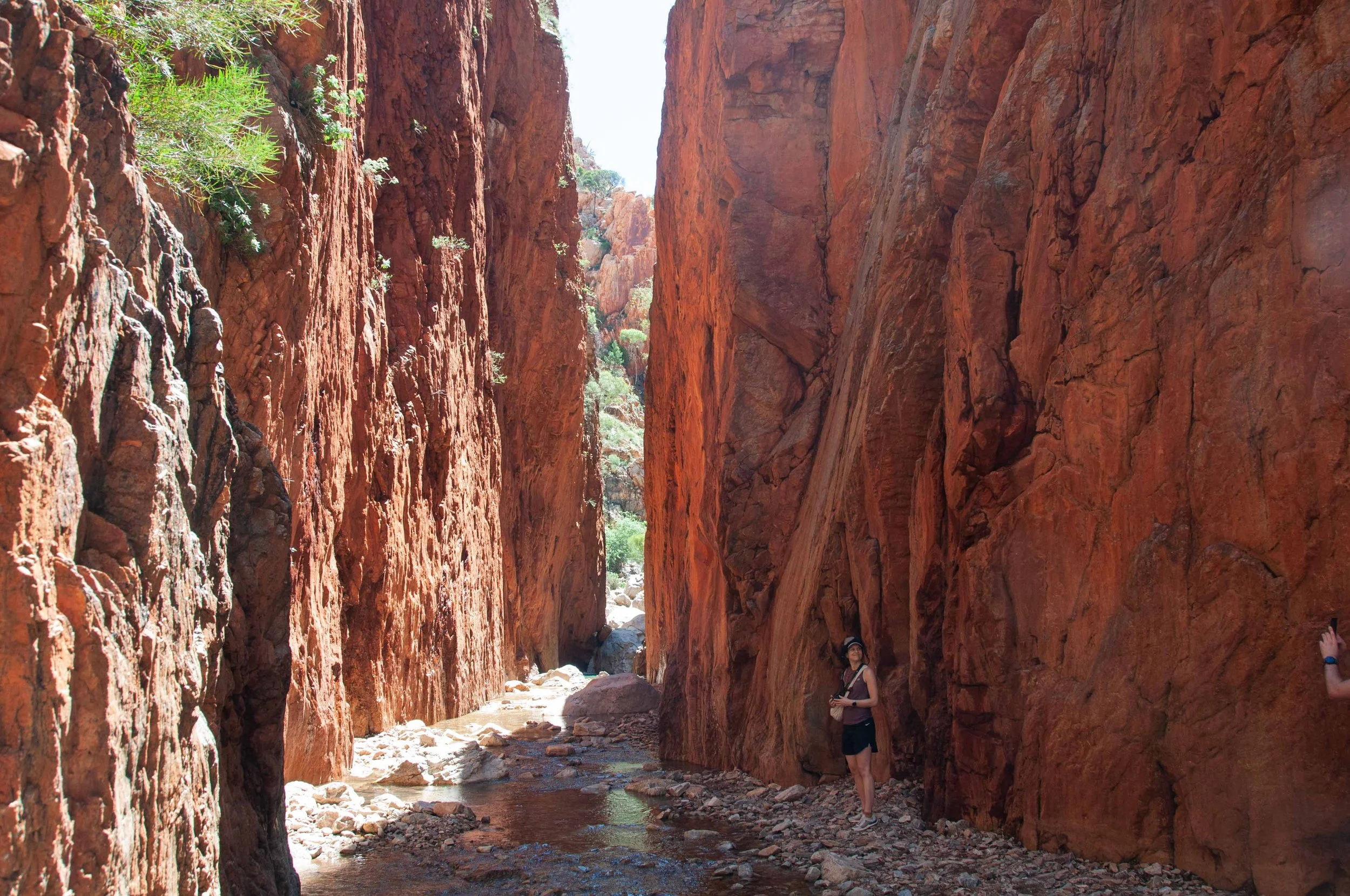
16. The very narrow Standley Chasm
We made a day trip to several of the more well-known gaps, most of them with running water after the rains. There are also several hiking trails including the gruelling Larapinta Trail, 220km long. We did not attempt it.
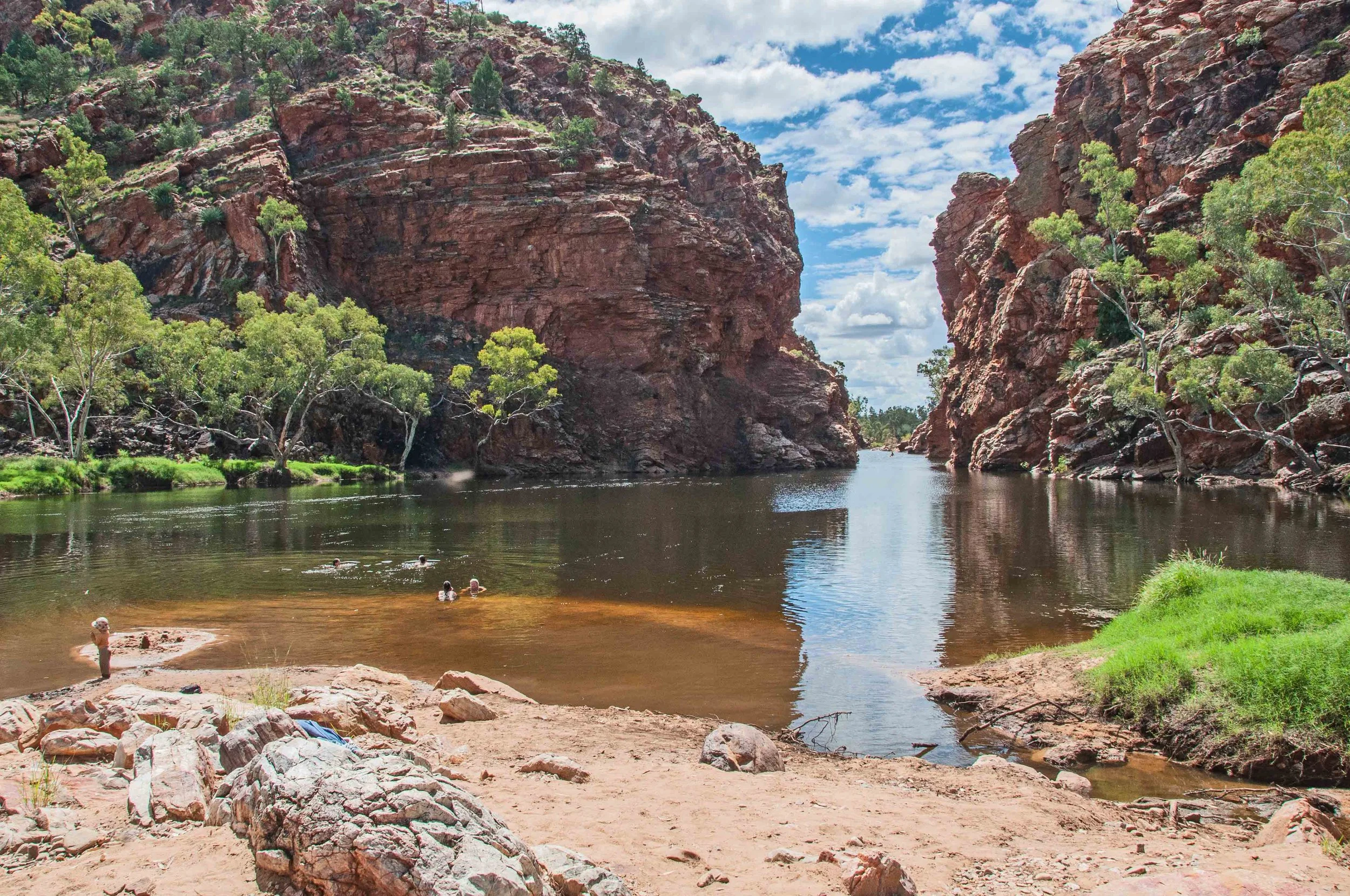
17. Swimmers in Ellery Creek. Not us. Water everywhere.
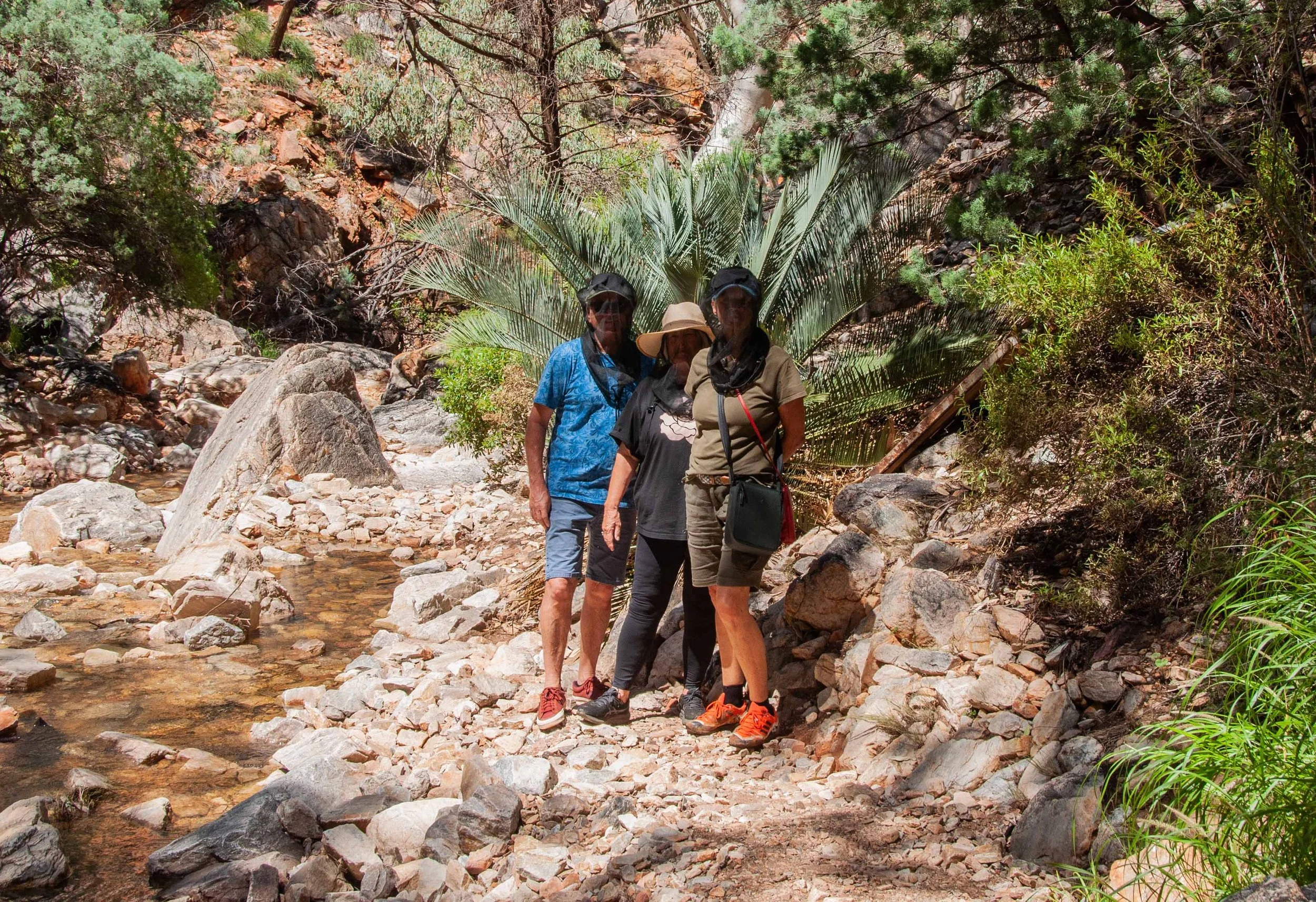
18. Suitably protected against the flies the family poses in front of a MacDonnell Ranges cycad
These horses stood in a rough circle, heads inward. It was only when we realised that there was a young foal in the centre that the behaviour made sense. Heads in the centre they could kick out to protect the foal. As far as we could see they were all mares.
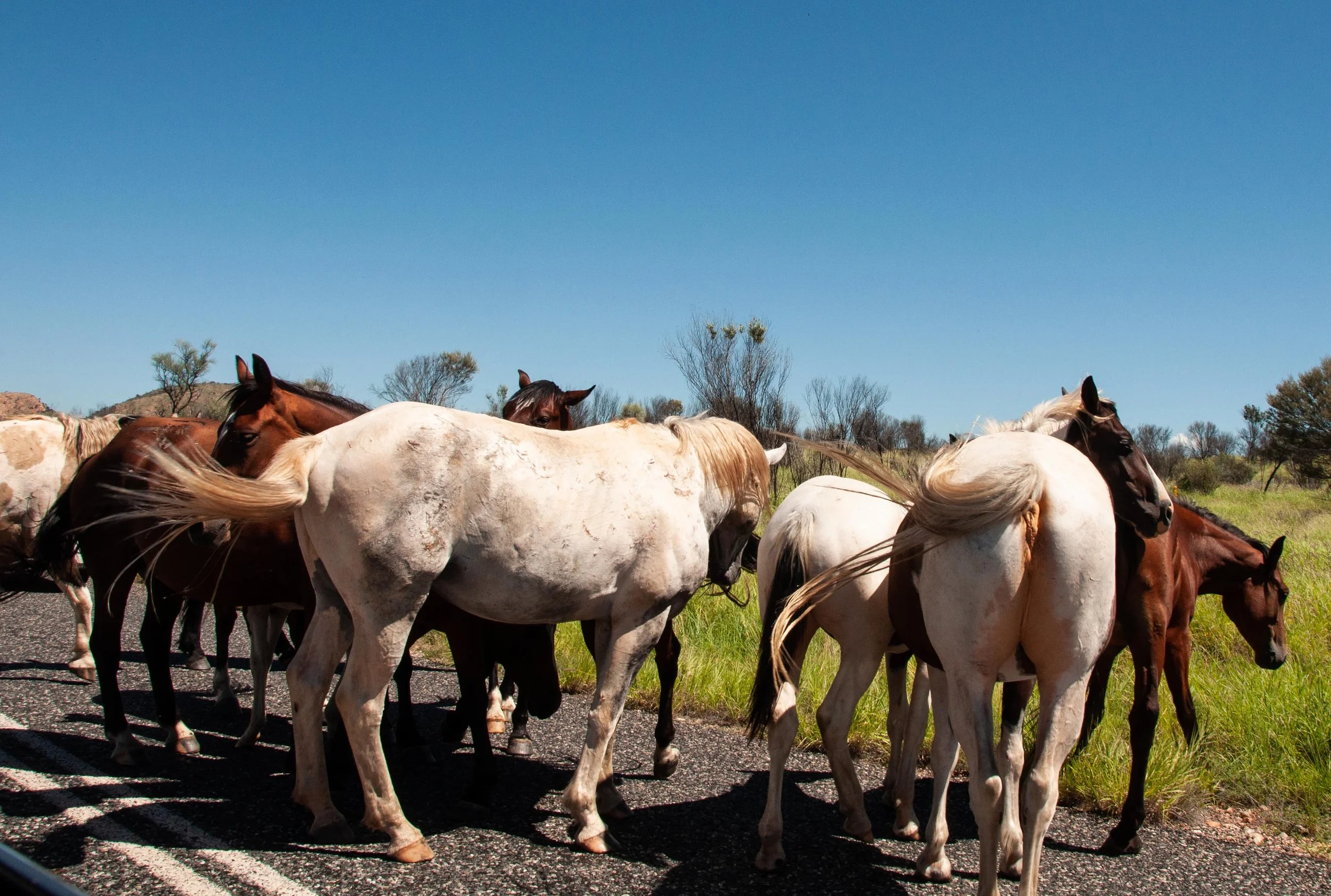
19. The horses on the road unexpectedly stood their ground, reluctant to move
Back in Alice Springs we visited a private art gallery run by an Austrian who worked with Aboriginal artists and sold their work from his gallery. We were really taken with the work in his gallery, and we bought pieces of art from him.
After an all too short a time in Alice Springs we had to move on and we flew to Adelaide.
ADELAIDE
Adelaide, at least central residential Adelaide, is a delightful town of single-storey detached houses, built mostly of red brick or limestone blocks. The city is built on a grid with five concentric squares surrounded by parks. This makes directions easy the city an easy place to walk about in.
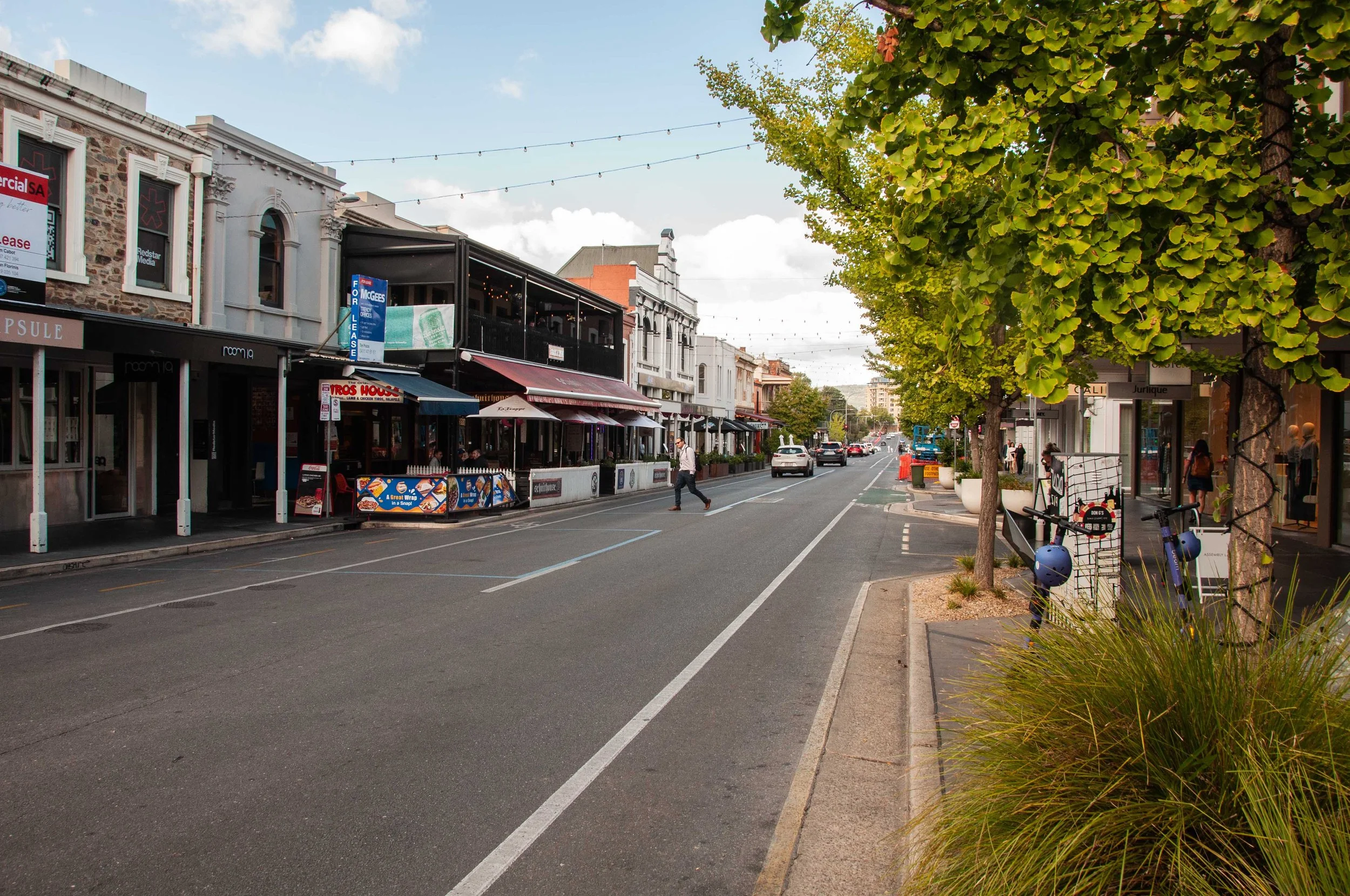
20.The central commercial area at rush hour.
We spent time in various art galleries, including the Art Gallery of South Australia. As with all the state galleries we visited, we were really impressed. The curation tended to be on themes instead of individual artists, so that an exhibition could have work from ancient Egypt or Greece to the present day, organised around one theme.
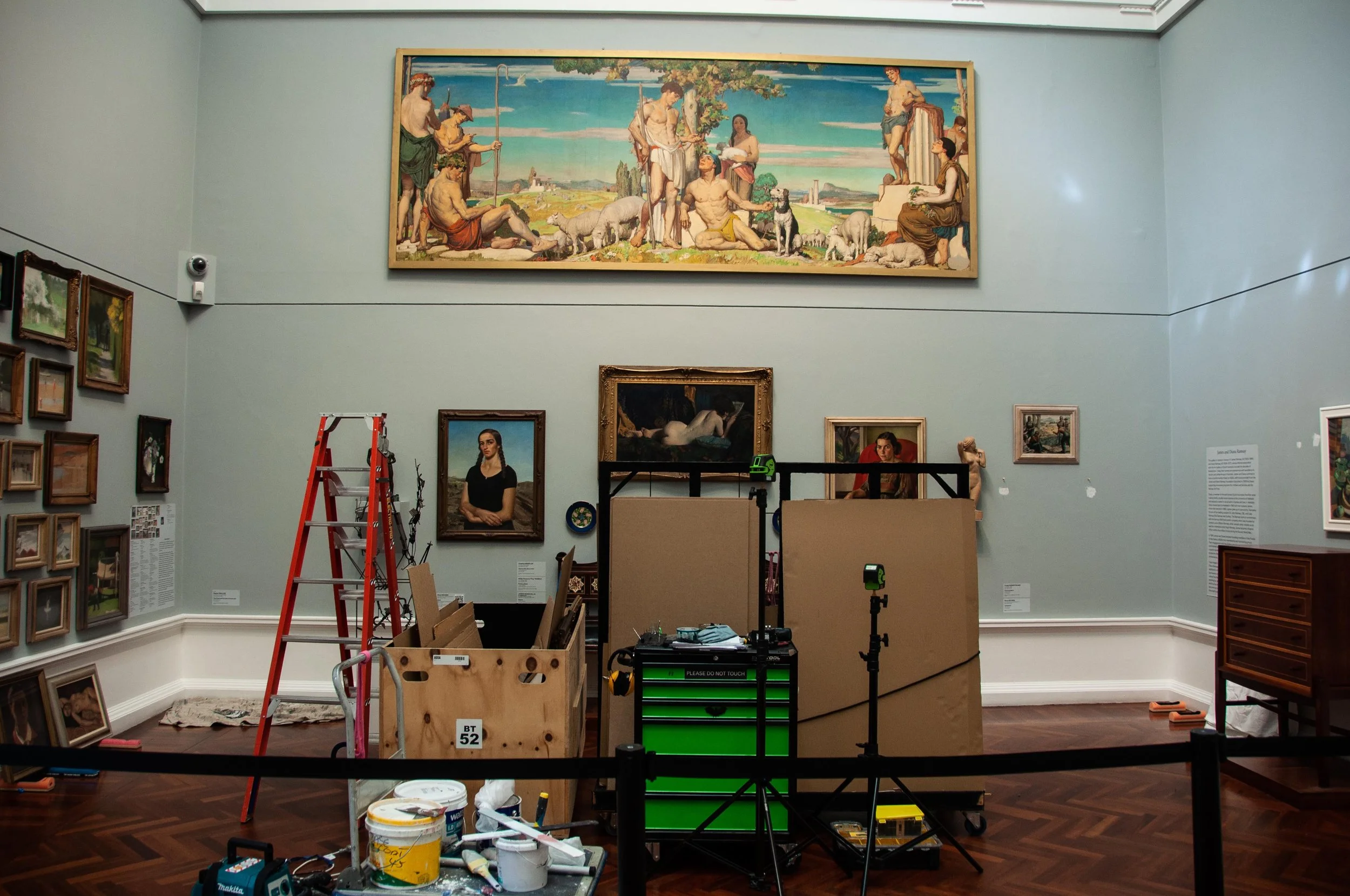
21.Some of the exhibitions were still being hung
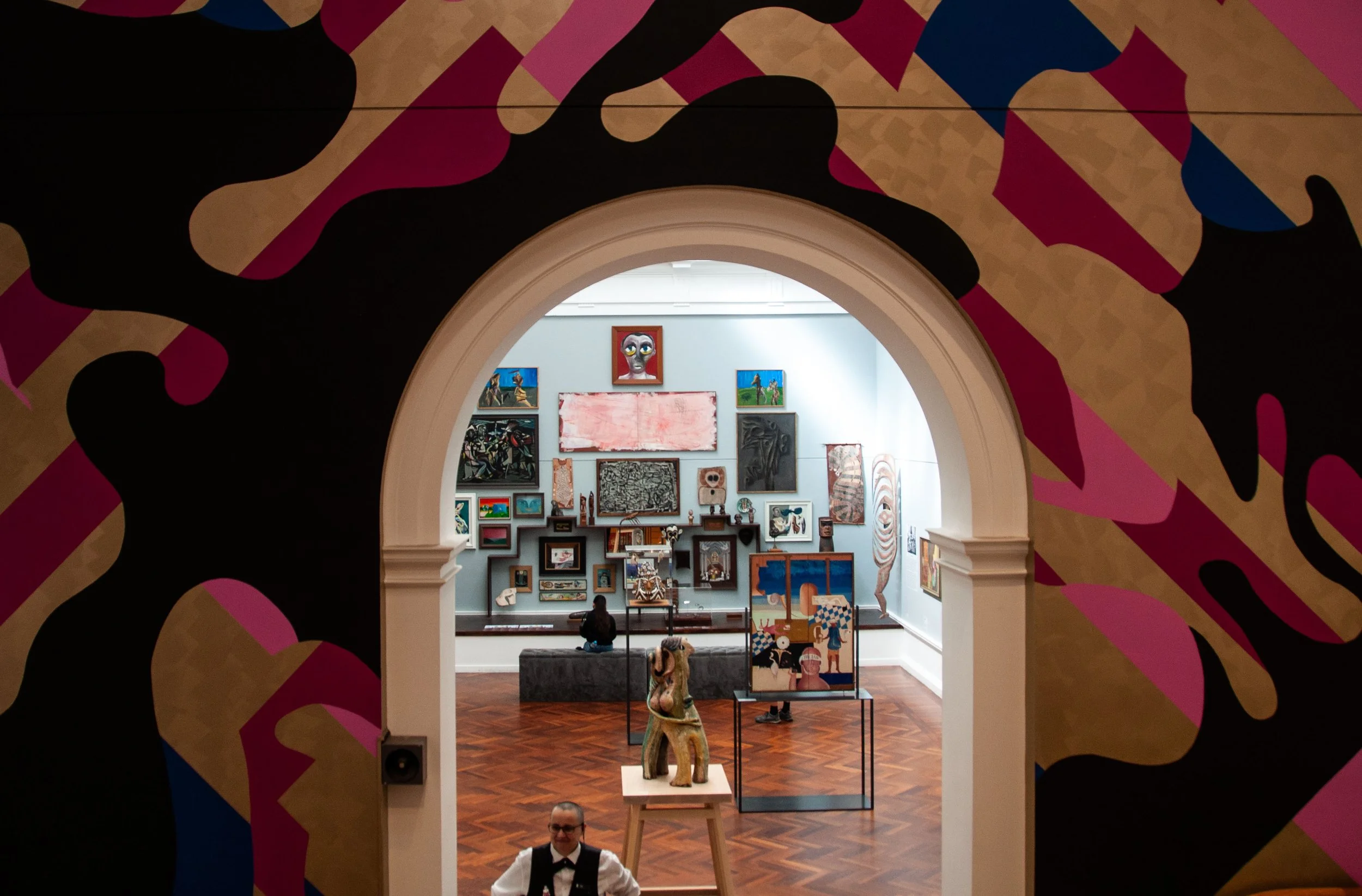
22. A glorious mixture of the old and the contemporary.
Hahndorf
We made a day trip to the town of Hahndorf and then intended to go to the Barossa valley to investigate the properties of Australian wine. At least that was the plan.
Hahndorf founded in 1839 by German Lutherans fleeing religious persecution in Prussia. We were wary of visiting the town, did we really want to experience the joys of German settlerhood. But we found a lovely town with (another) excellent museum detailing the everyday hardships of settler life at the time. Teenage daughters walked the 28km to Adelaide carrying produce for sale. With the proceeds, bought supplies for the settlers and carried them the 28km back to Hahndorf!
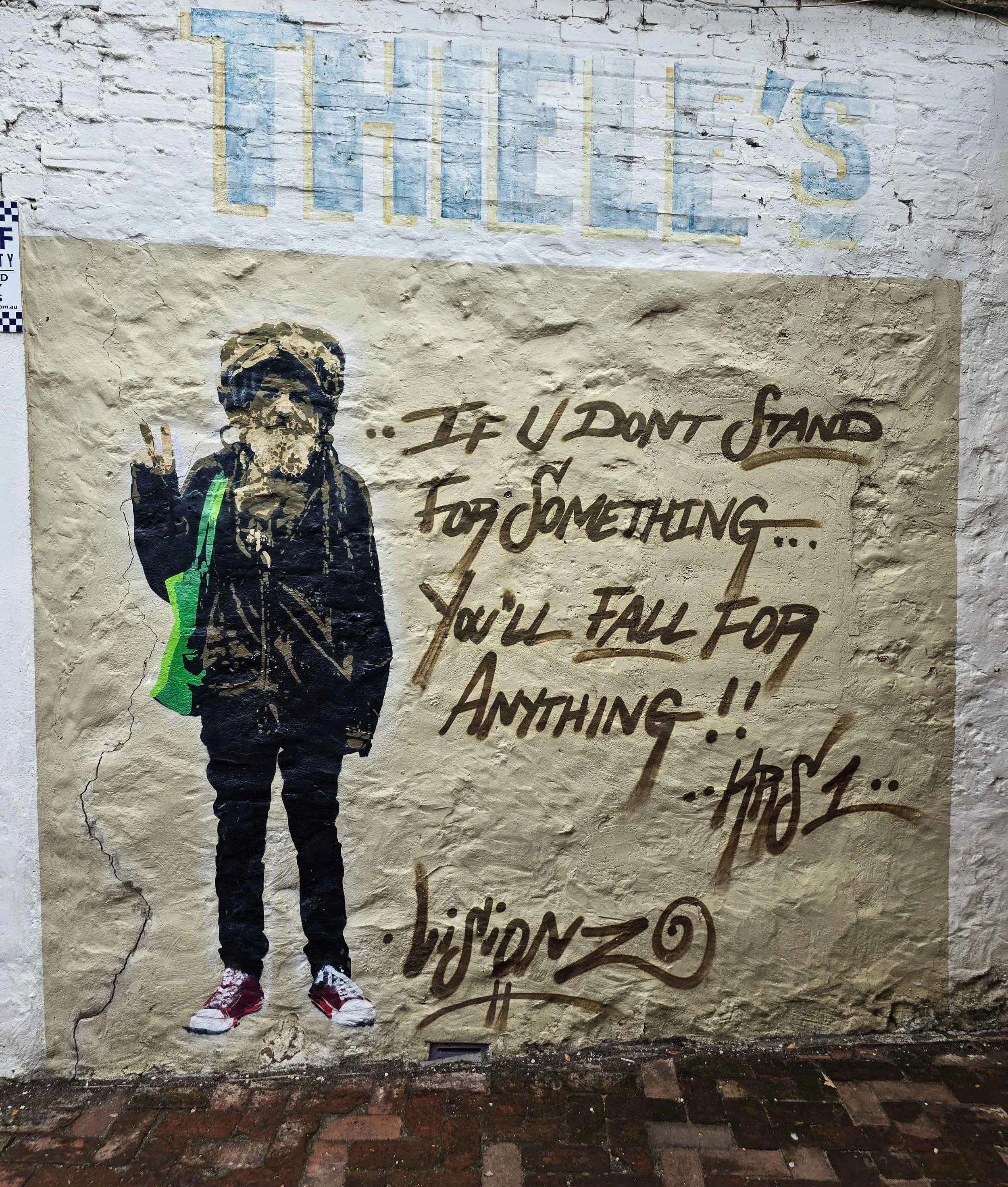
23. A fine piece of graffiti in Hahndorf, but not especially Germanic.
After Hahndorf we planned to go to the Barossa valley, but we had spent longer than anticipated in the town, and an interesting “scenic” drive meant that we missed the valley. But we did find an interesting vineyard, the Hemera Estate, where we spent a productive time tasting their wines, before buying enough to last us the remainder of the trip.
While in Adelaide we felt we had to visit the famous Henley beach. Unfortunately, it was cold, overcast and very windy, so we did not experience the joys of swimming at the beach.
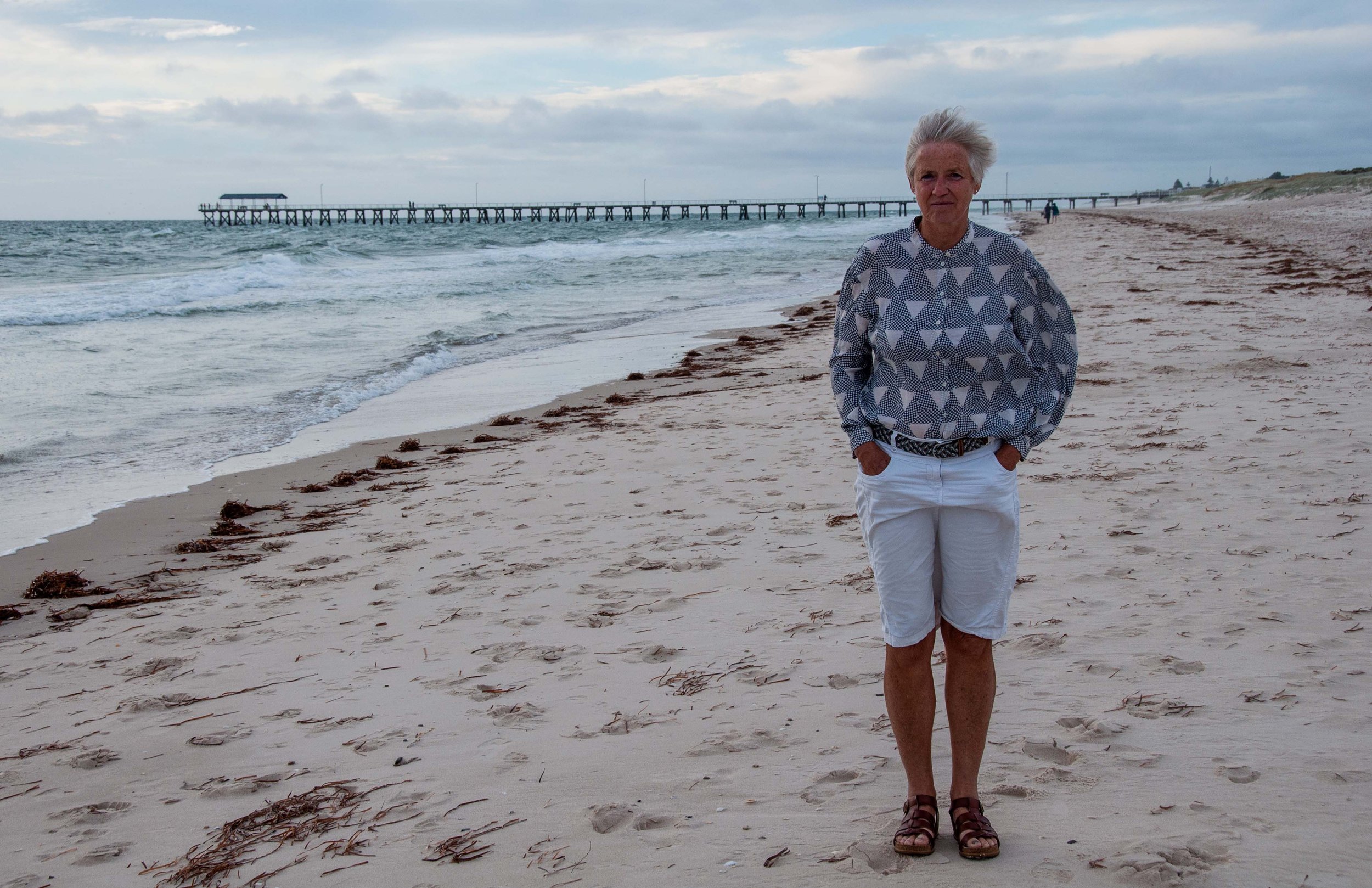
24. Determinedly to braving the weather on Henley beach
From Adelaide we travelled South toward our final destination, Melbourne, with several stops on the way, the first being Hall’s Gap
HALL’S GAP
Another gap, this one in the Grampians, where we stayed for 2 nights in the Gariwerd Motel, basic but very comfortable. The Grampians are a range of mountains, part of the Great Dividing Range, and it is designated as a national park.
Here we, at last, saw our first kangaroos and emus, both fairly common around and even in the town.
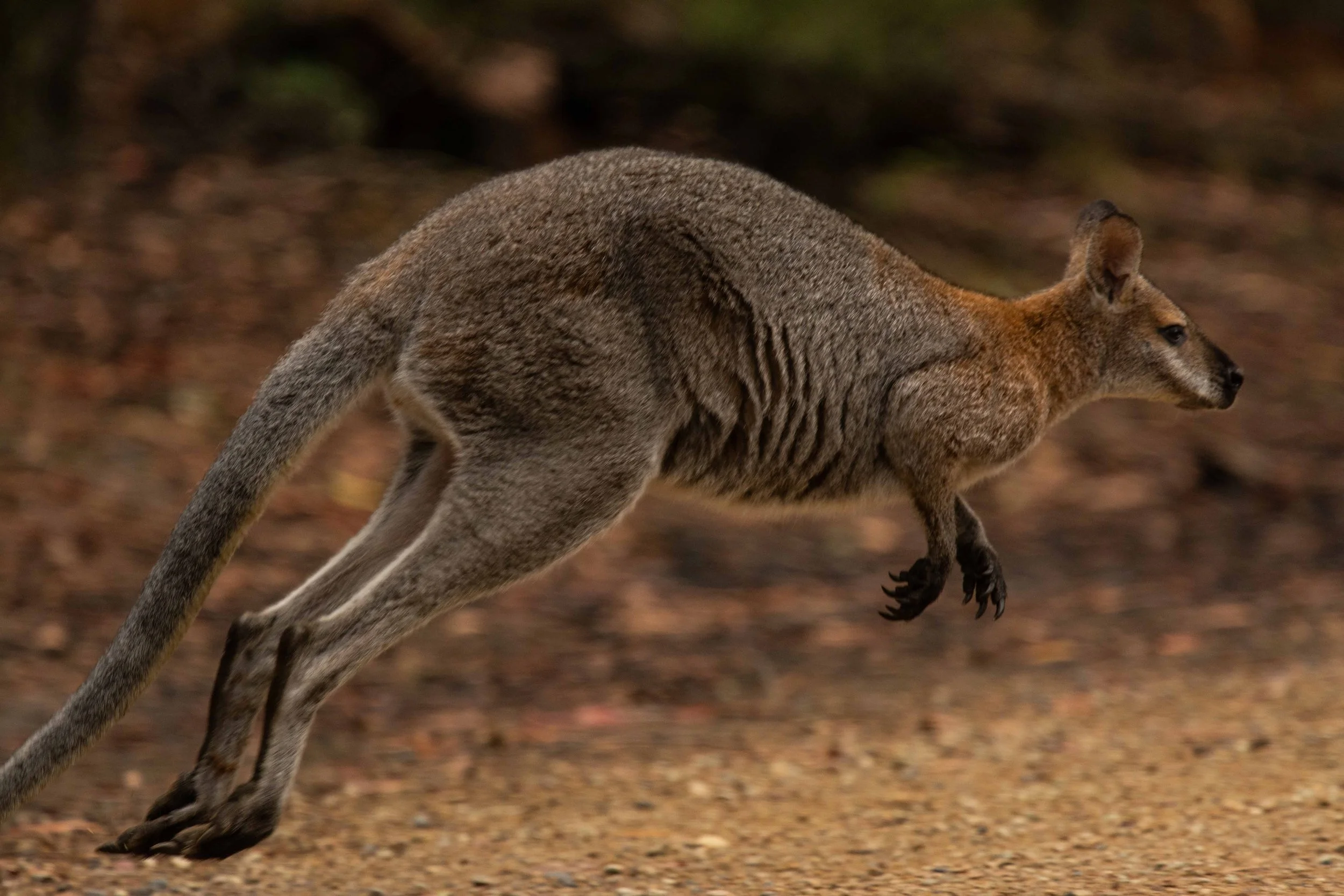
25. Kangaroo deciding to move on –“and with one bound ……”.
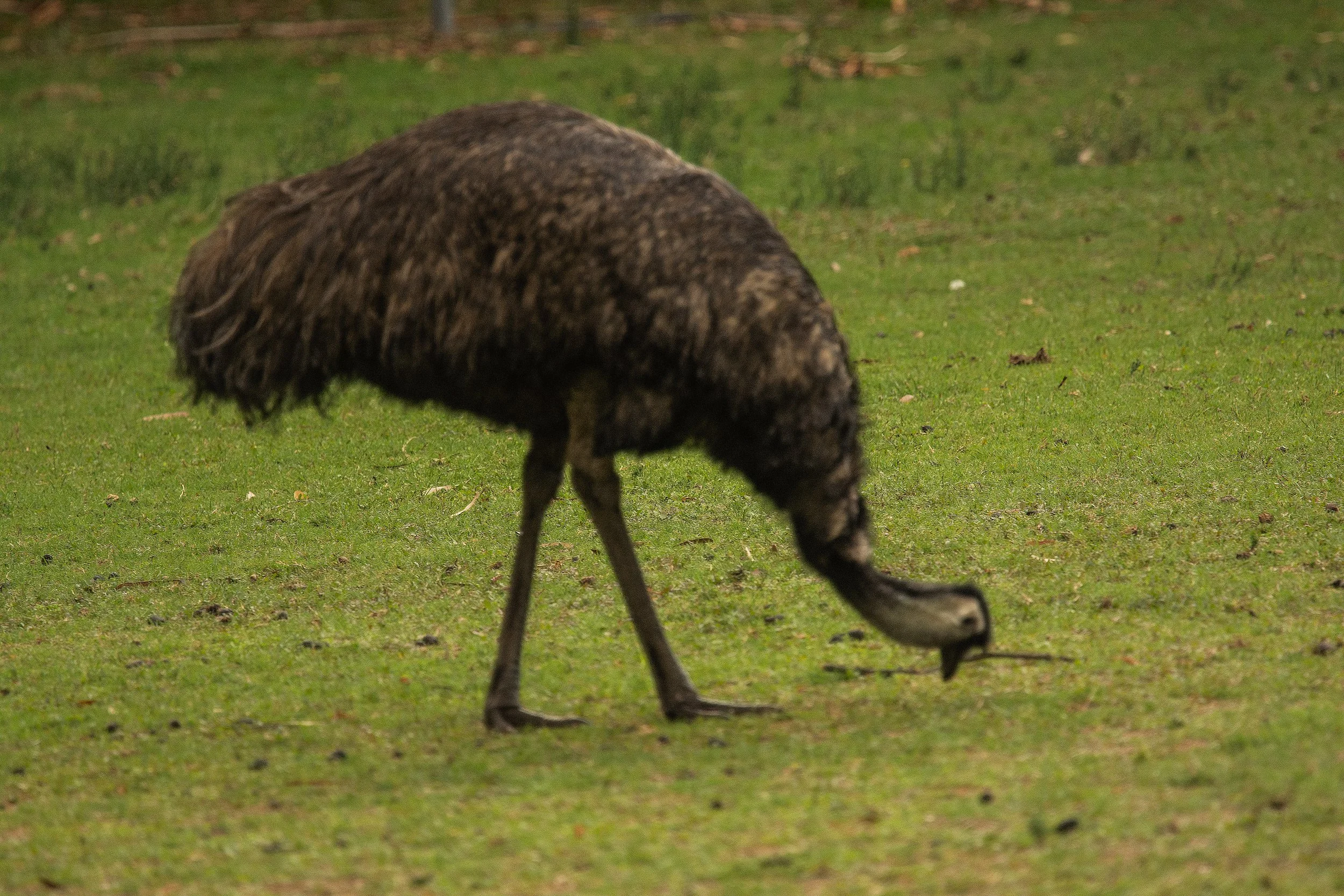
26. Emu on the Australian rules rugby pitch
We drove to a viewpoint overlooking the town for a spectacular view over the town and the plains beyond. The weather wasn’t good but we managed walks through the botanical garden, small but interesting, and the birding was quite good in spite of the weather
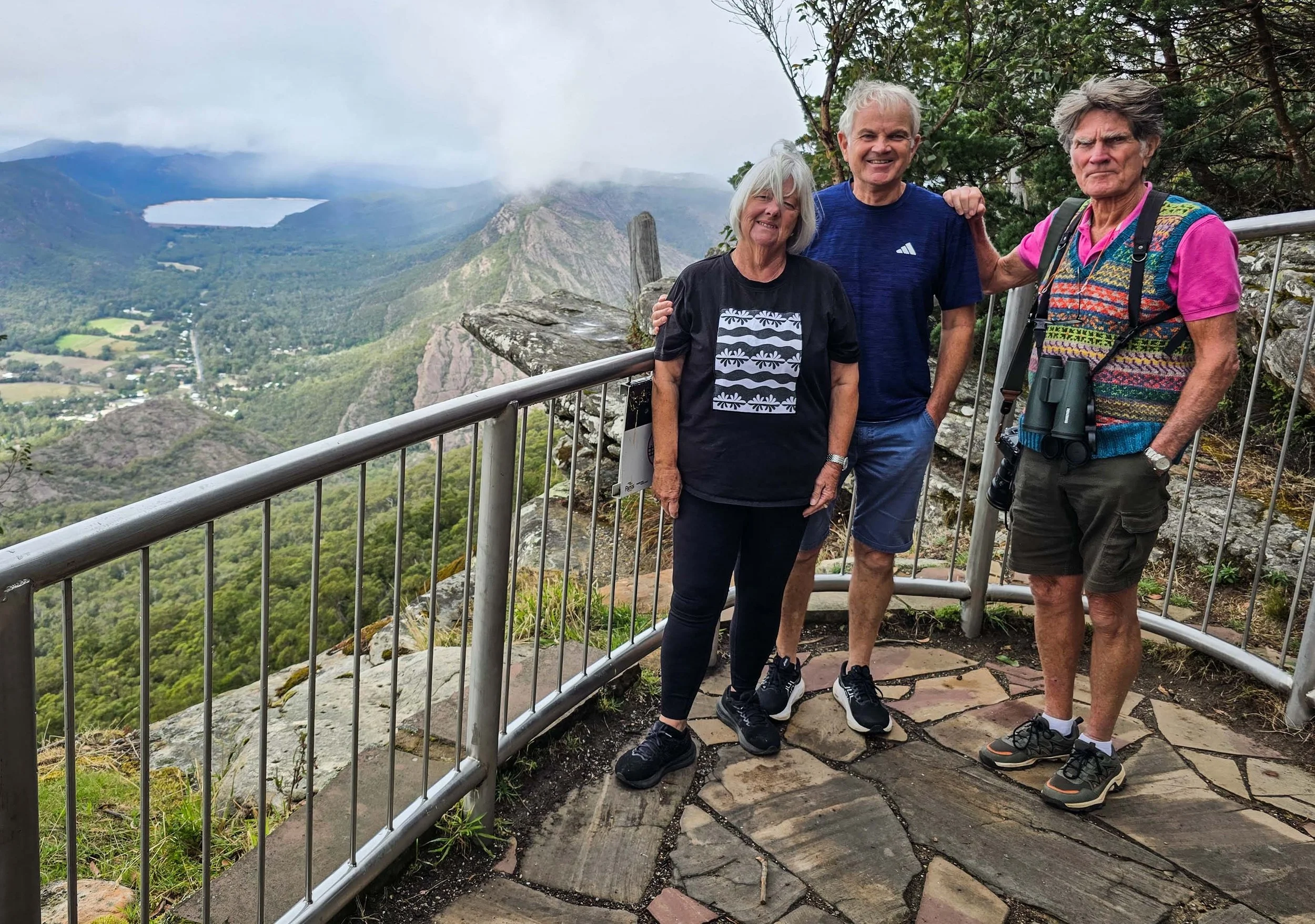
27. The Boroka Lookout above Hall’s Gap
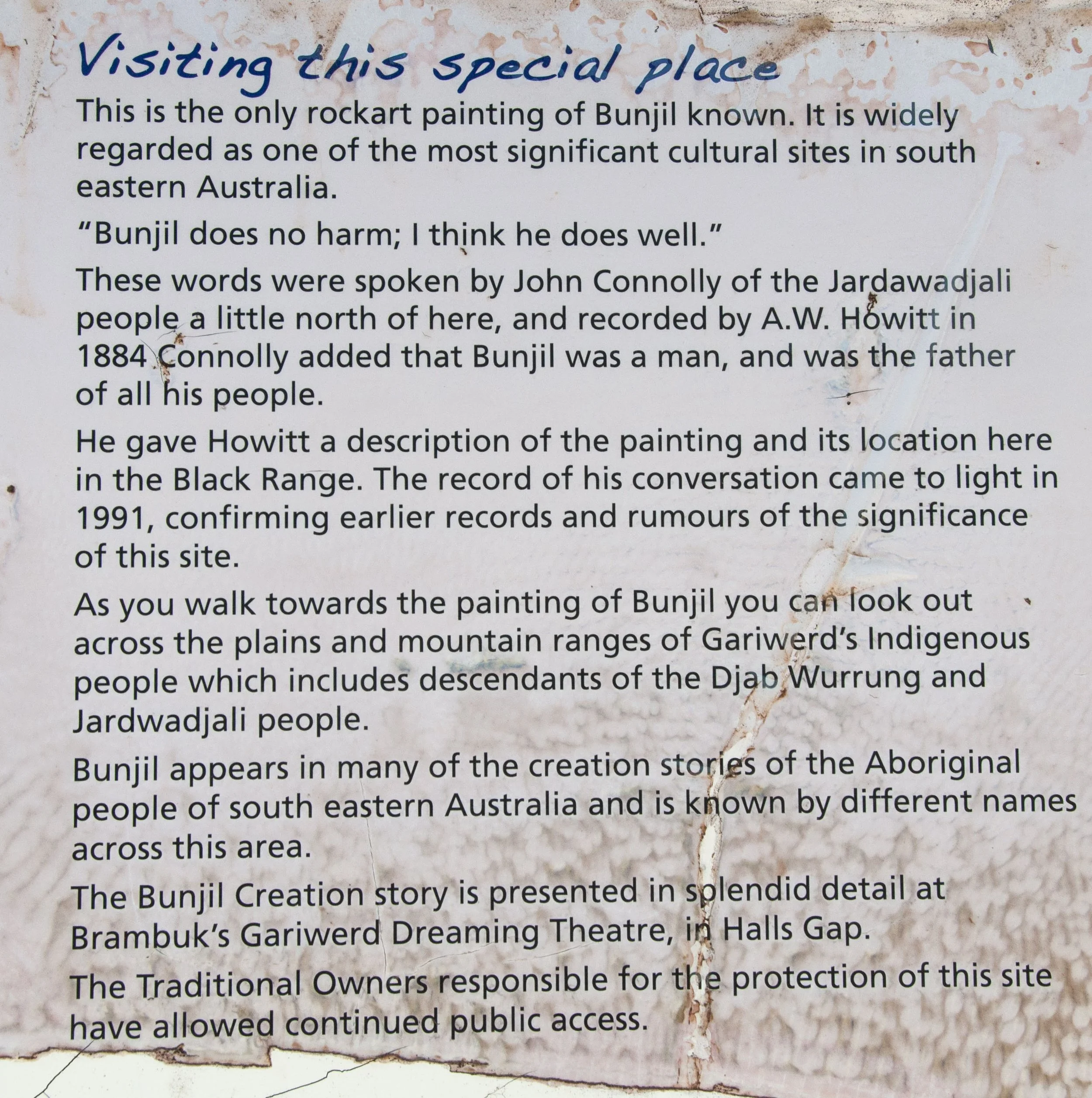
After leaving Hall’s Gap we stopped to see the Bunjil Shelter, a low cave with one of the most important pieces of rock painting. Bunjil, in the traditional mythology, created the world, and is its protector
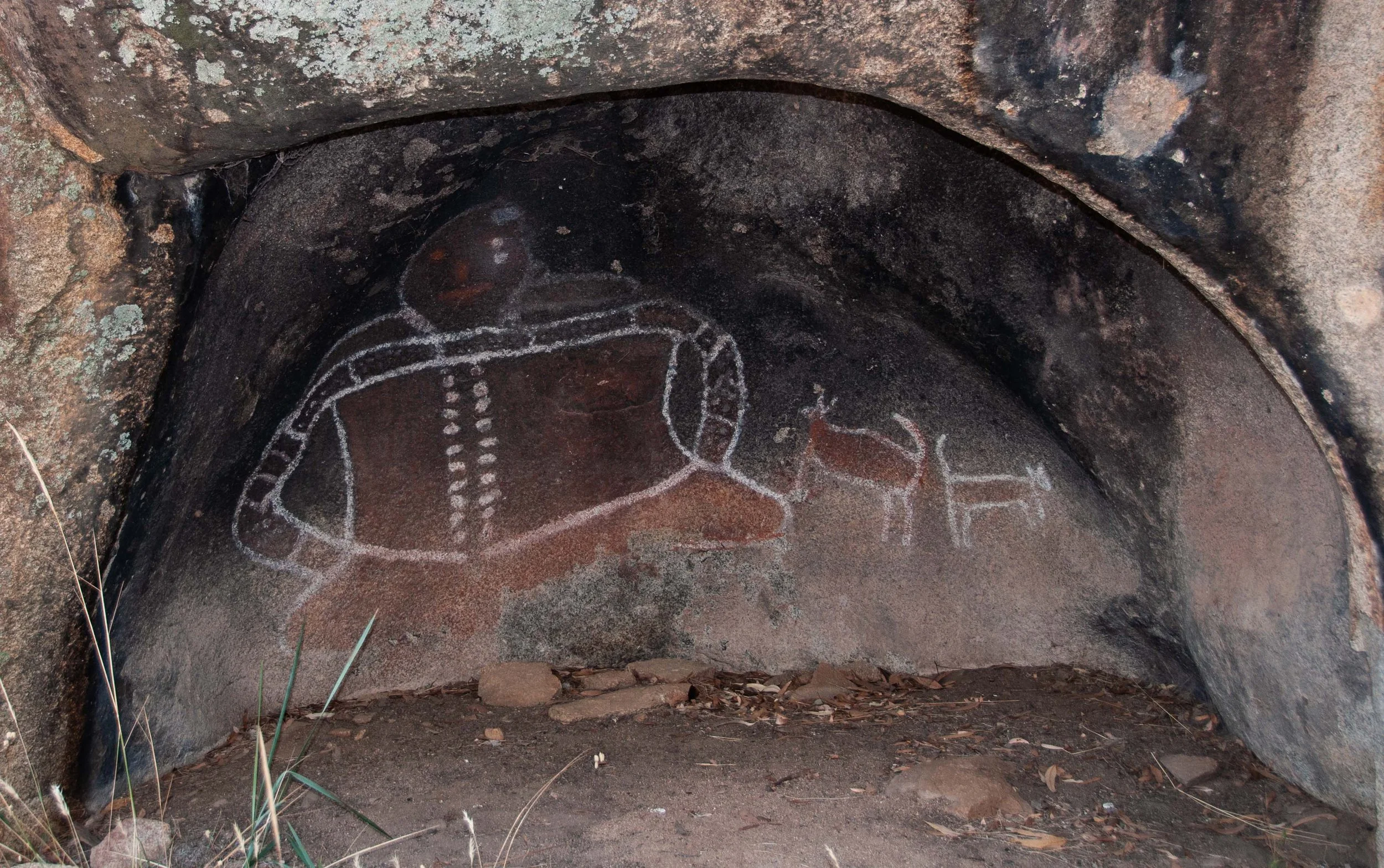
28. The Bunjil Shelter depicting Bunjil and two dingo
29.
We would love to go back to Hall’s Gap and really explore the Grampians. There seemed to be so much more to experience. From here we made our way toward the Great Ocean Road, that runs along the south coast of Victoria, hugging the clifftops.
Our next stop was the delightfully named town of Port Fairy. It is a fishing port built on the Moyne River estuary. A lovely town with a number of listed / protected buildings. Griffith Island lies at the mouth of the Moyne, is a protected area hosting a nesting colony of short-tailed shearwater. It was not breeding season but we walked the trail that encircles the island.
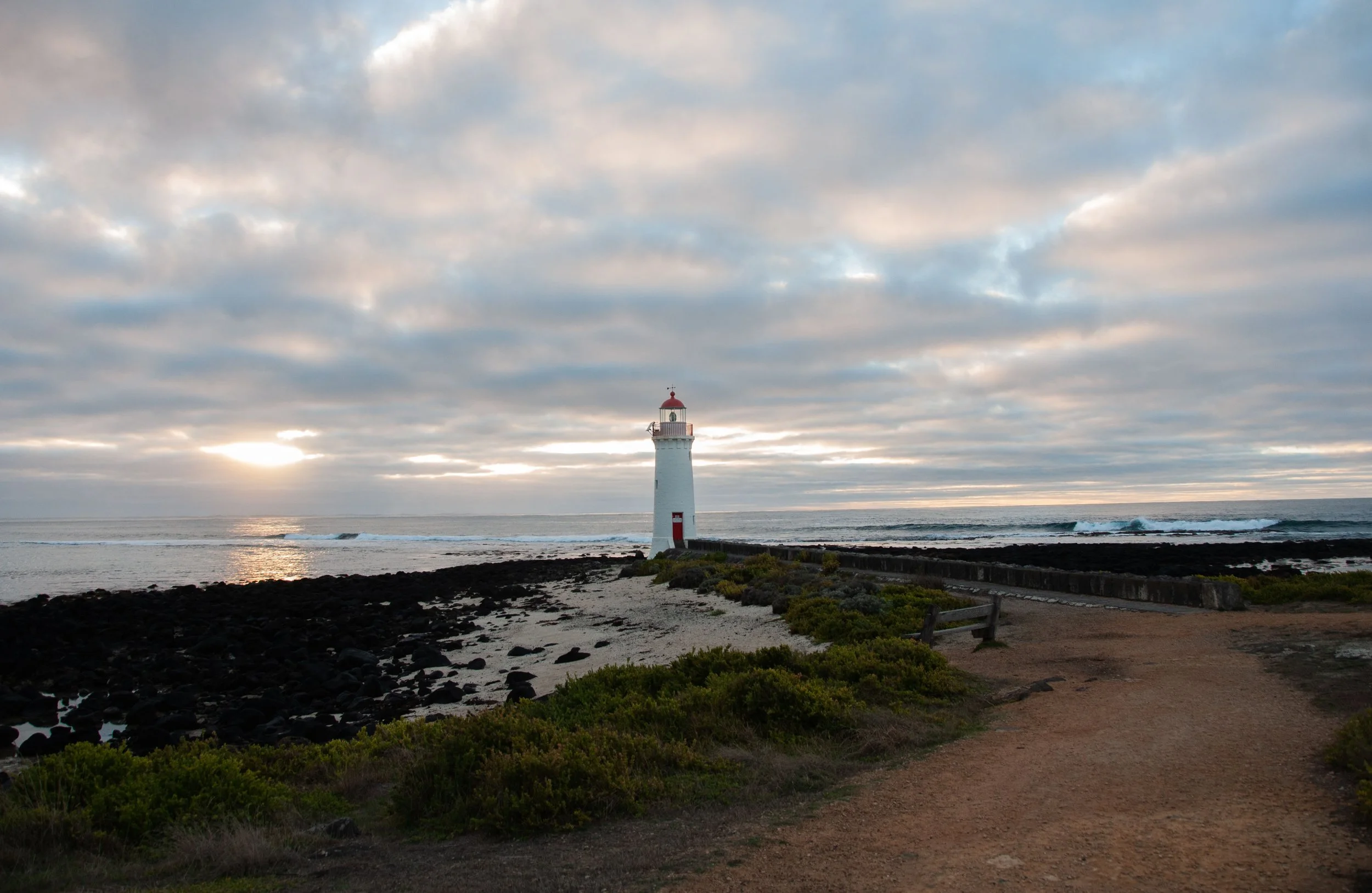
30. Griffith Island lighthouse at dawn
In spite of not seeing the shearwaters, we did see a number of birds new to me and had a good sighting of a pair of Nankeen Kestrel.
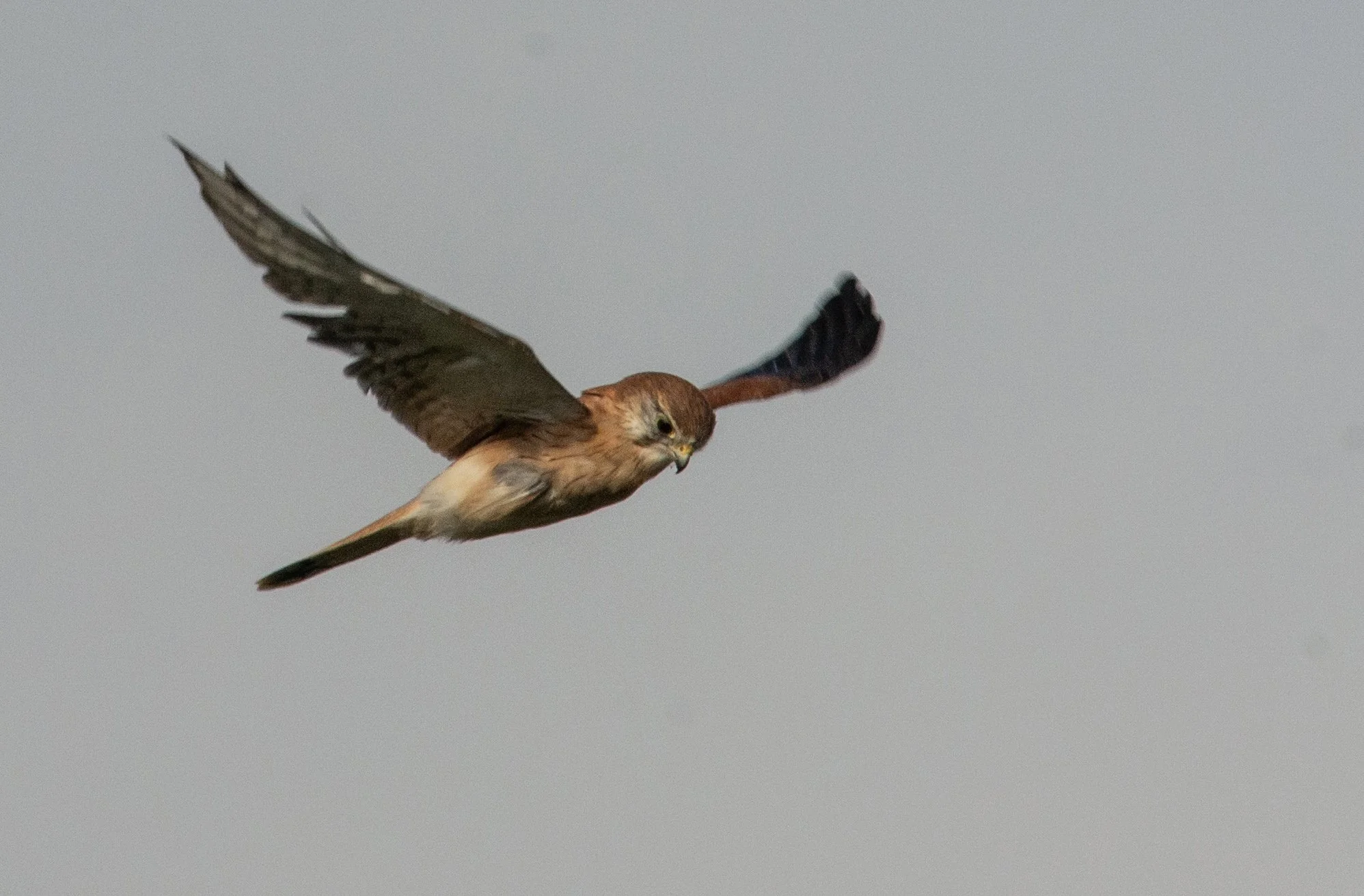
31. A Nankeen Kestrel hunting over the dunes
The Great Ocean Road is 250km long and runs the sandstone and limestone cliffs that are a feature of the area. The erosion of these cliffs has left a number of limestone stacks known as the 12 Apostles, although there never were twelve, but perhaps nine, and there only seven still standing.
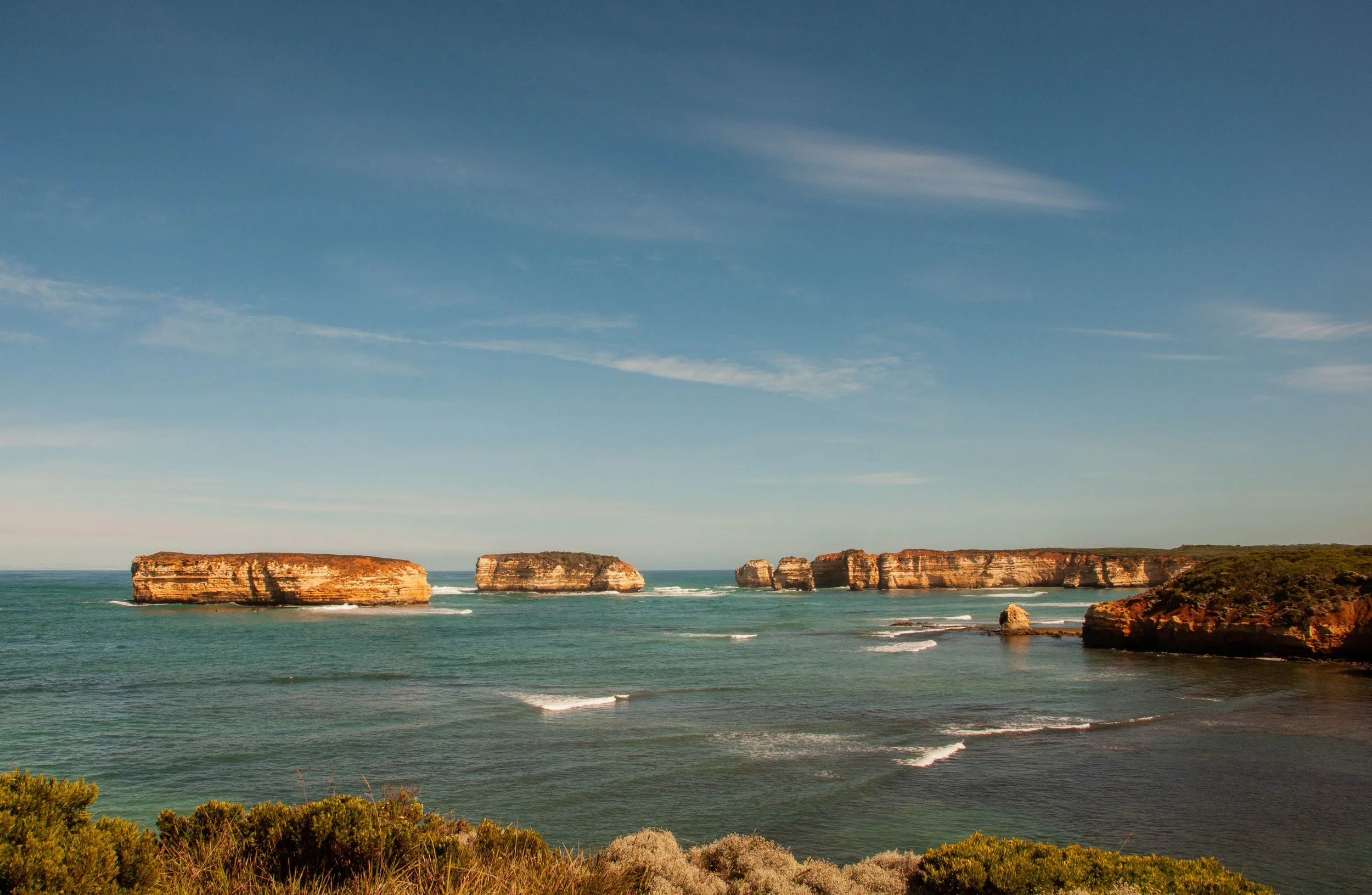
32. The cliffs run for kilometre after kilometre with isolated island stacks off shore
There are well-known surfing beaches along the coast and one of the most famous is Bell’s beach and we stopped there to watch the surfers. An international surfing competition was to be held there in the following week, and there were many surfers out getting to know the break.
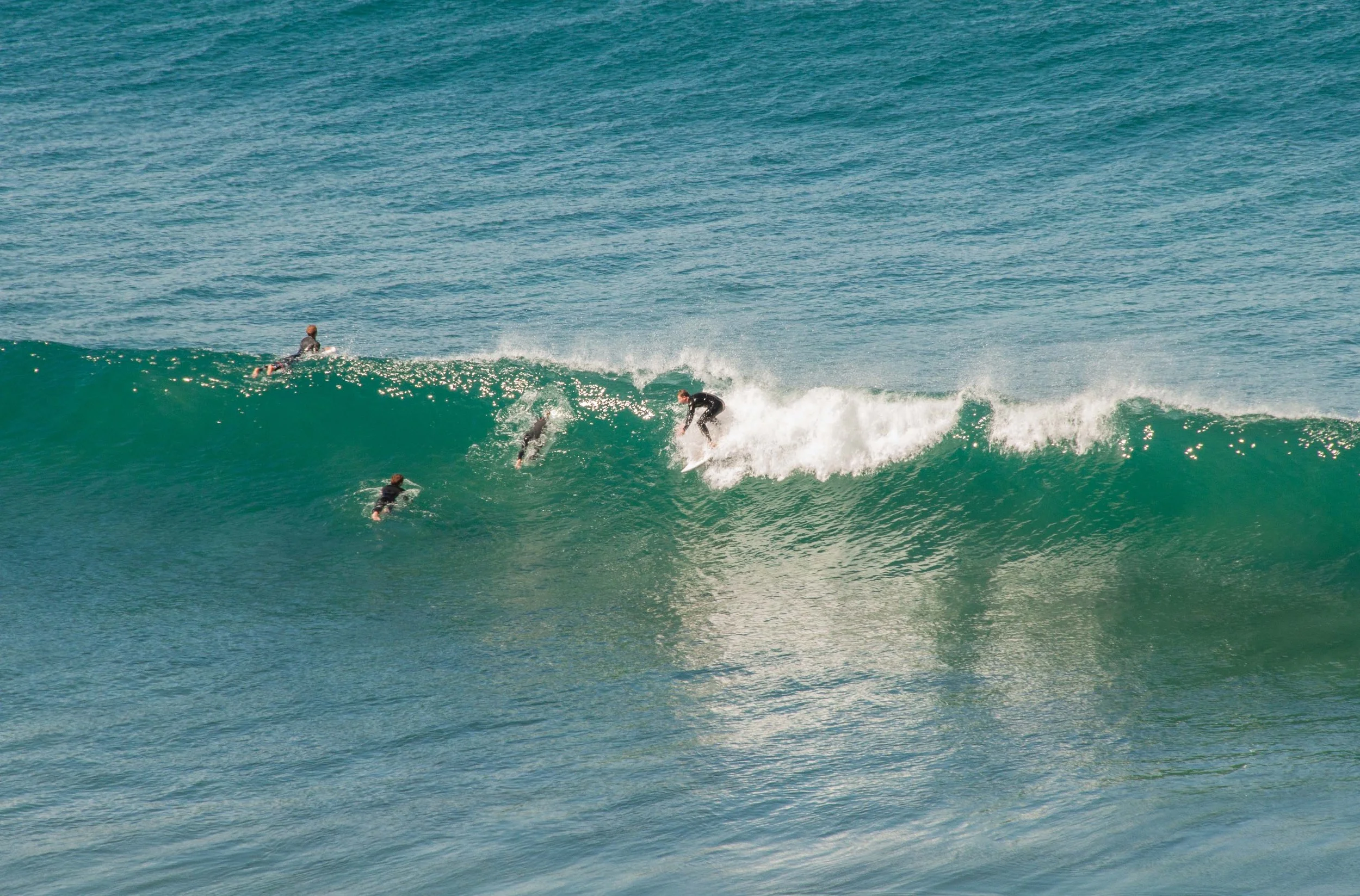
33. Lovely weather, perfect surf, what more could you want.
We had one further stop on the Great Ocean Road, at Apollo Bay where we arrived in the evening and left the next morning. Southern right whales come into the bay to have their young, but once again we were there at the wrong season for that. From there we drove through Geelong and finally to Melbourne
Melbourne.
Melbourne was rather a shock after our experience of rural and small town Australia.
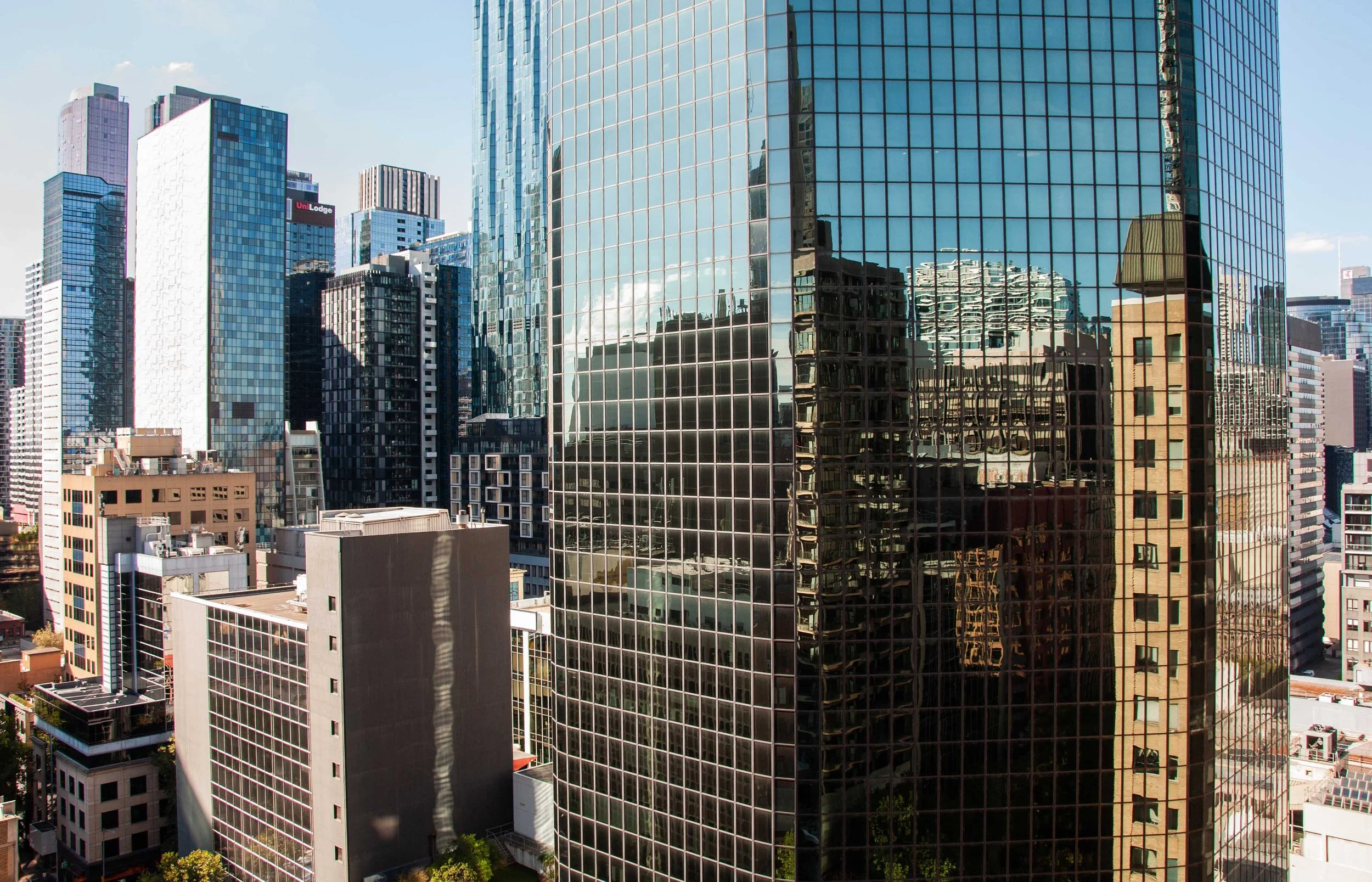
34. Melbourne is a large bustling city of glass; the view from our hotel window by day.
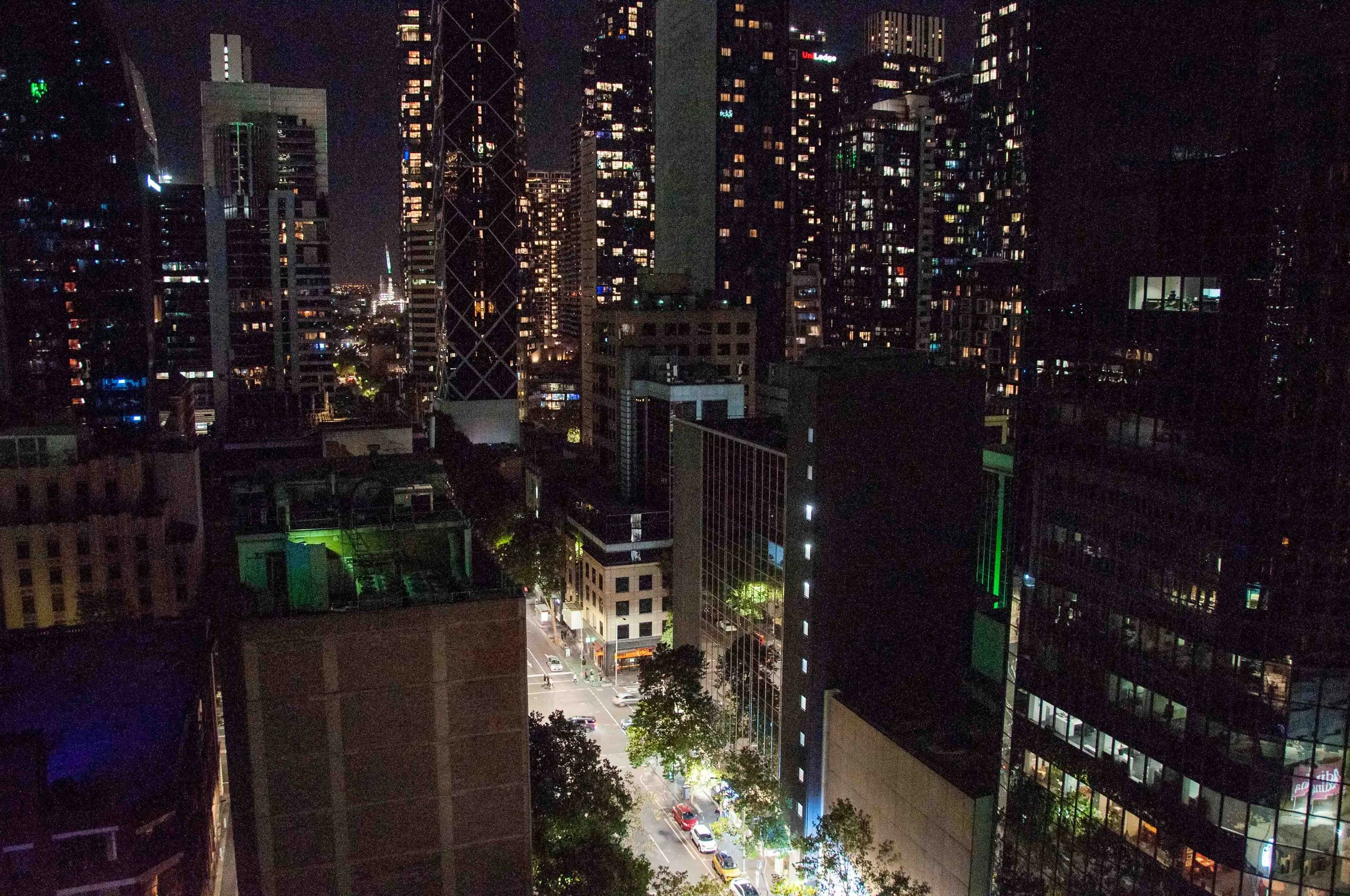
35. And by night. Not much in the way of energy saving here.
A bustling city of restaurants, art galleries and retail straddling the Yarra river, with the famous Melbourne Cricket ground, (MCG) a 20 minute walk from the city centre
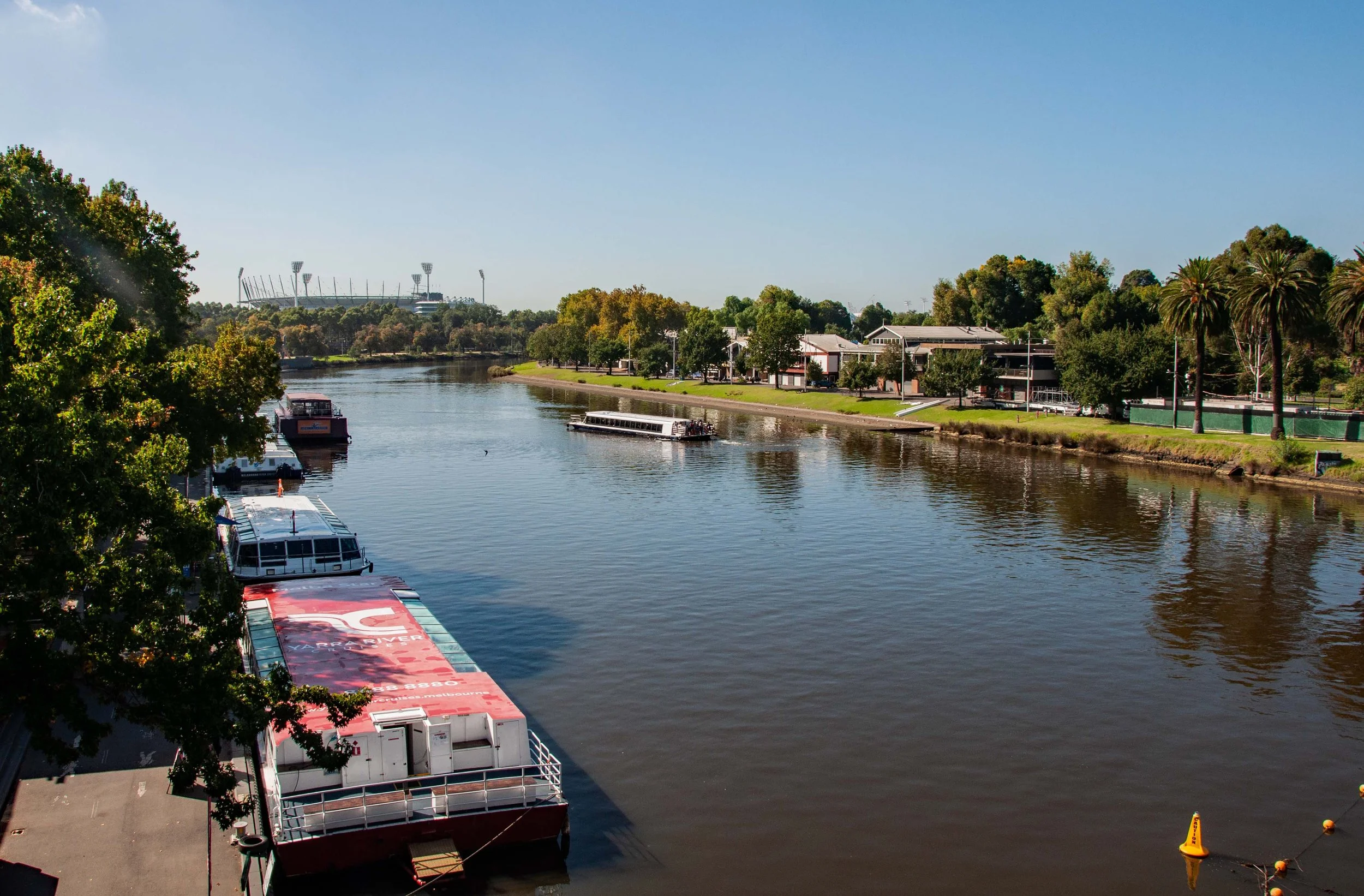
36. The Yarra river with the MCG in the background.
In the midst of all the optimism and aspiration, it was a shock to come upon this wall of photos commemorating 98 women who had been killed in Melbourne in 2024.
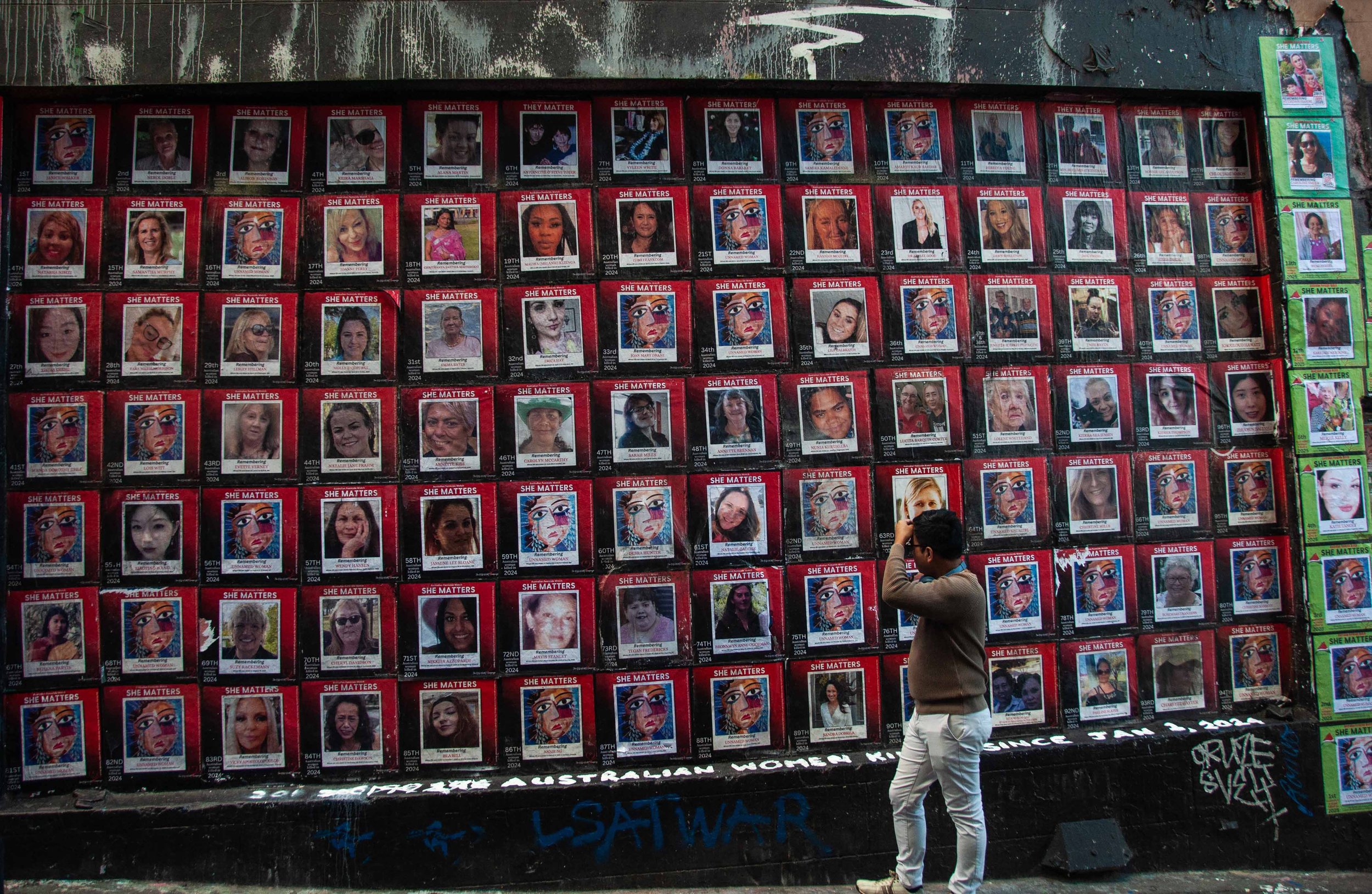
37. The red posters commemorate the 2024 victims. The green posters on the right are the first row of 2025 victims
Melbourne is a coastal city and like so many coastal towns and cities in the southern hemisphere, boating is popular recreation activity with marinas close to the city centre
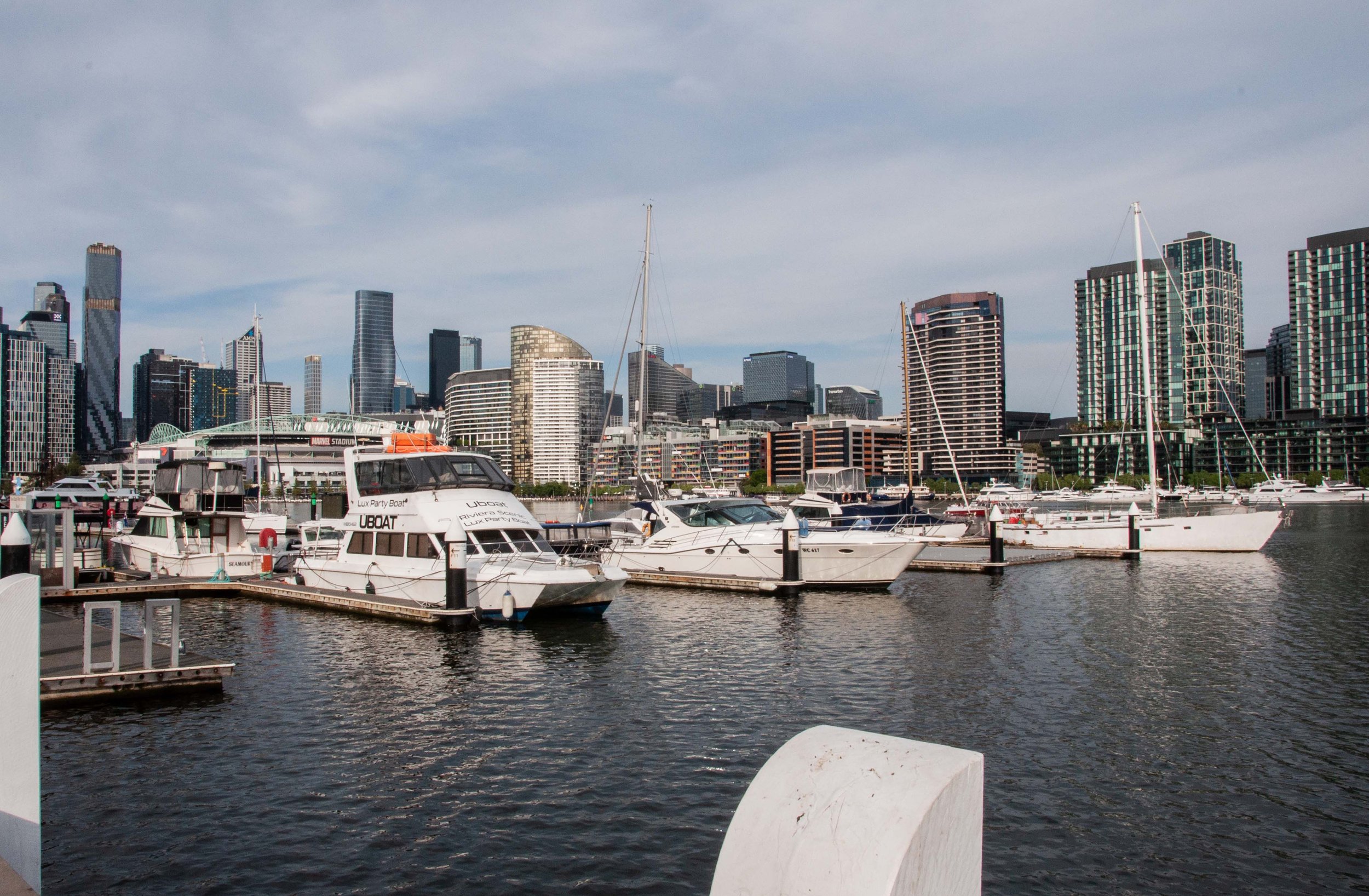
38. Surrounded by the architecture of a city centre, what my father memorably described as “floating gin palaces.”
As in the other cities we visited, we spent time in the state art gallery and again, were impressed by the exhibitions
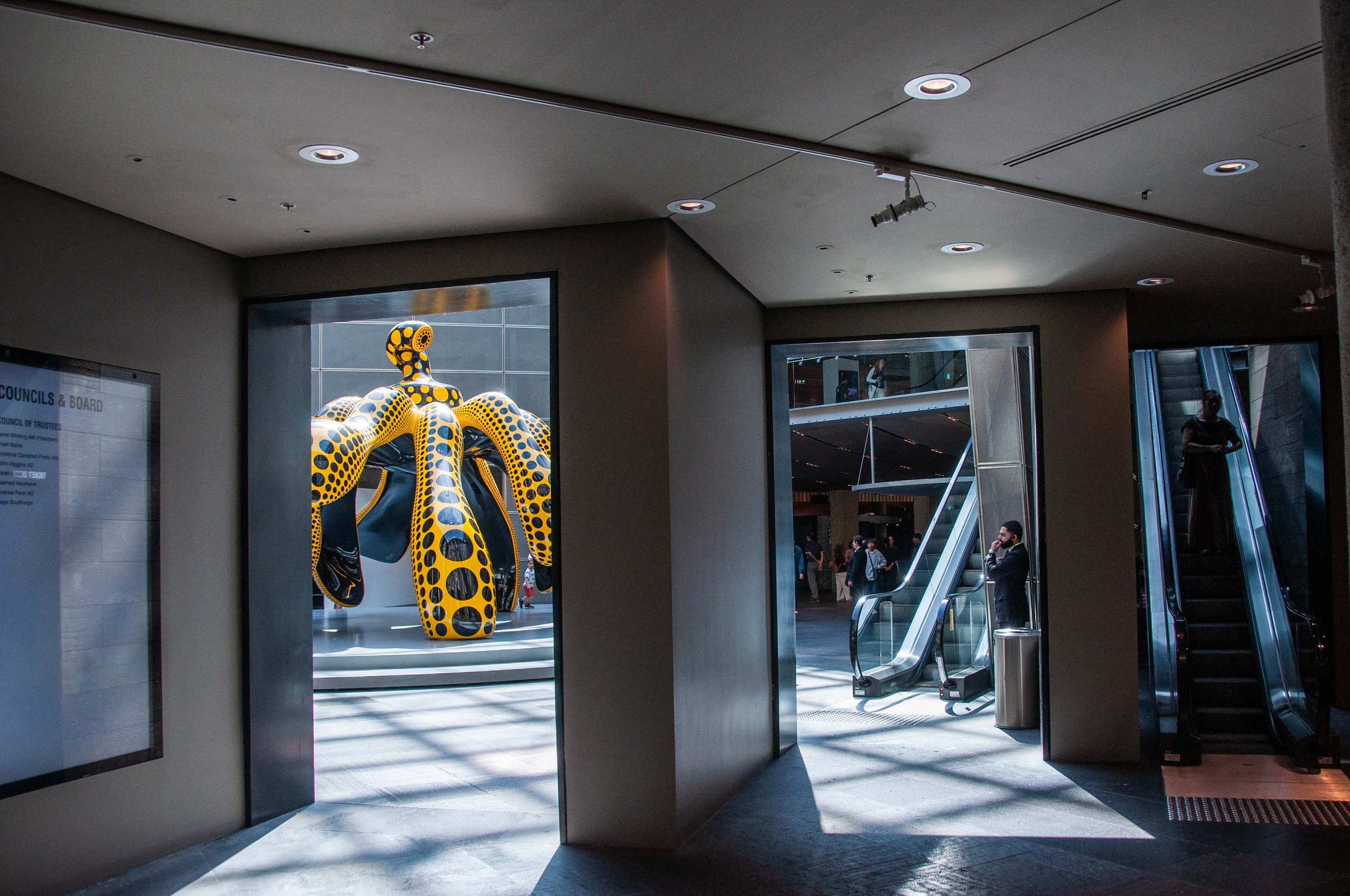
39. Inside the National gallery of Victoria
At the National Gallery there was an exhibition of Vivienne Westwood’s creations and her impact on fashion. Best summed up I thought by this quote as we entered the exhibition.
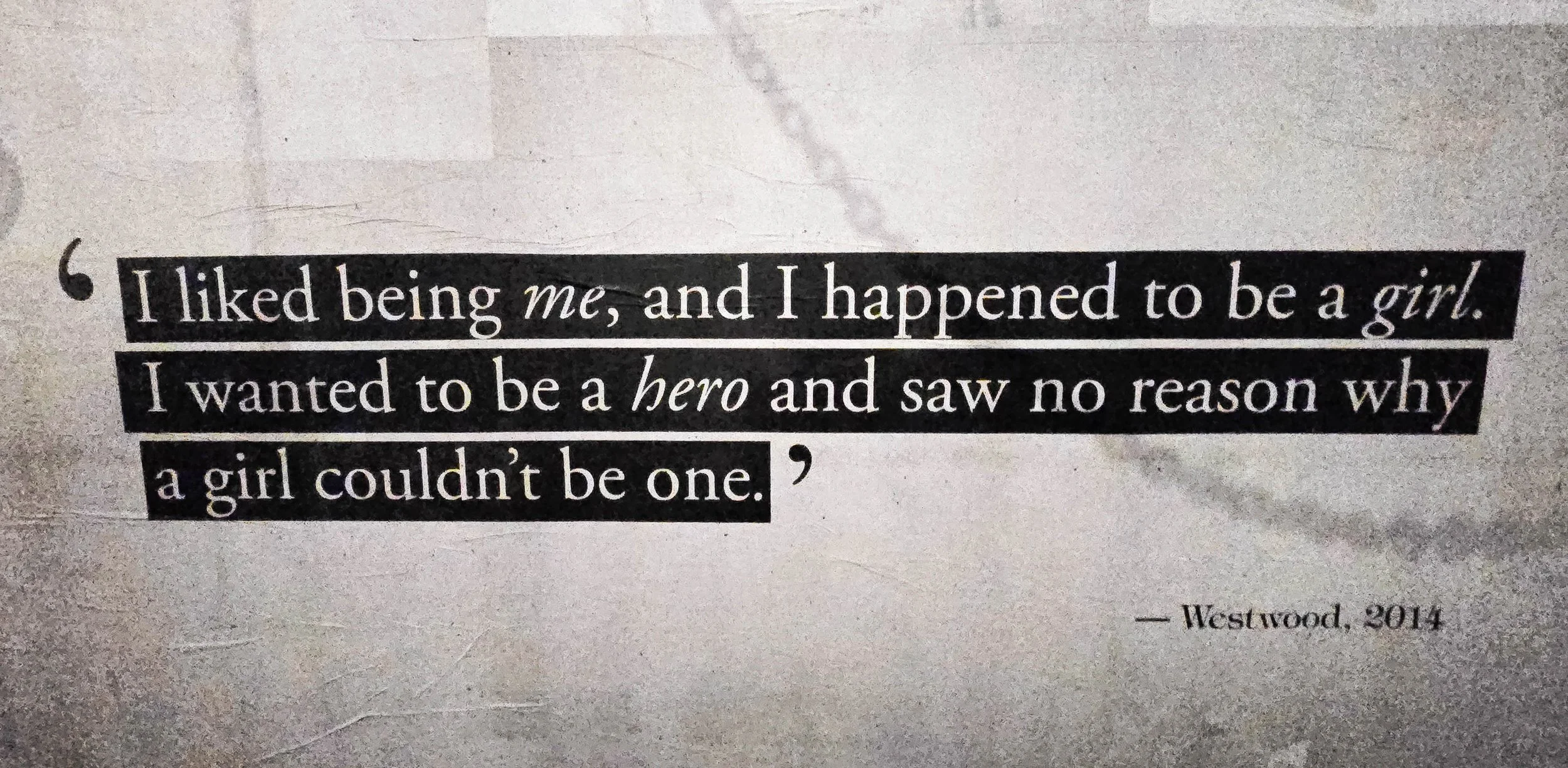
40. Westwood in her own words.
Chinatown in Melbourne is one of the biggest and oldest such districts in Australia. The food was, of course, excellent.
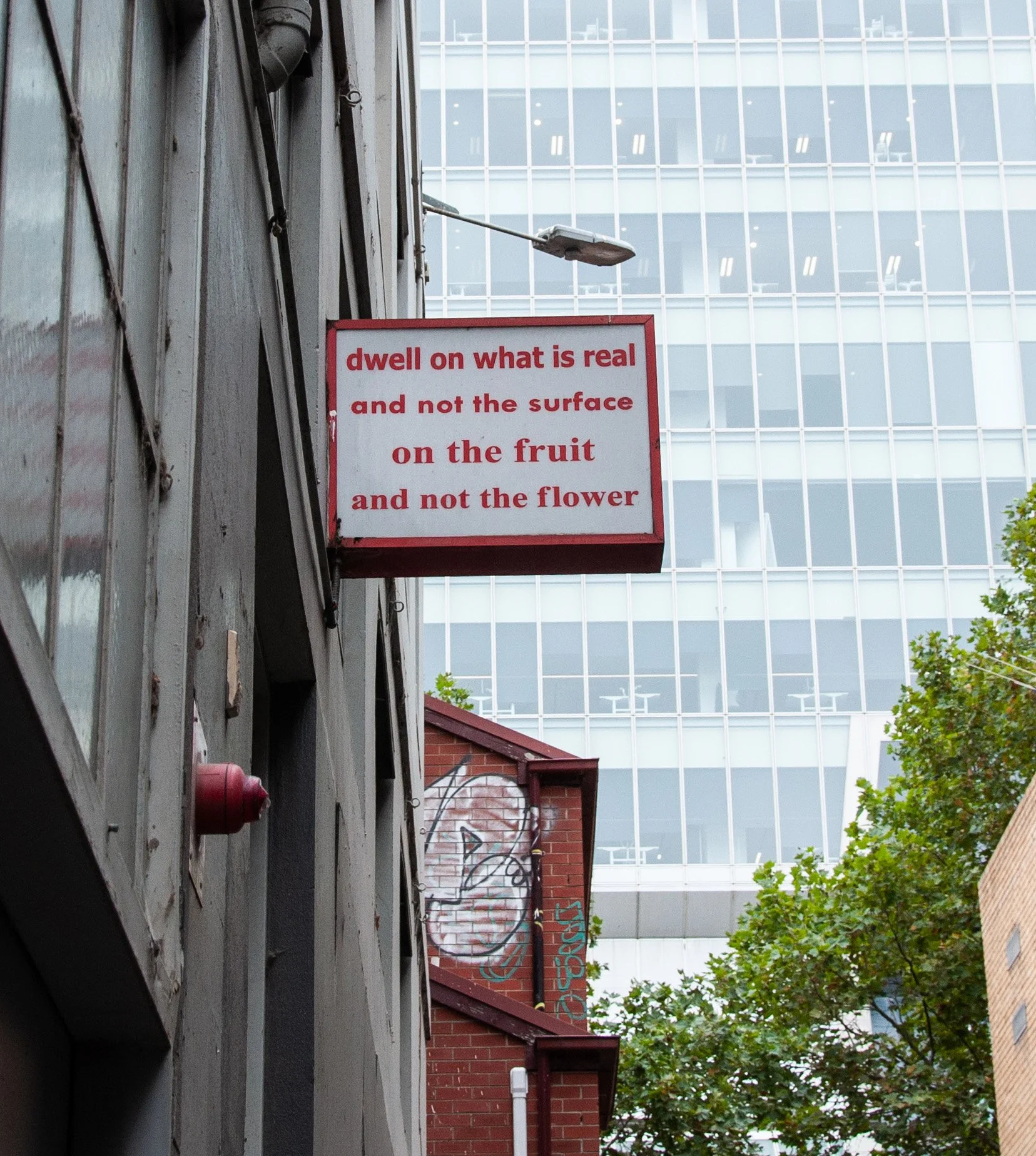
41. One of a number of rather gnomic messages on buildings in Chinatown
We visited only three states in the Southeast of the country, New South Wales, South Australia and Victoria, and briefly the Northern Territory in the form of Alice Springs, and most of our time was spent in cities and towns, so our view of the country is necessarily limited.
What struck us most about Australia was the feeling of self-confidence that we found everywhere, whether in the cities or the small towns we visited or passed through. The feeling that somehow, there is a culture being built; and that that culture is not an ersatz western European or Caucasian one, but of a nation of immigrants, with a population drawn from countries around the world, but clearly feeling itself part of the Pacific rim.
This was exemplified for us by the state art galleries we visited where emphasis was placed, it seemed, on presenting an Australian perspective to art, both national and international.
We were pleasantly surprised by the acknowledgement of the place and contribution of aboriginal culture and history to this endeavour. There is a long way to go and this is not to deny that there are ethnic tensions within the country, but that in our limited and brief visit, we were not overtly aware of this.
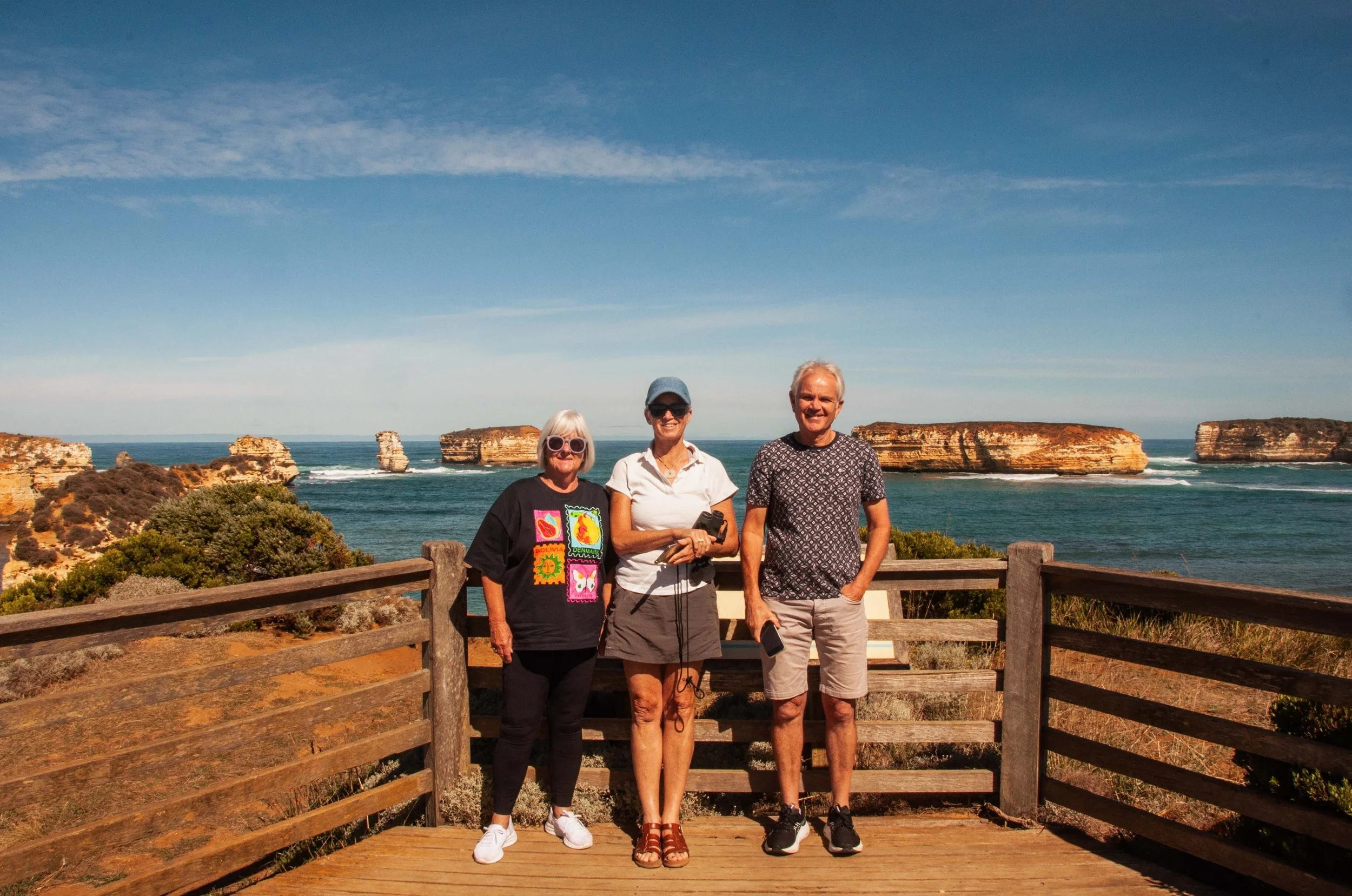
42. The band of happy travellers in the land of sunshine.