The Azores are an isolated group of nine volcanic islands about 1600 km from Europe and Africa. They were discovered and settled by Europeans in the early 1400’s. Historically they were strategically important as a resupplying stop for sailing ships travelling west across the Atlantic, and those travelling south, down Africa. The islands arise steeply from the sea, and Mt. Pico at 2351m. is the highest peak in the Azores.
Before the arrival of settlers the islands were covered in a mist or cloud vegetation and forest. Most of this was cleared for agriculture and plantations of introduced trees. Exotic plants have displaced most of the indigenous vegetation What survives today is a much impoverished vegetation of shrub forest and some surviving peat bogs.
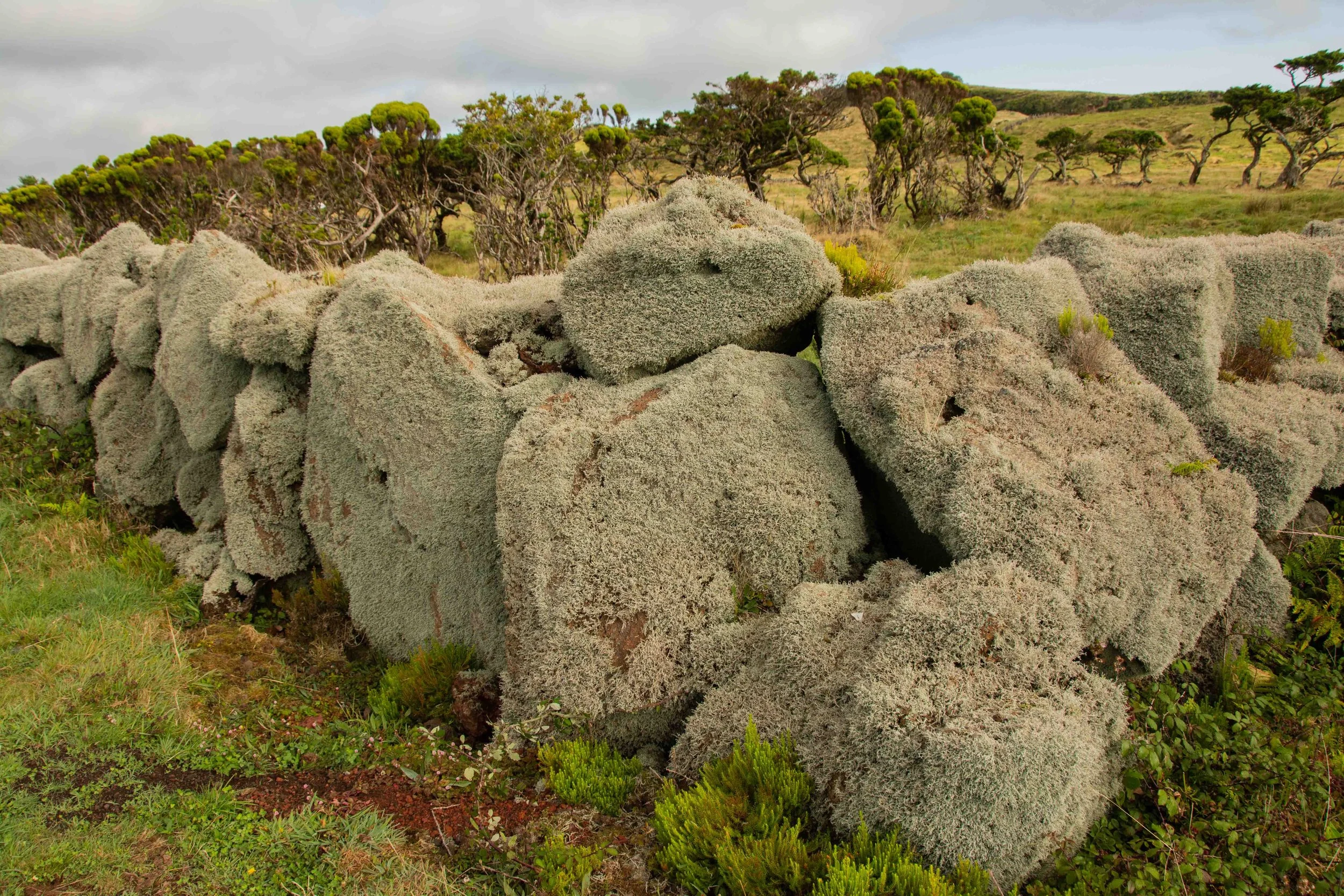
1. Lichen covered stone wall with what I think are juniper bushes in the background, the remnants of the shrub forest.
When Europeans first settled the islands there were seals but they were exterminated by fishermen and the only mammals, besides whales and other marine mammals, have been introduced by settlers; the usual suspects, hedgehogs, stoats, weasels, rats and mice that have done so much damage around the world, and agricultural livestock.
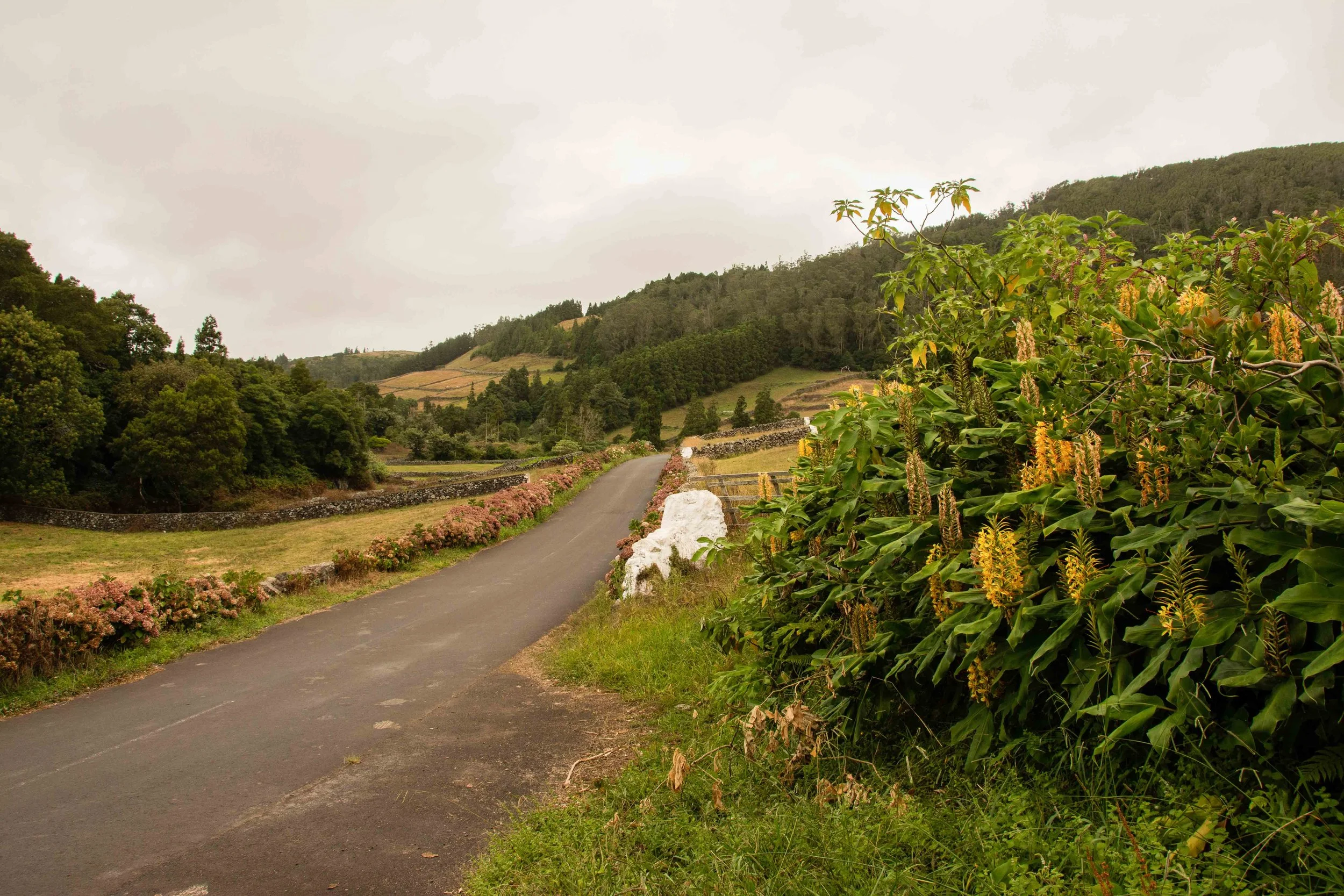
2. Almost every plant in this picture is an introduced species, Hydrangeas on the left, ginger on the right. The forests in the background are Japanese Cedar
The real biological diversity is found in the deep waters and underwater peaks. Unfortunately we did not go diving, however we did go on a whale watching trip. Maybe on the next visit?
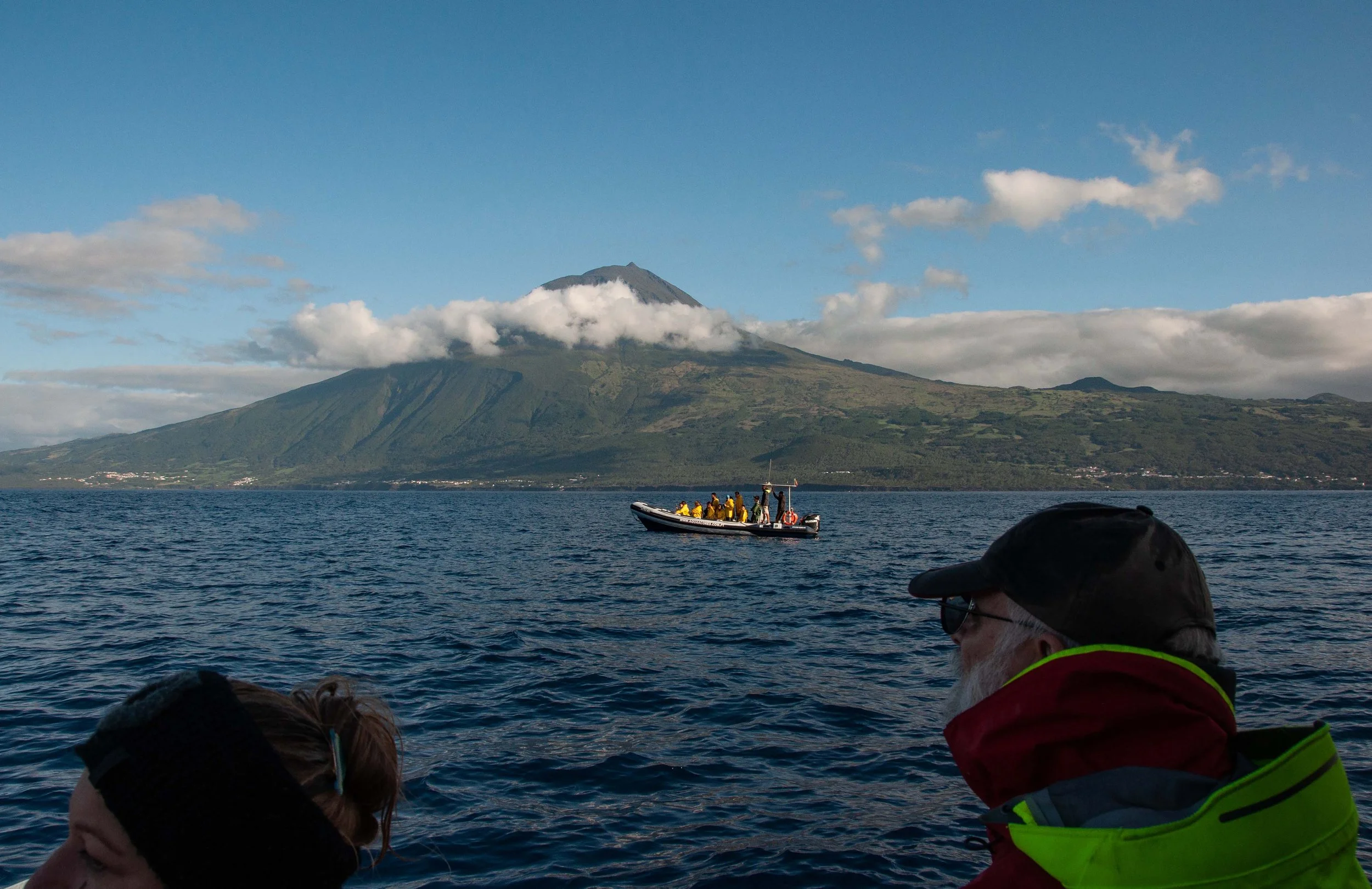
3. The impressive Mt. Pico seen from the whale watching boat.
We also visited 3 different museums dedicated to the whaling museums, (whaling was banned in the Azores in 1986). We, or at least I (Chris), was really impressed by the beauty of the whale hunting boats.
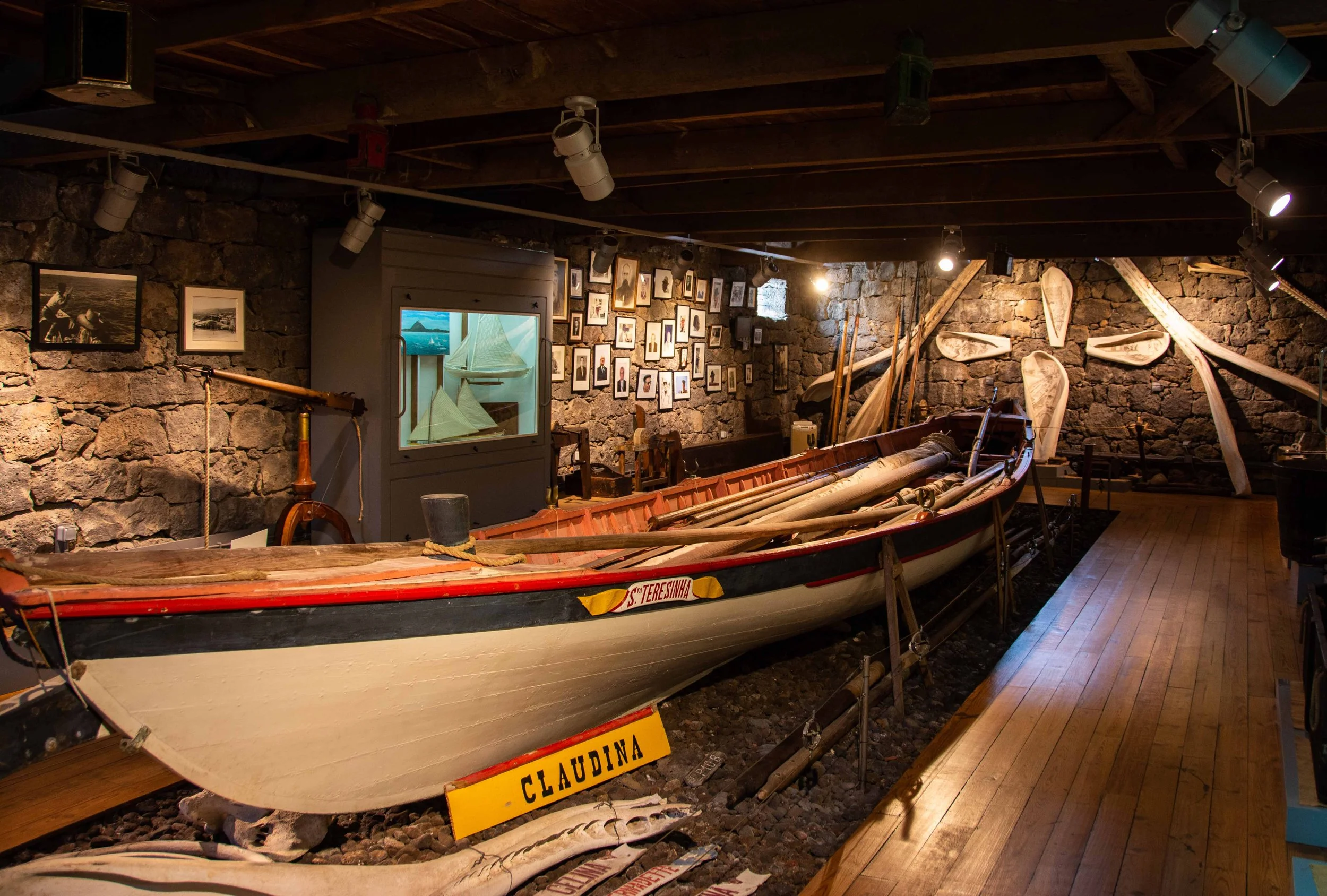
4. An Azorean whale boat So delicate in appearance , a beautiful design and completely functional
These boats were 11.5 metres long but only 2 metres wide at the widest. The boats were rowed out when whales were spotted offshore although sails were used, conditions permitting.
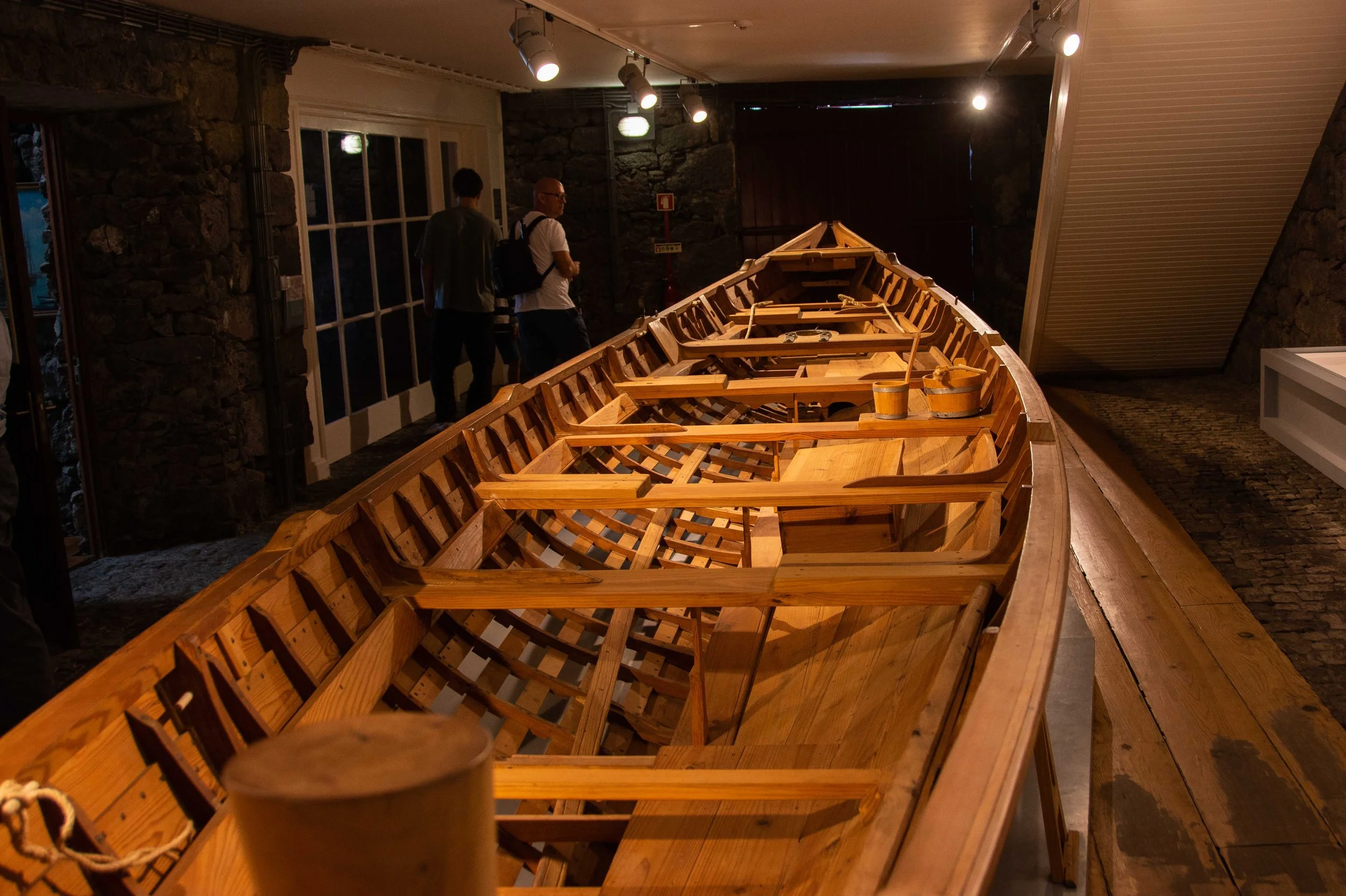
5. Beautifull, hand made, and wonderfully seaworthy, replicas and survivors of these boats are still sailed in regattas.
The highlight of the day was the whale watching. The Azores are part of a whale migration route and up to 21 species of whale and dolphin are regularly seen int the Azores depending on the season.
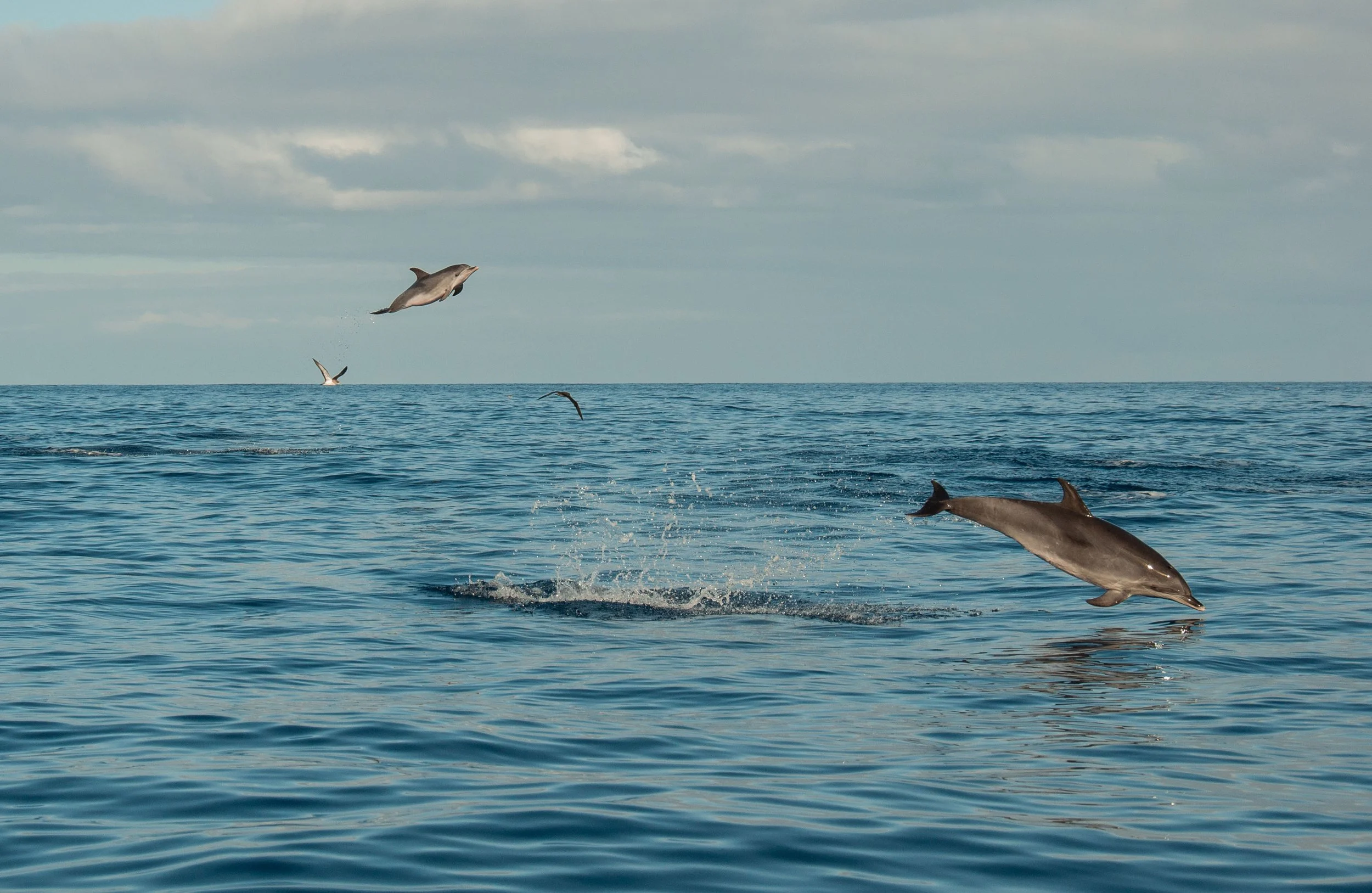
6. Spotted Dolphin. I know this photo looks so perfect it almost looks faked. But it wasn’t, I promise you. Even the distant dolphin so high in the air.
We saw 5 of those species and felt the trip to be a great success, Sperm whale, Sei whale, Bottlenose dolphin, Short-finned pilot whale and Spotted dolphin.
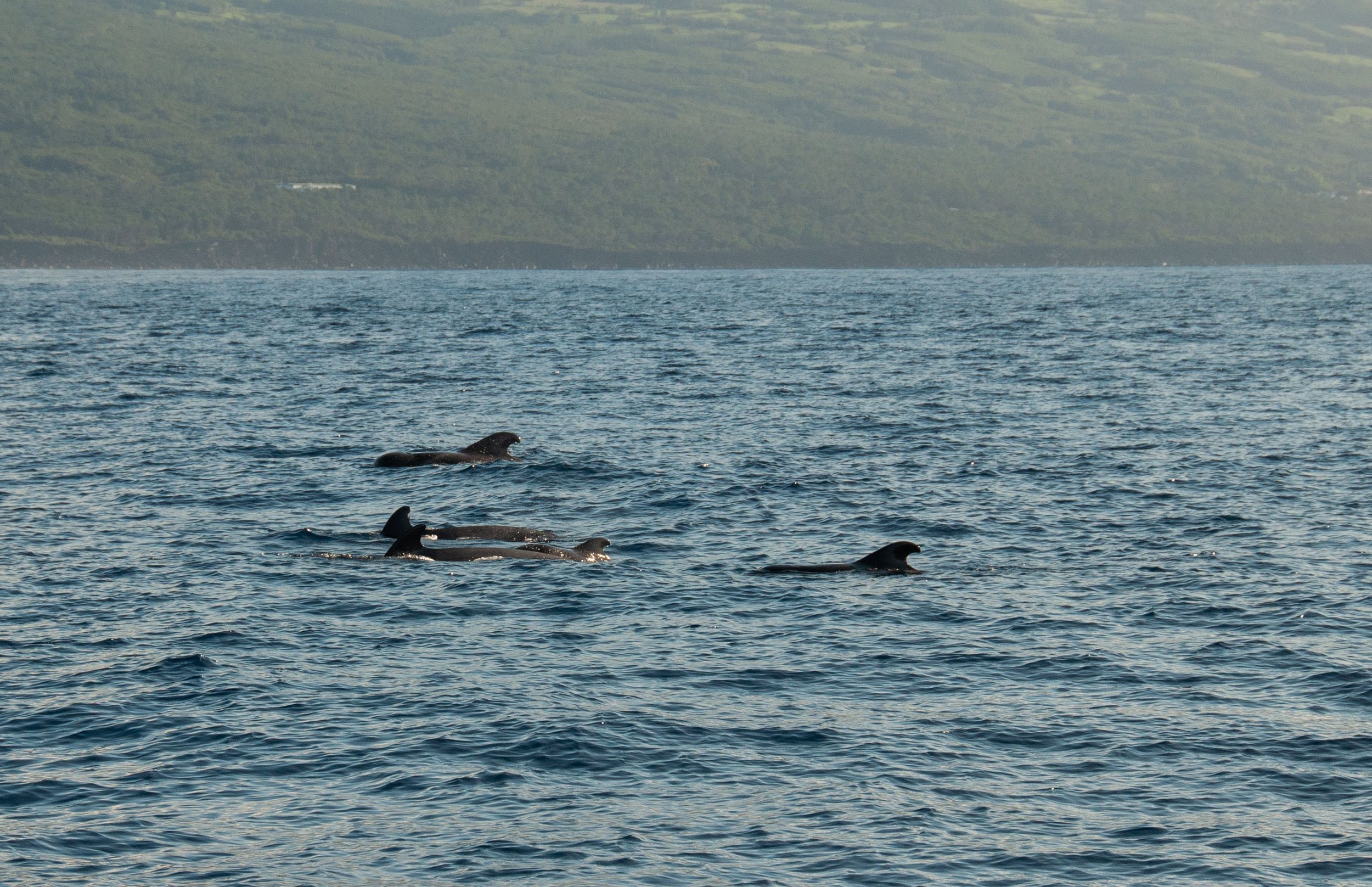
7. A small pod of Pilot whales
Once you see these majestic animals up close, we really have to wonder at the killing of these wonderful for a few buckets of oil.
Seabirds were everywhere, a testament to the productive waters of the Atlantic. Cory’s shearwater, a rarity, was a highlight for the birders.
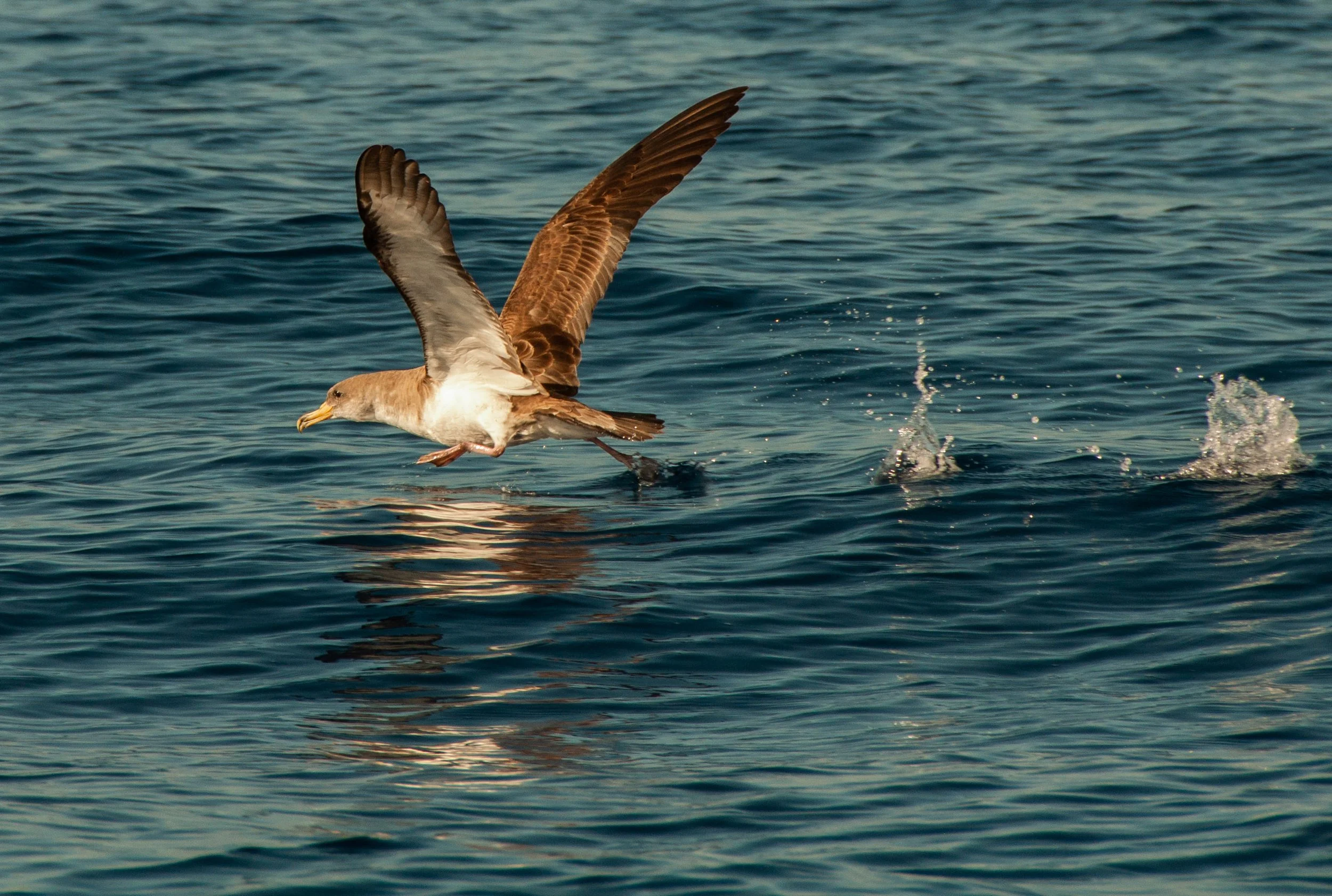
8. A Cory’s shearwater disturbed by our boat
Although Azores is geographically isolated, there are few endemic birds on the islands, unlike the Galapagos Islands. Of these, the Azores Bullfinch, known locally as the Priola, is the most noteworthy, and found only in the northwest laurel forests of Sao Miguel. Unfortunately we never managed to see them. We did, however, see the Azores Chaffinch (F. morletti), now recognised as an endemic species.
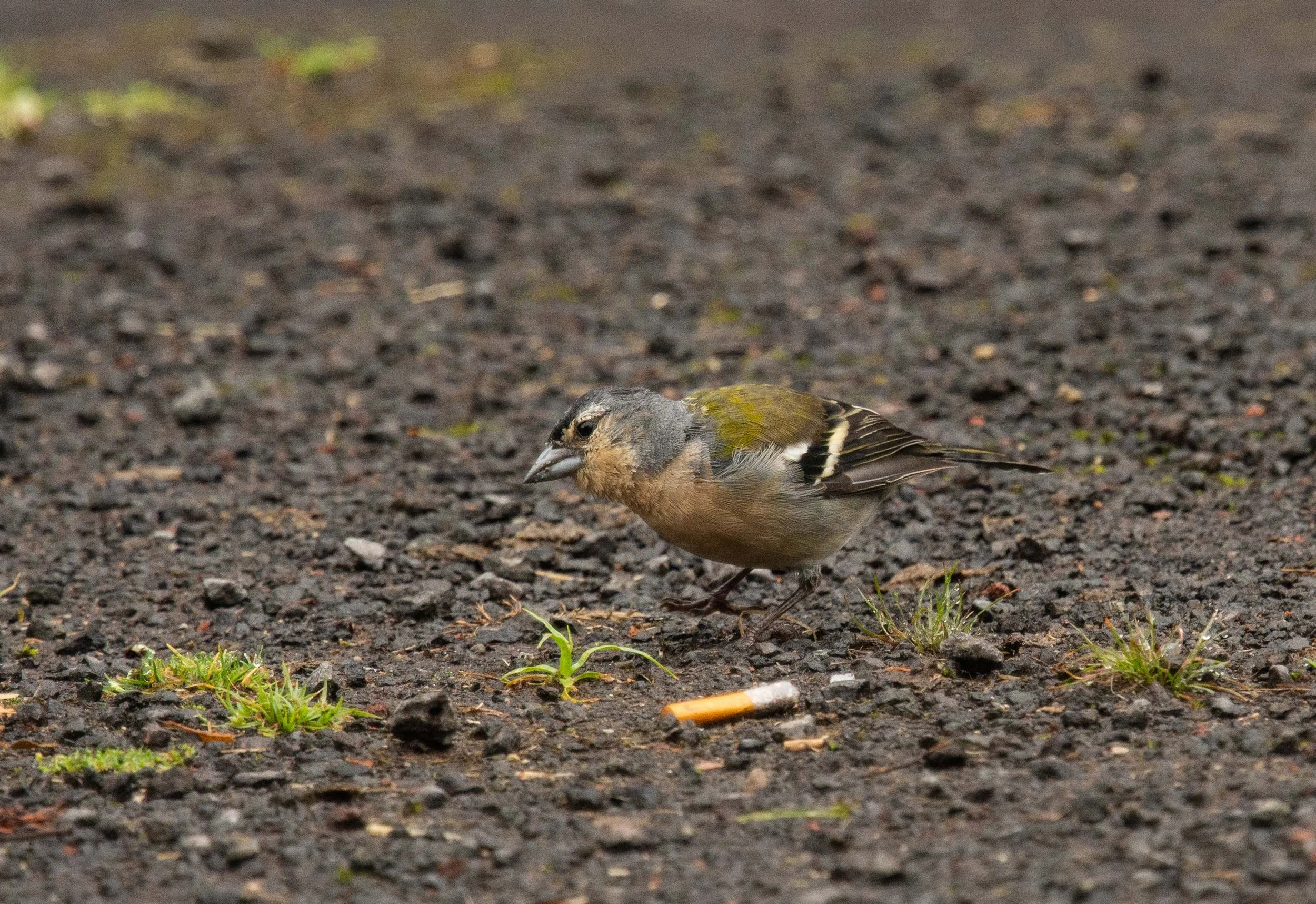
9. An Azorean Chaffinch examining a cigarette butt. Is it edible? The Chaffinch seen to be a little duller in colour than their European counterparts.
There are also 2 subspecies recognised for the Azores, the Sao Miguel goldcrest and the Azores woodpigeon.
The islands are an important stopover for birds on their annual migration. We were there at the right time to see hundreds of Grey Wagtails. They were found in every habitat, from seashores to the high grasslands.
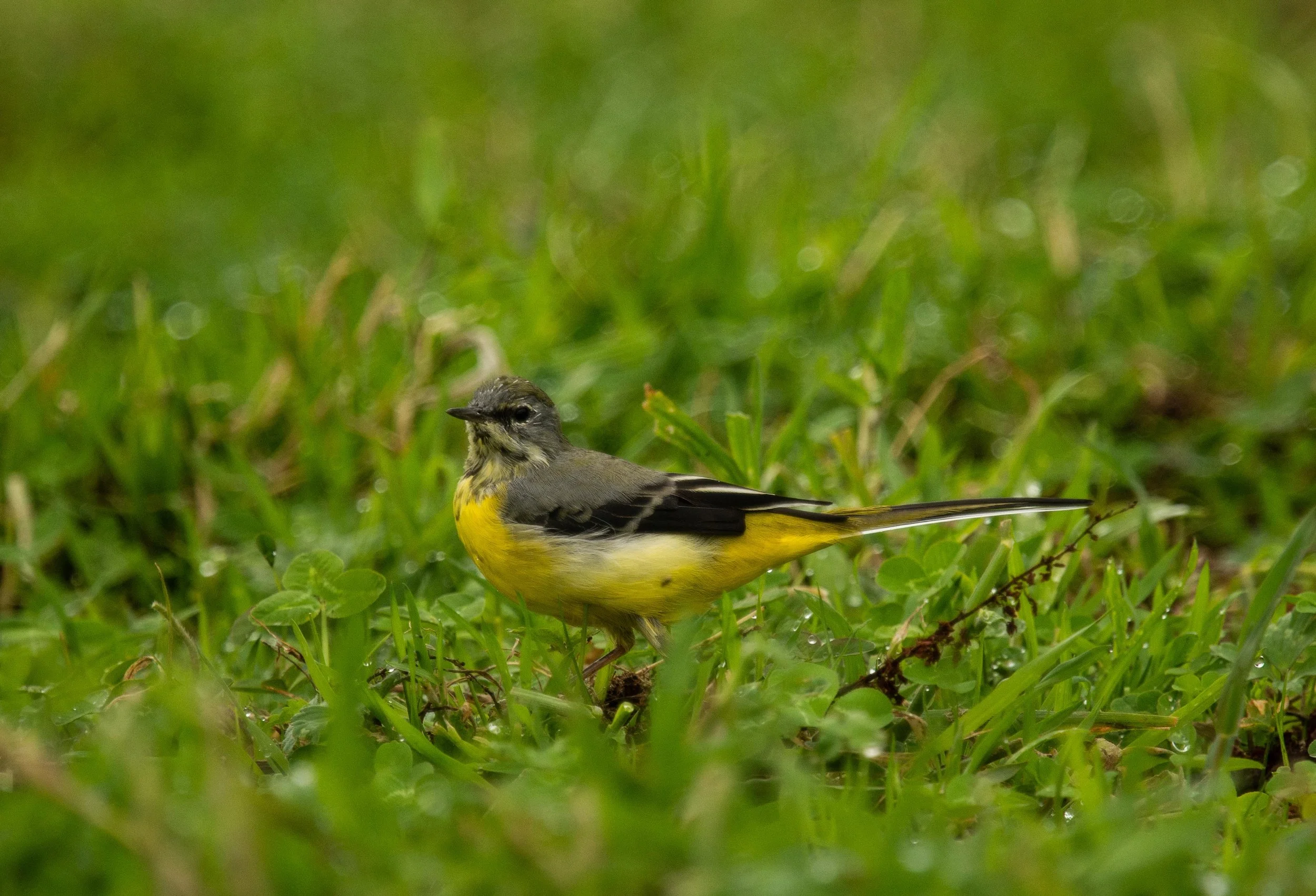
10. A Grey Wagtail in the highlands
And along the shore, sanderlings were common, turnstones were widespread but not in large flocks, at least while we were there, and a few godwits.

11. A Sanderling sorting through the debris along the shoreline
Moving on from birding, the Azores are Roman Catholic and almost every village seems to have at least one church. These churches are traditionally white and trimmed in one of two dominant colours, black, usually the natural black of the basalt building stone
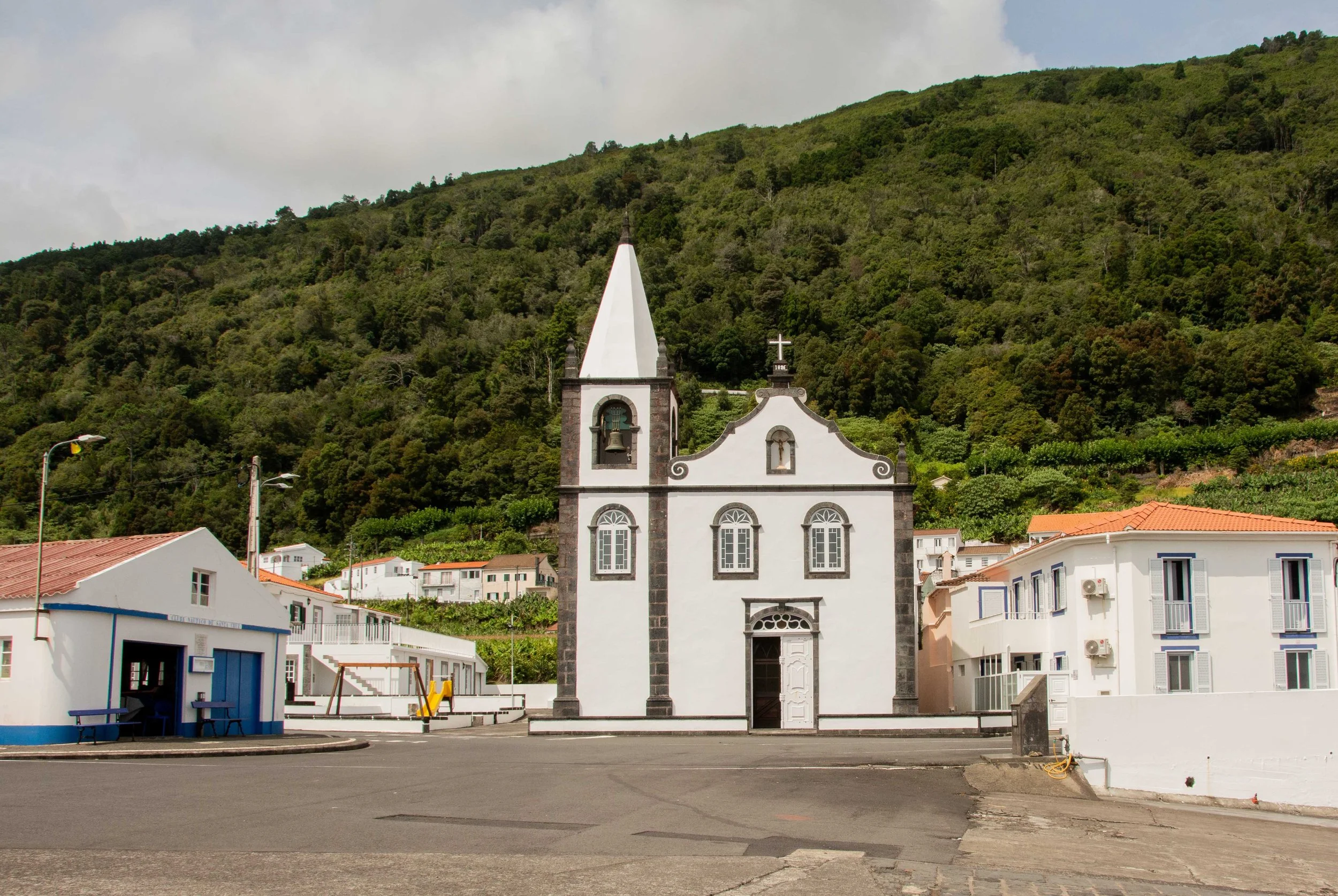
12. Black
and blue.
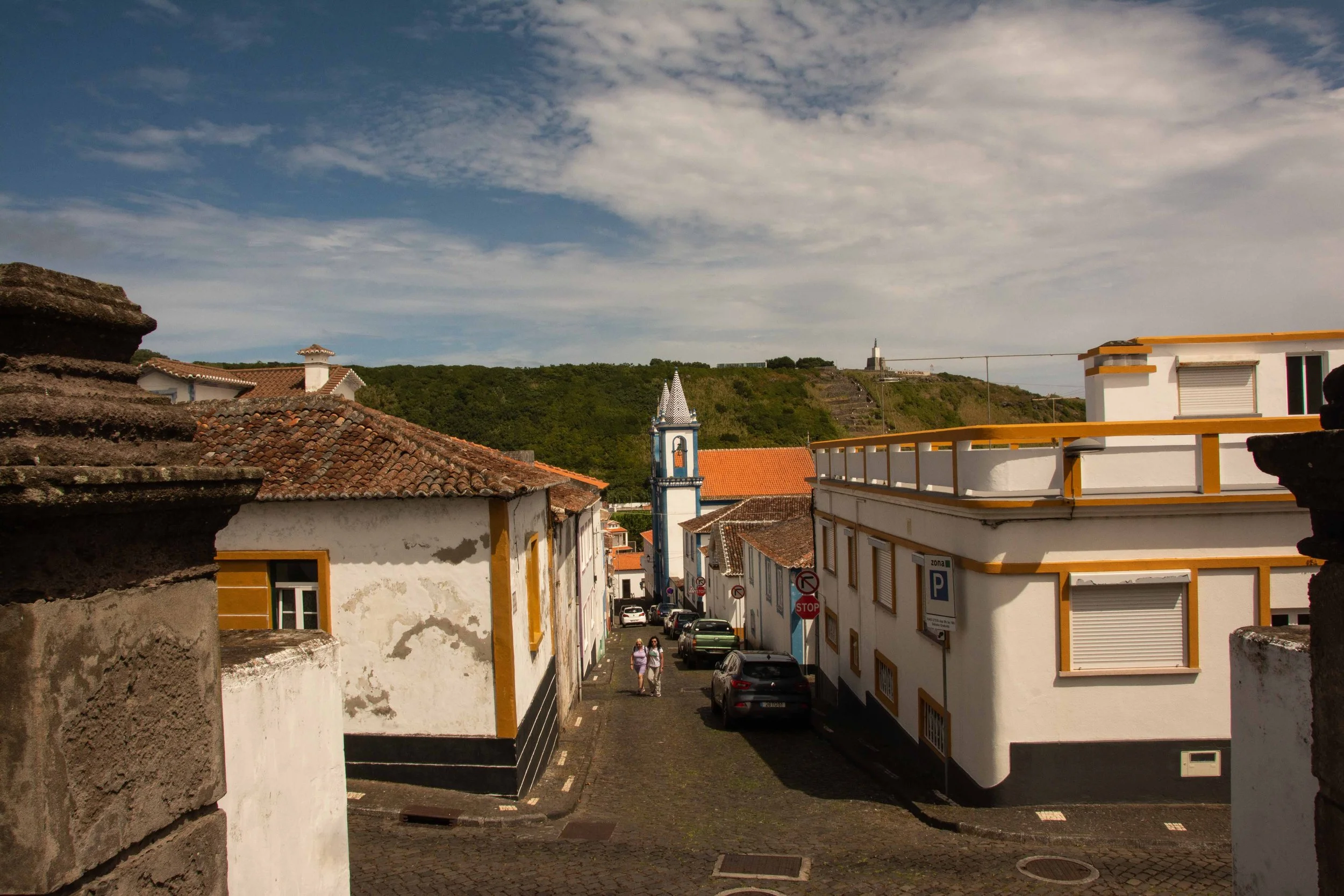
13. Blue, in the background down the street
For the larger, more important looking churches, a yellow-gold seems to be a strong choice as well.
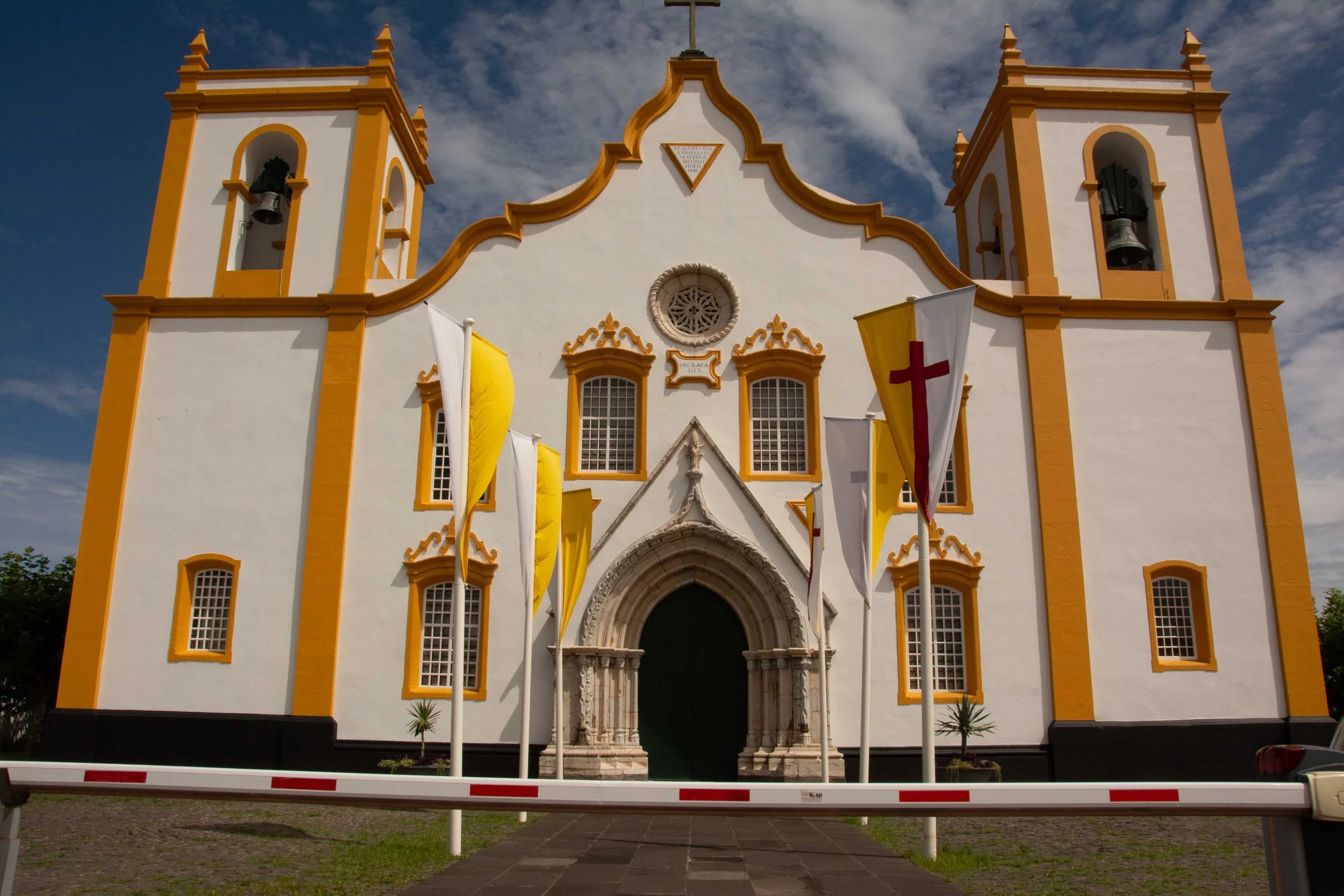
14. and gold
We wondered whether the colours represented any doctrinal difference, but it seemed to be more informal matter of taste. No matter they add a splash of colour, unlike the dark and sombre churches common in northern Europe.
AND FINALLY
The Mystery of the Cranes, Solved
Wherever we went, particularly in Terceira and Pico we were initially mystified by the little cranes on the walls and wharfs at the many small harbours.
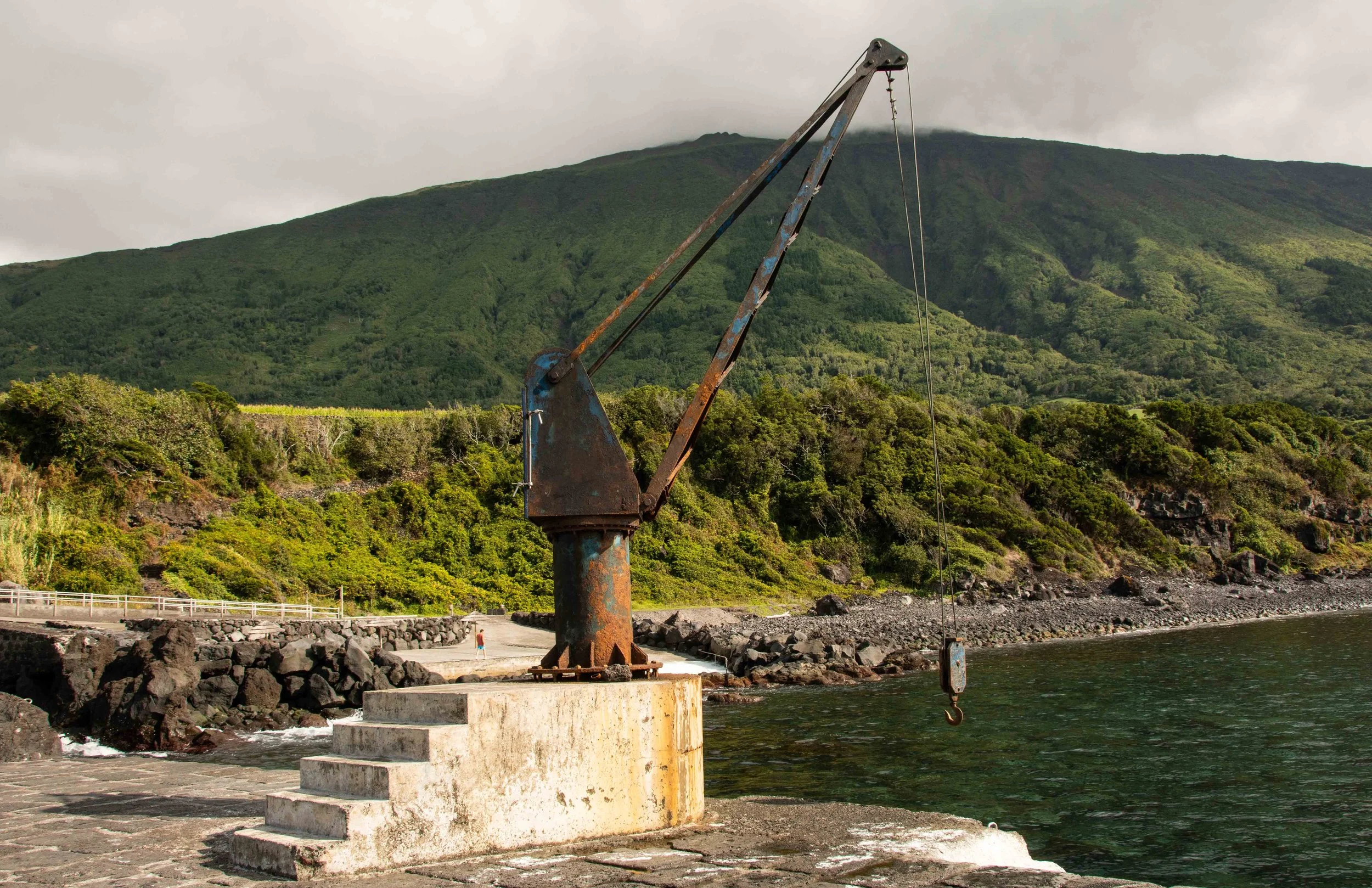
15. Every small harbour seemed to have a small, rusting crane like this one. A mystery, what was their purpose.
Most of these harbours had slipways and initially we thought that the cranes might have something to do with the previous whaling industry. And then, at Pico we had the opportunity of watching the crane in action right outside our B & B.
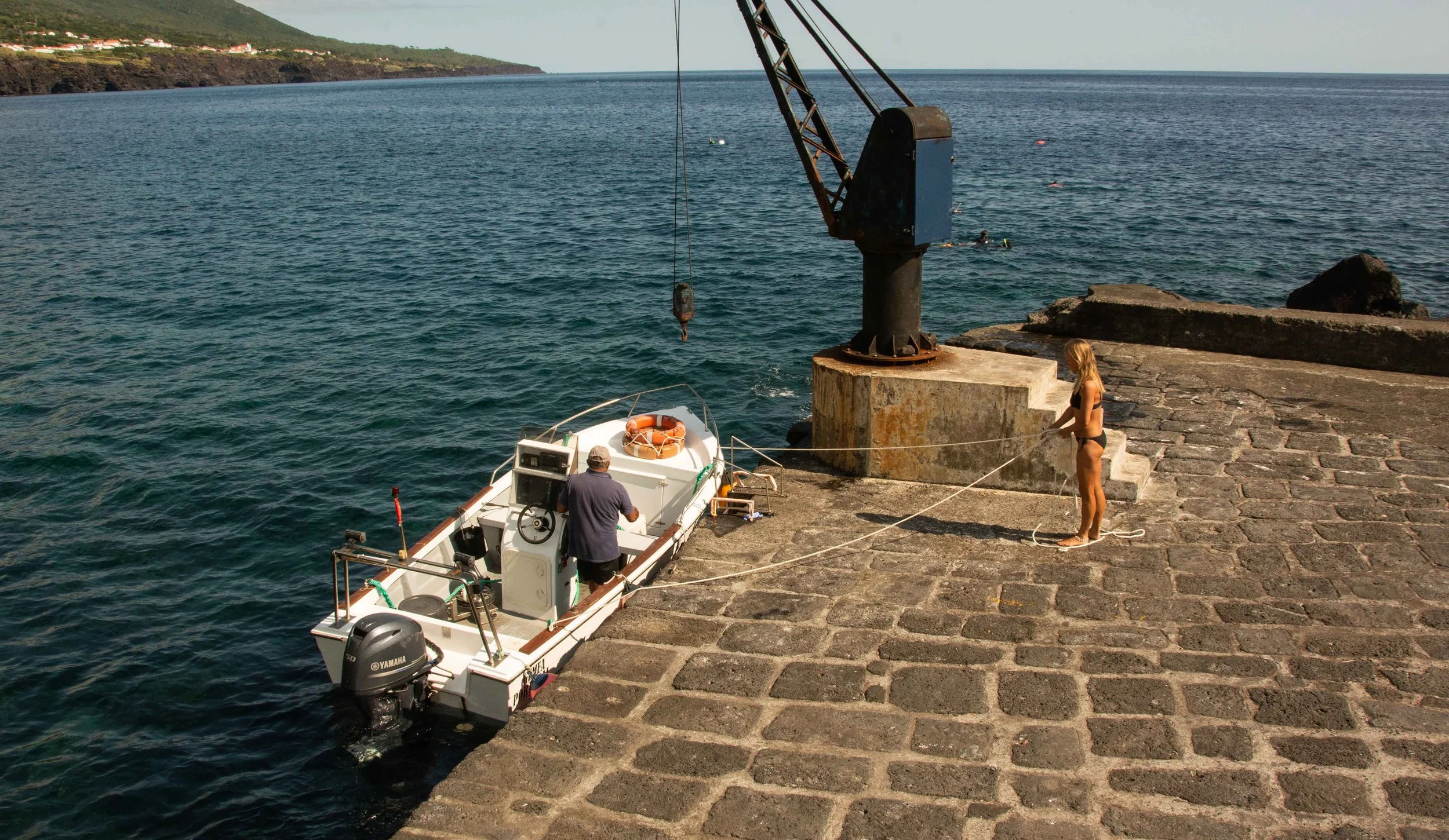
16. A boat returned from a day fishing and help arrives from a landlubber
The crane was swung round and hooked up to the blue rope which was attached to the bow and stern of the boat.
The motor on the crane was started
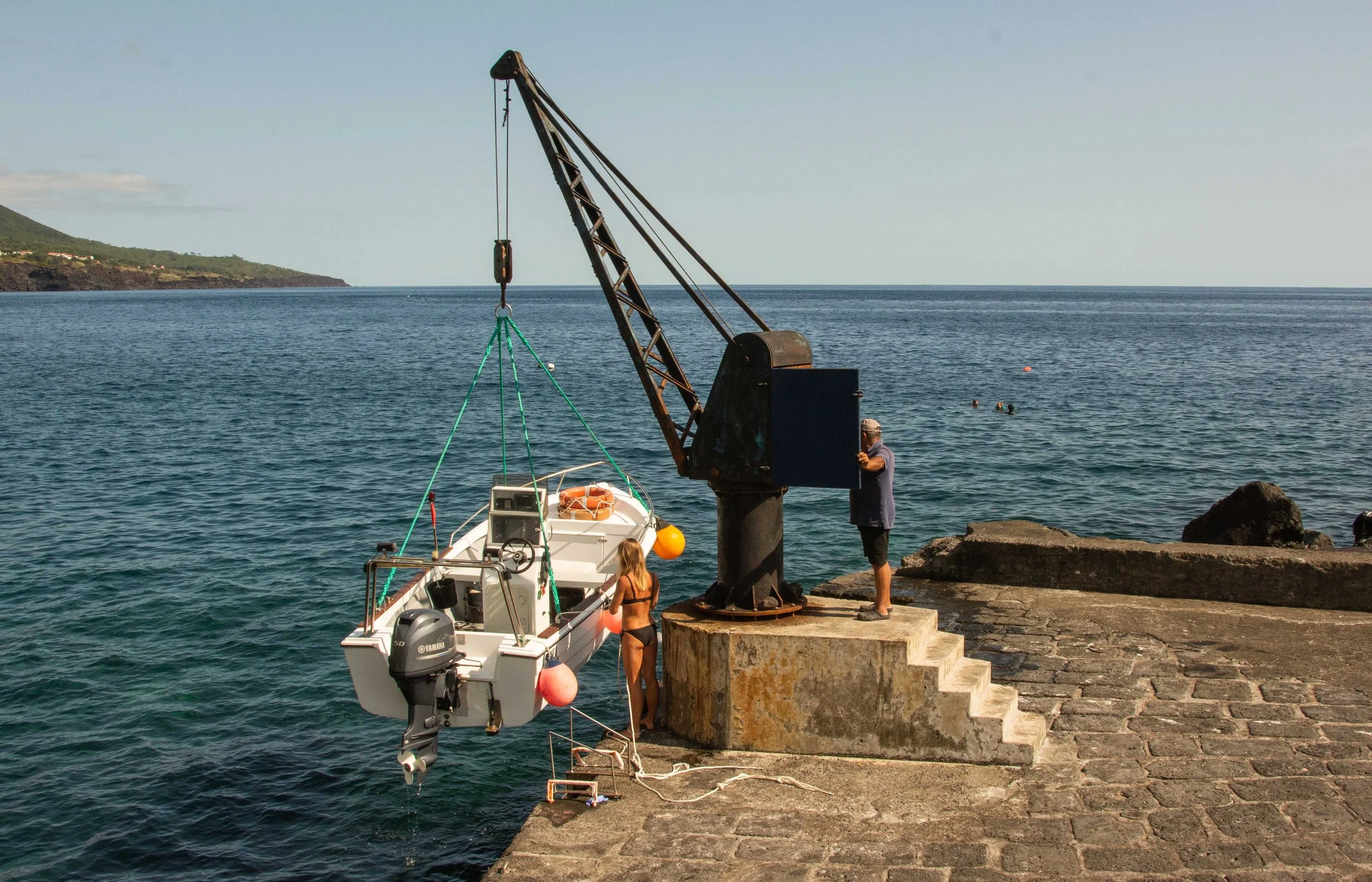
17, and lo and behold, the boat was lifted from the water.
The boat was left hanging for a few minutes while the trailer was manoeuvred into position, and the boat was lowered onto it and secured.
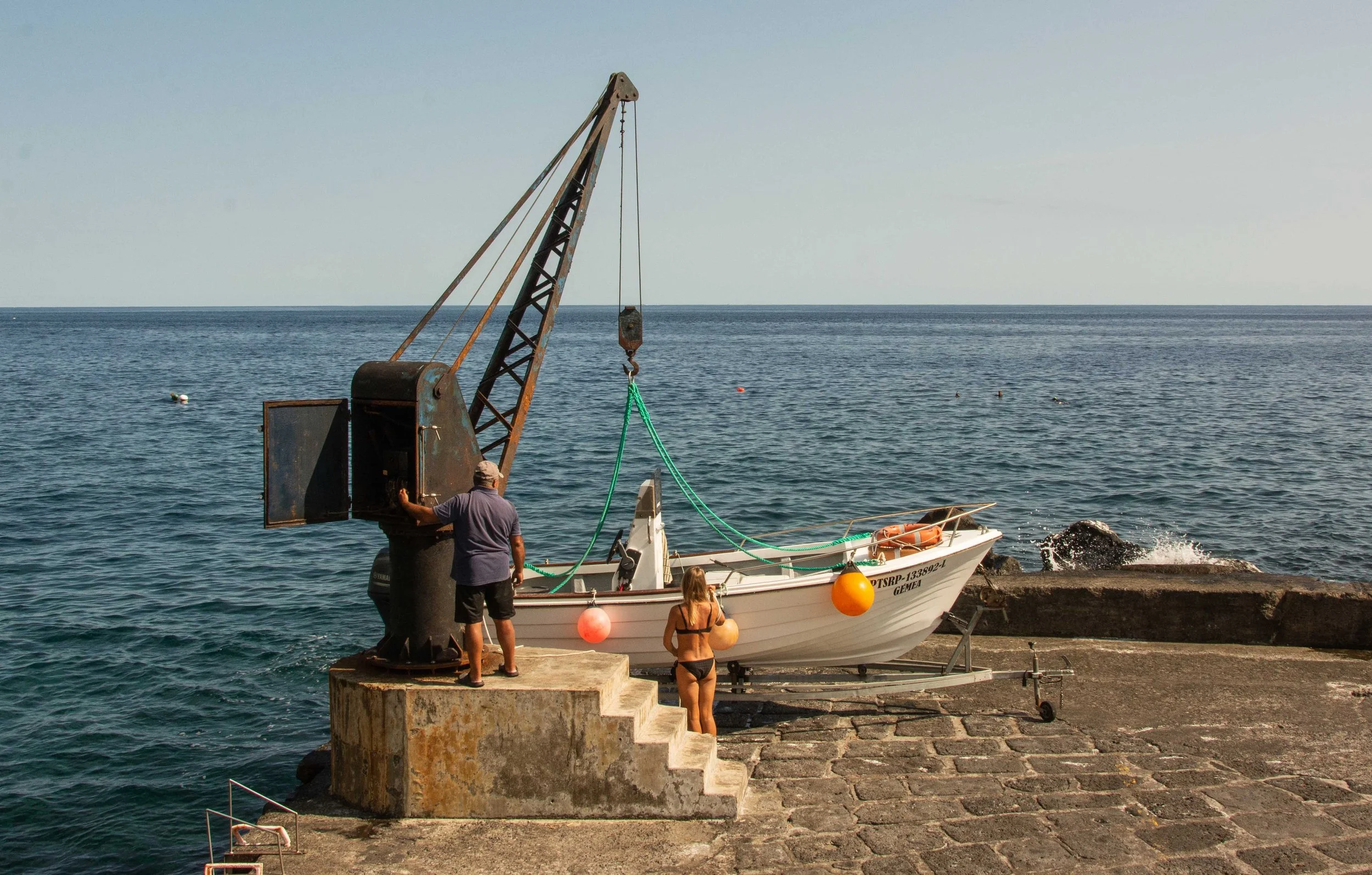
18. The trailer was hooked up to a pick-up and driven off, (leaving the bikini-clad assistant to return to her sunbathing).
We would go on to see this played out several times during our time in Pico. And of course it made perfect sense once you have seen it. There is a slipway, but the foot of the slipway drops off very steeply over sharp basalt and it is quite impossible to take a trailer into the water and float a boat onto it.
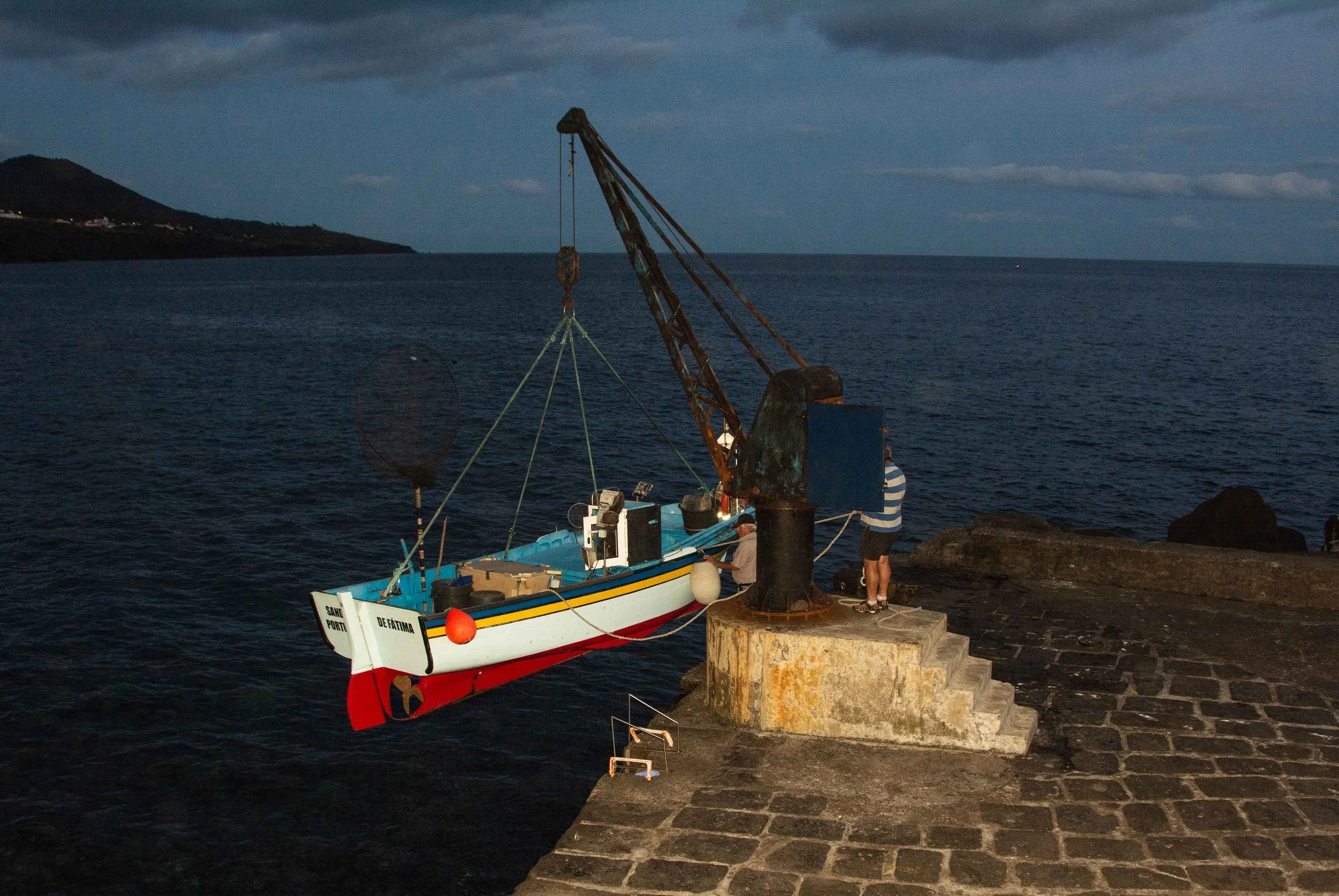
19. This boat was being launched at 9.30 at night with barely any light.
Highly efficient, it only requires one person to launch or lift the boat. Even at night it was possible for boats to launch or be lifted.
A wonderful holiday, relaxing and recharging batteries. We would love to return and visit the islands we were unable to visit this time. And perhaps see the Priola, or do a bit of diving.