A WEEKEND IN THE JURA
To hasten our recovery from the glories of Australia we decided we needed a holiday, and mountains of Jura, our favourite part of Switzerland, beckoned. The Jura is in the French speaking part of the country, and formed by the collision of the African tectonic plate with Europe. This collision has thrown up the Alps, and the Jura are in effect the “shock-waves” of this collision forming a series of parallel limestone ridges with lakes in the valleys between them, one of which is Lake Neuchatel. But enough geology, although you cannot move in the Jura without being aware of it.
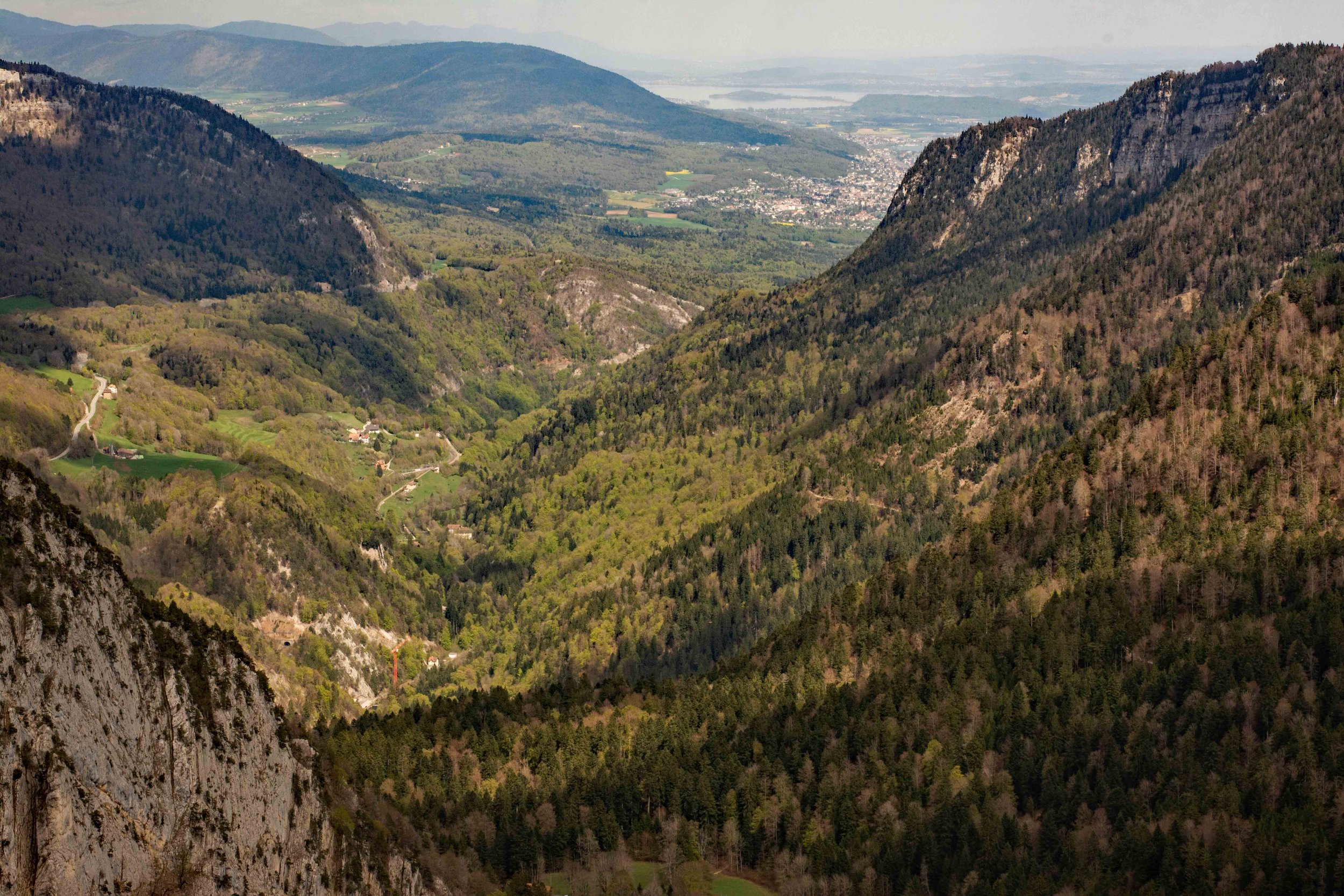
1. The cliffs and valleys with lake Neuchatel in the distance
A friend had kindly lent us her car while she was away and we took the opportunity of Ursula having a long weekend and her birthday, to make the trip. Ursula found a B&B in the town of Couvet which looked ideal and off we went. We arrived at our weekend accommodation in the afternoon and spent a few hours exploring the town and finding a place to eat in the evening.
The next morning, we took the local train for 3 stations to the little town of Noiraigue from where we started our walk. We were walking downstream, always so much easier than walking upstream and uphill.
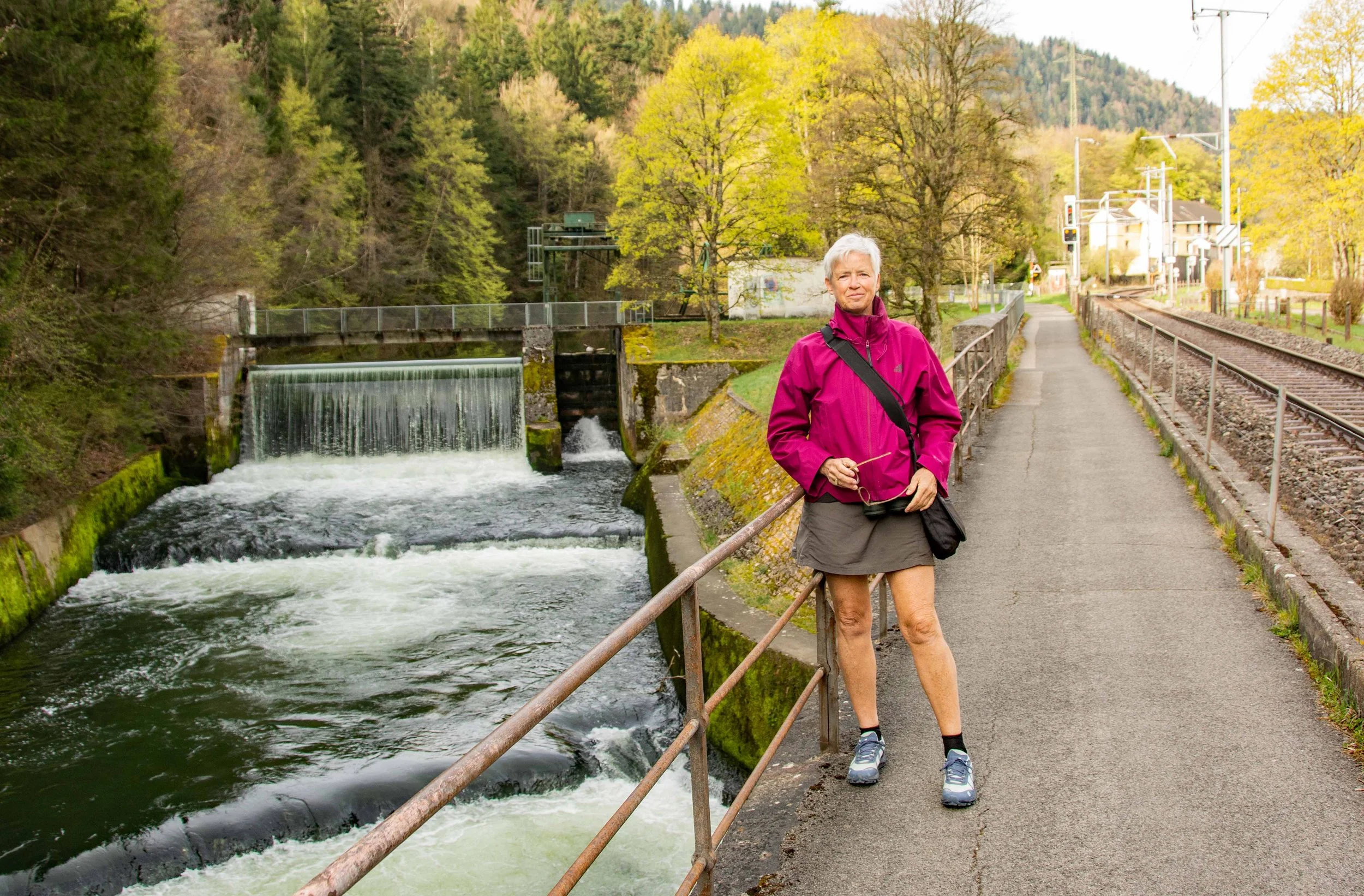
2. Leaving Noiraigue and ready to go
We began our walk where the river leaves the flat and fertile valley of dairy farms, and enters the deep, steep sided valley just outside the village of Noiraigue.
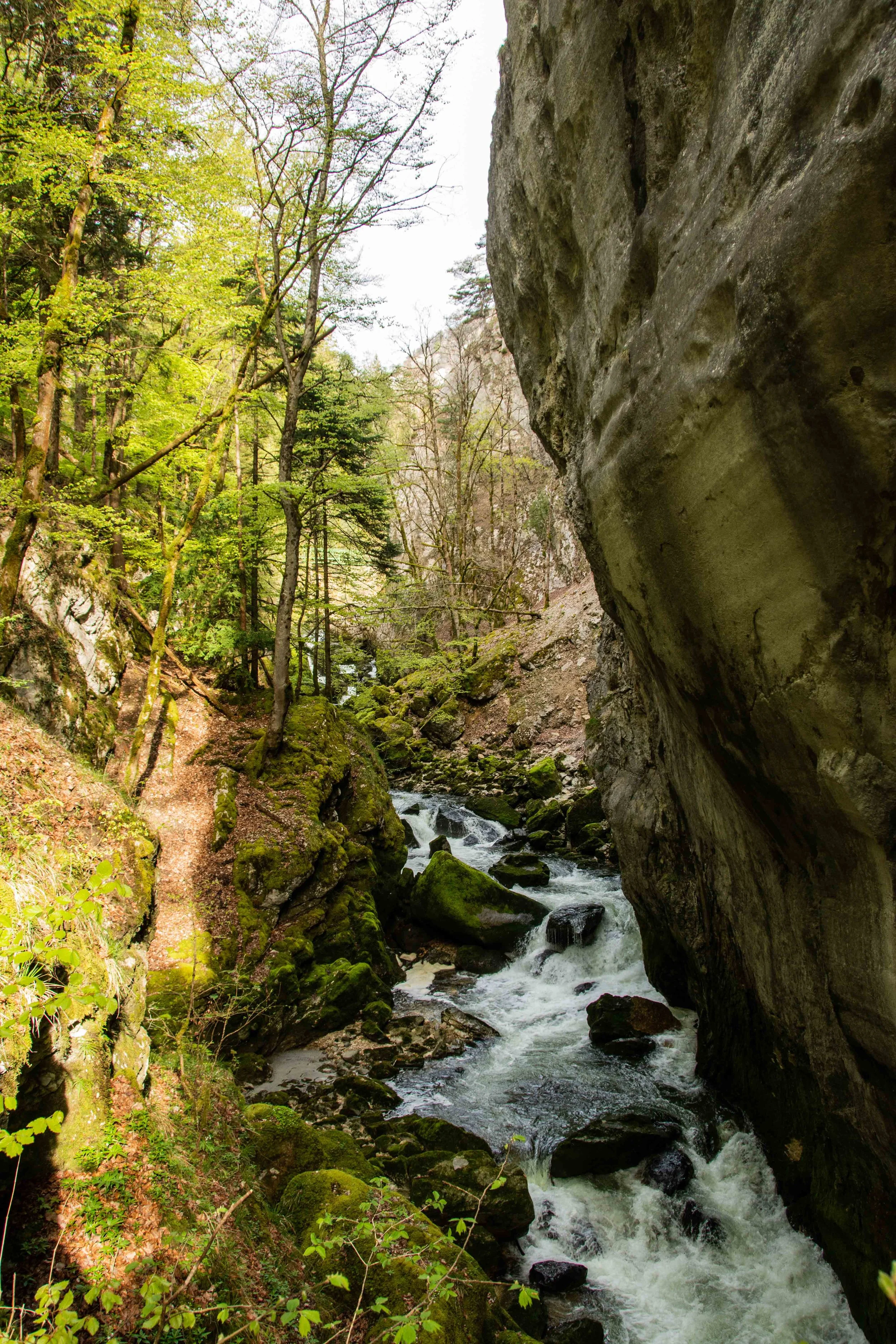
3. River narrows between the limestone cliffs
The path alongside the river wanders from side to side, bridging the river as the geography of the valley allowed.
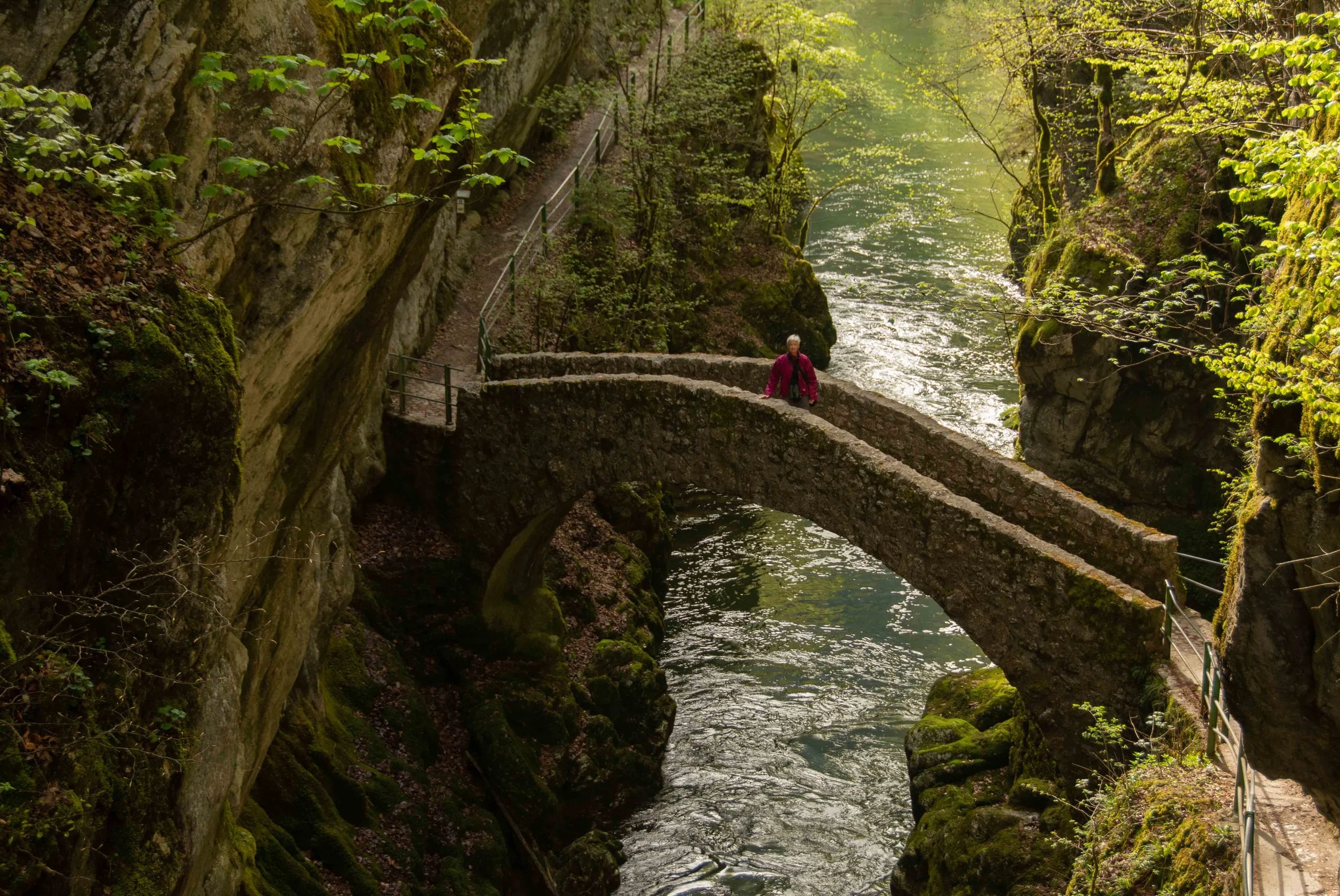
4. Old stone bridges
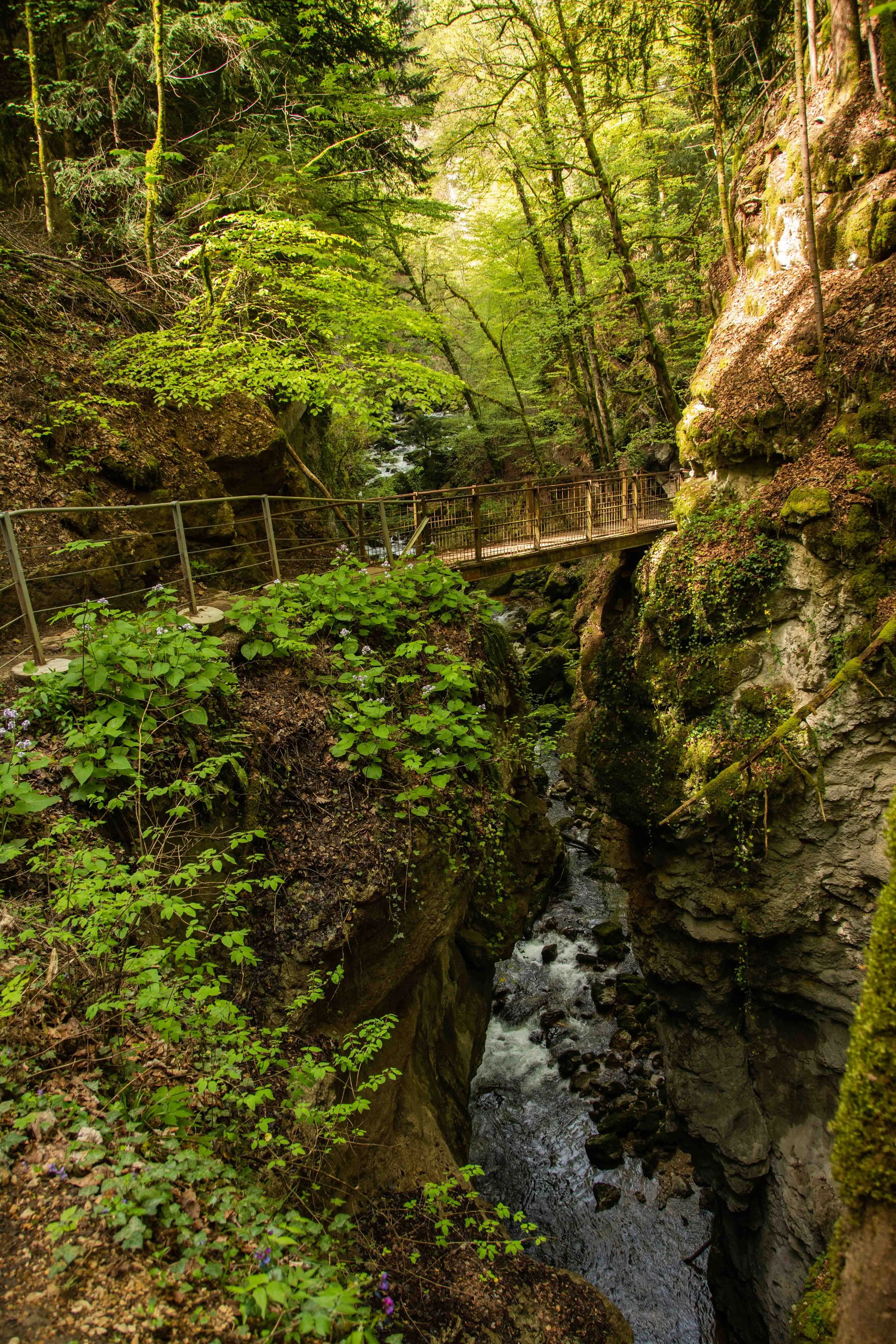
5. and small wooden ones bridging vertiginous fissures
The path, which must be ancient, is kept in good repair by the authorities. The steep sides to the valley have made for some imaginative feats of engineering. Fortunately, limestone is a relatively soft rock.
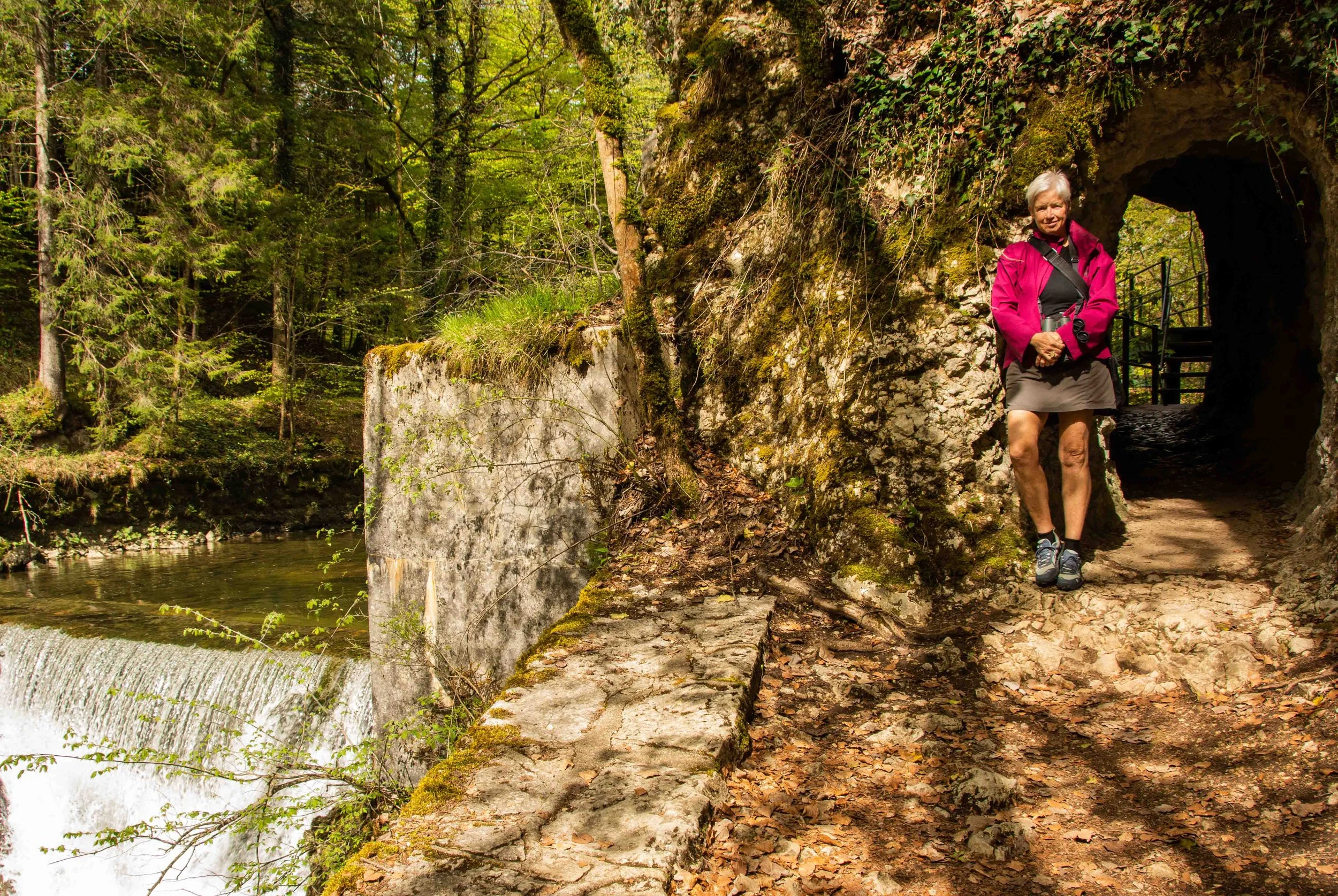
6. Where the valley narrows a low tunnel keeps the path open
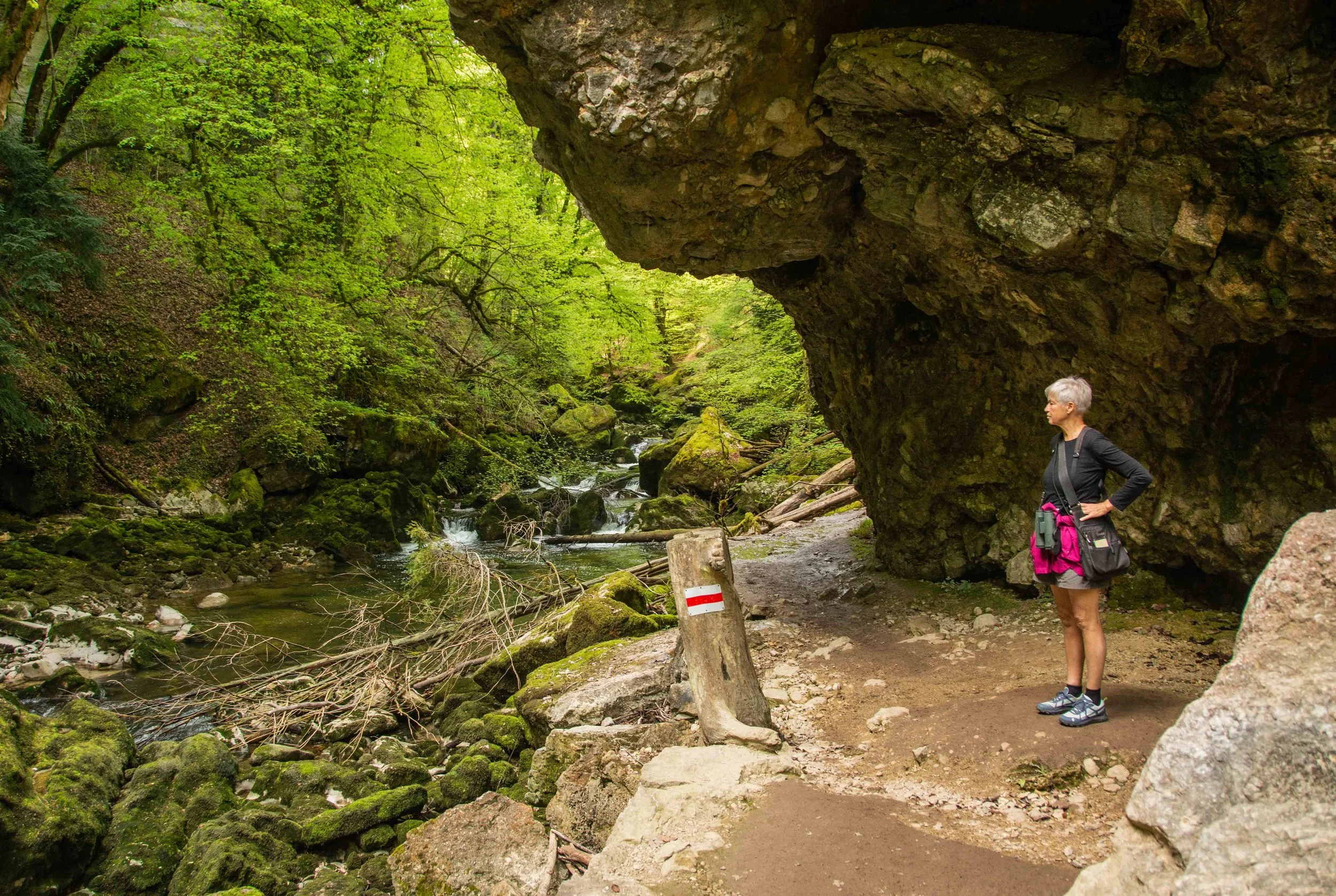
7. And tight corners give rise to threatening looking overhangs
The river looked promising for fishing, the water was clear with deep pools and tumbling rapids. We saw pairs of Dippers, birds whose presence is indicative of good, clean, water, with lots of insects, as well as Grey Wagtails, similarly indicating good water quality.
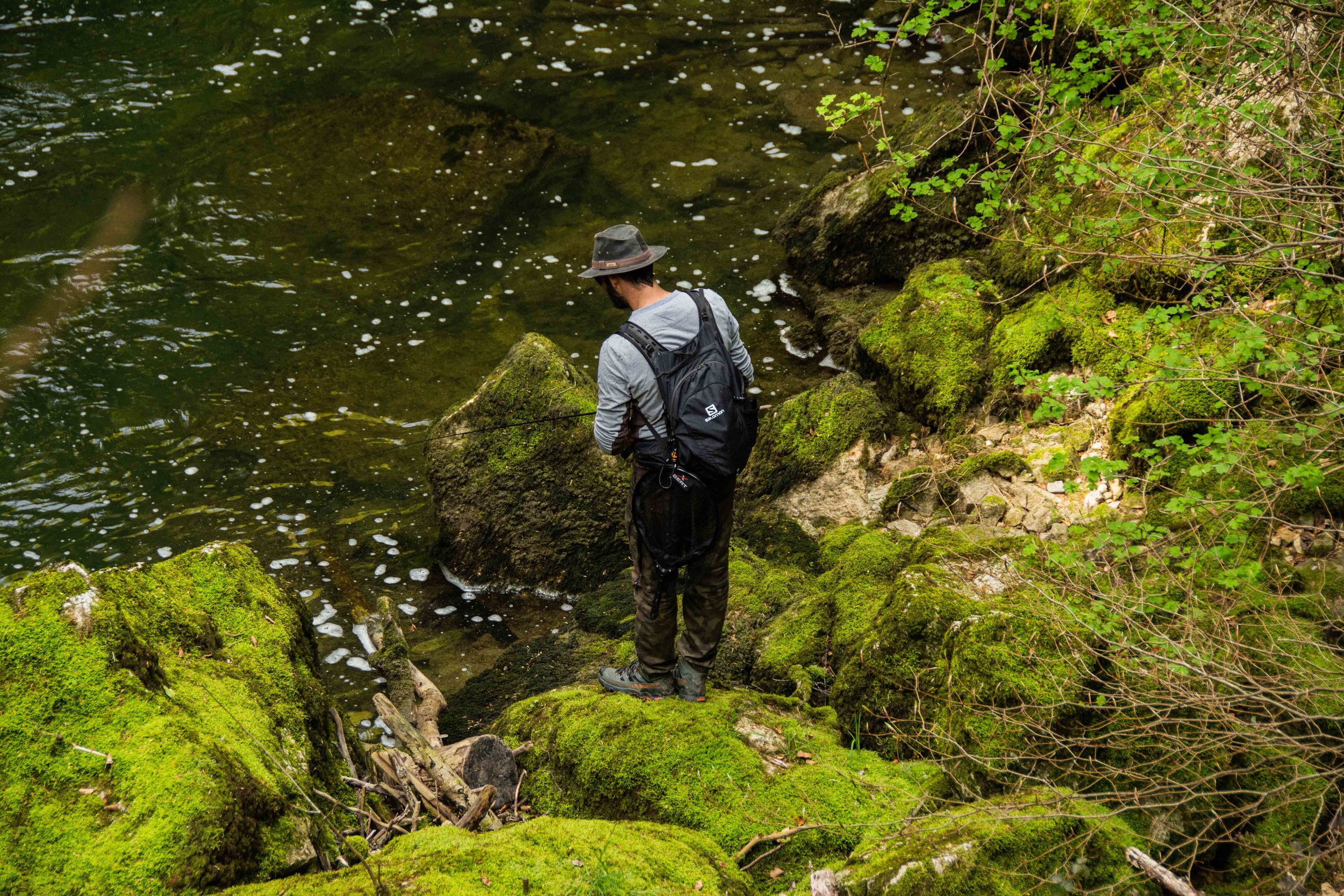
8. The presence of a fisherman along the way confirmed the water quality.
Even in the depths of the woodland there were the first of the spring flowers, and everywhere was green.
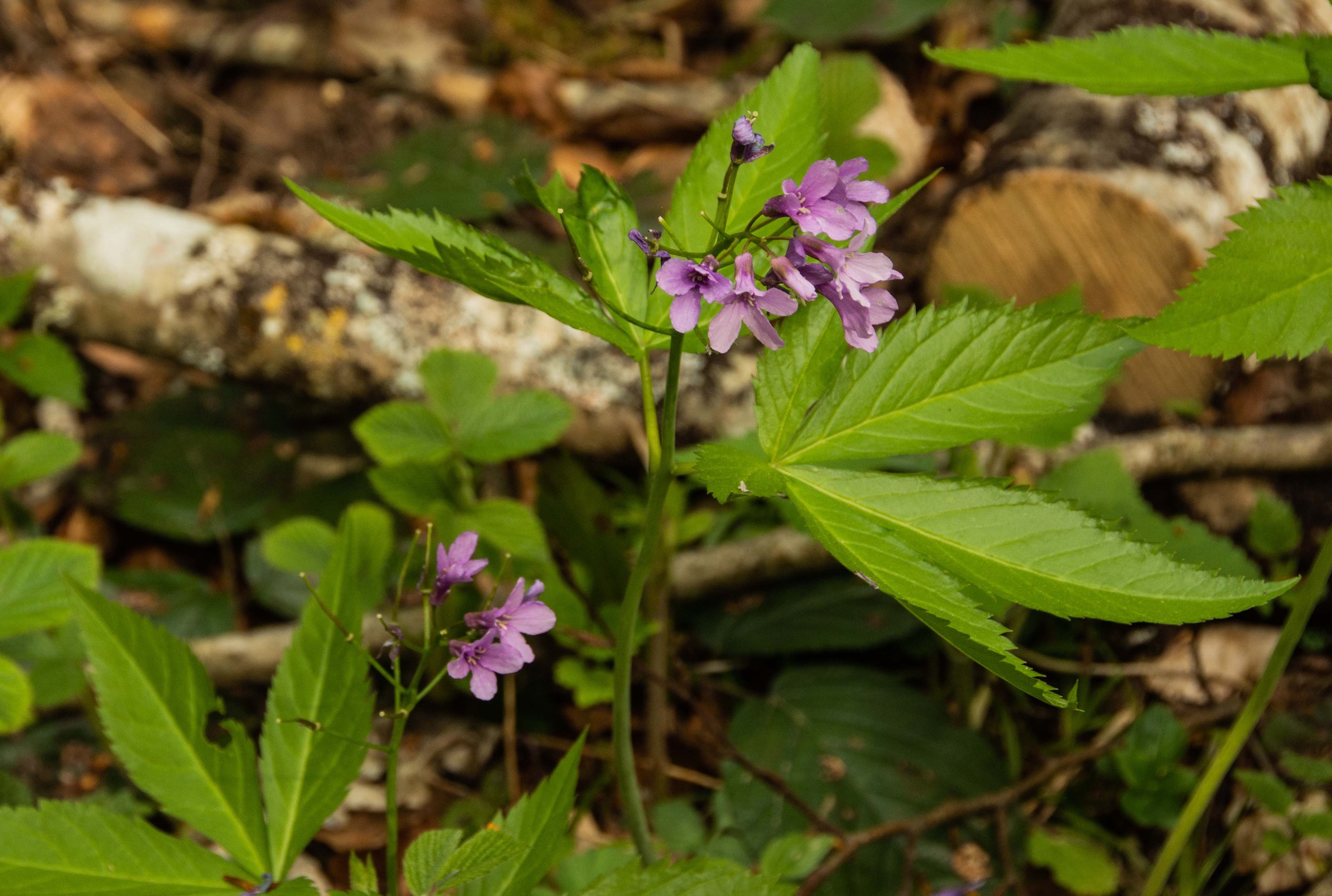
9. Spring was everywhere
Where the valley broadened out we passed a hotel and a road that led up to a railway station above the valley. We immediately abandoned plans to have dinner at a restaurant near our B&B, and return here in the evening for dinner. How could we resist a restaurant called Hotel of the Trout.
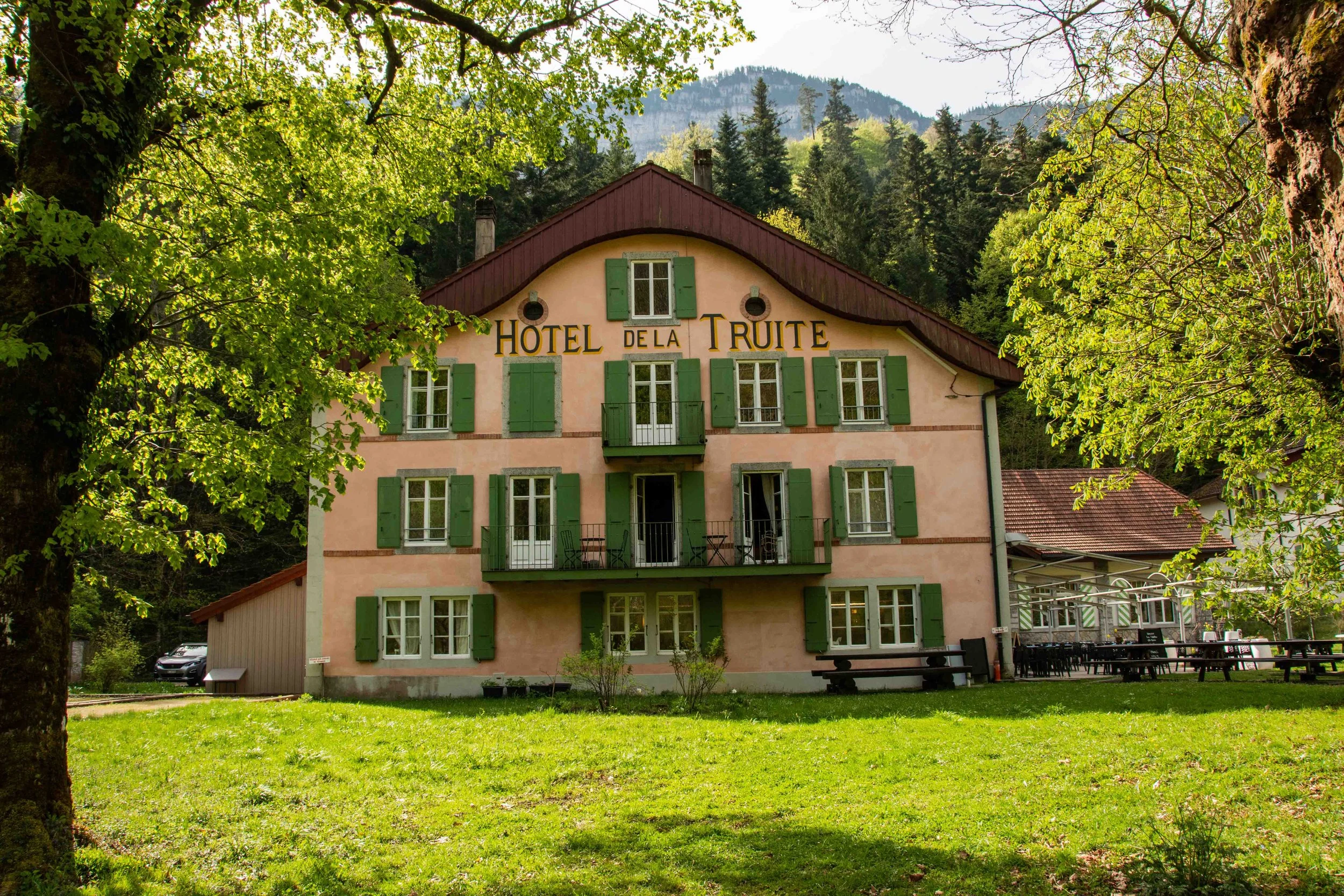
10. The meal was delicious, of course.
The next day we explored villages in the neighbourhood of Couvet, and in the town of Môtiers we stopped first to taste, and then buy several bottles of bubbly.
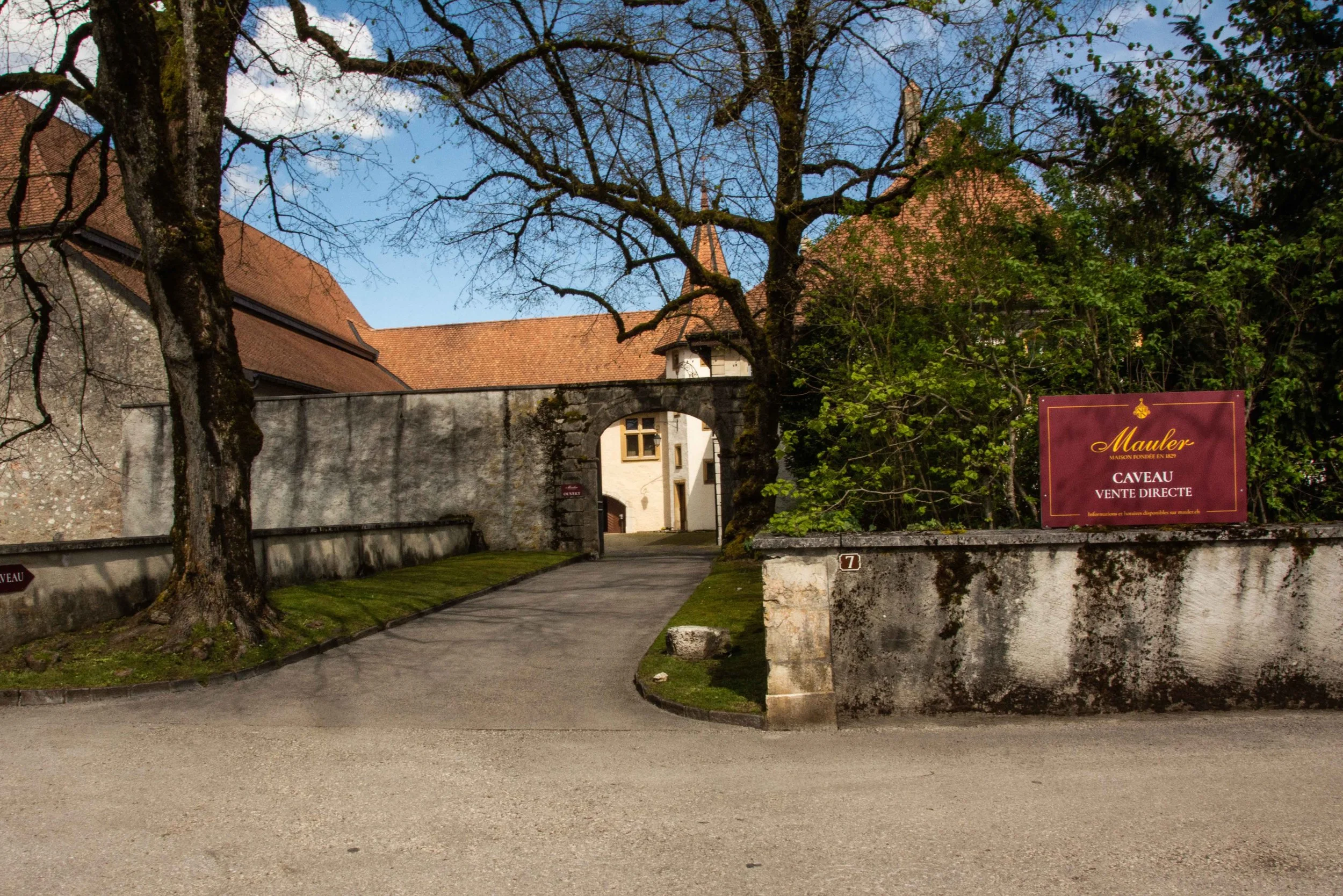
11. Sparkling wines have been produced here since at least 1829
Rousseau stayed for a while in Môtiers, but then he seems to have been everywhere in Switzerland. But what was more surprising was to find the Burkhardt – Felder Foundation, unfortunately closed when we were there.
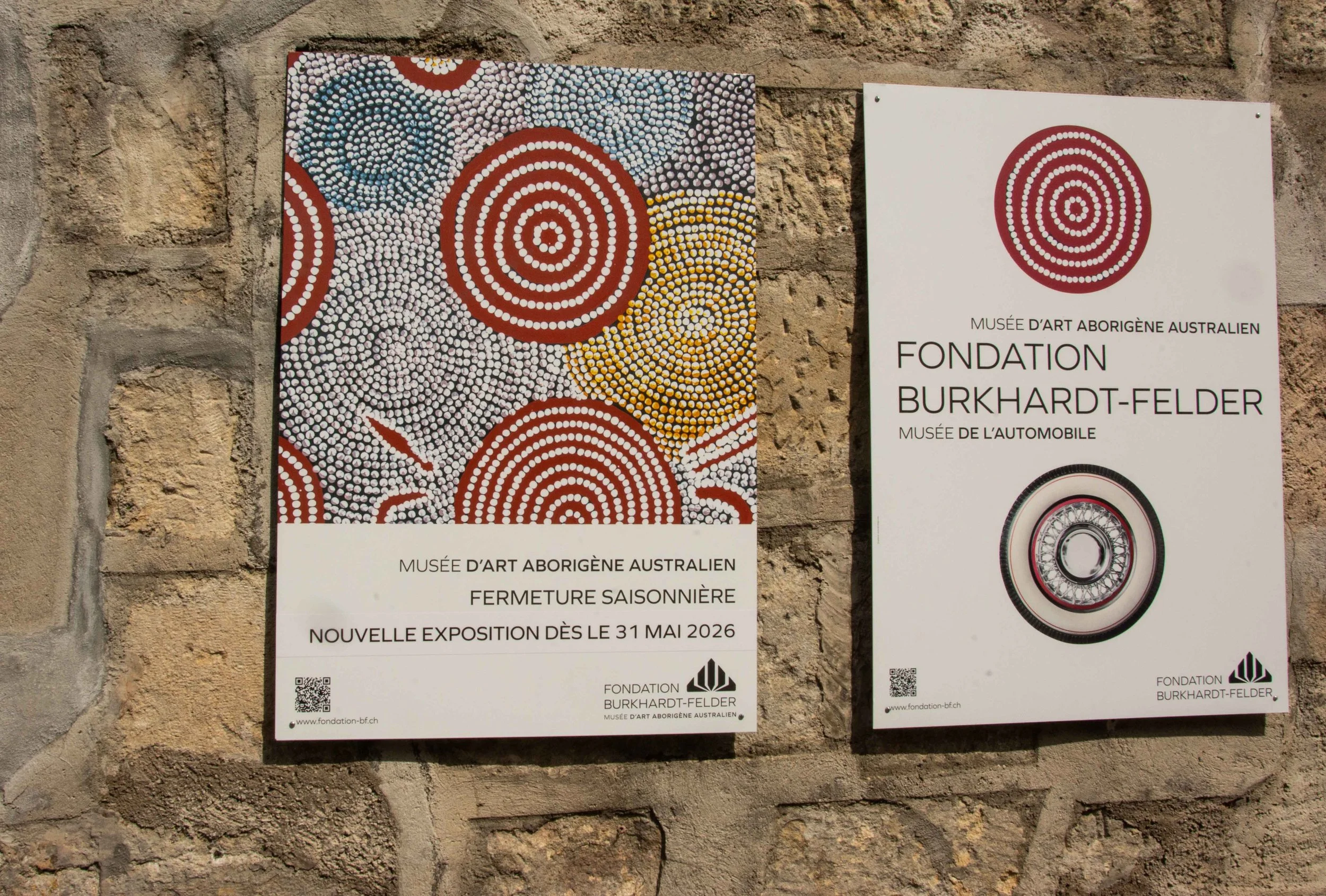
12. A surprising juxtaposition of Australian Aboriginal art and a car museum.
This is the 2nd Aboriginal art museum we have found in Switzerland. Strange. Perhaps a way of avoiding taxes or death duties or some such. Who knows? What are the Swiss ties to Australia.
Whatever, it was the end of a lovely weekend and we returned to Frauenkappelen well rested by our excursion.
BIEL
In May each year Biel hosts an annual Festival of Photography. We have attended the festival in previous years and decided to do so again. Biel is in the French speaking part of Switzerland and lies at the foot of the Jura mountains on the shores of Lake Biel.
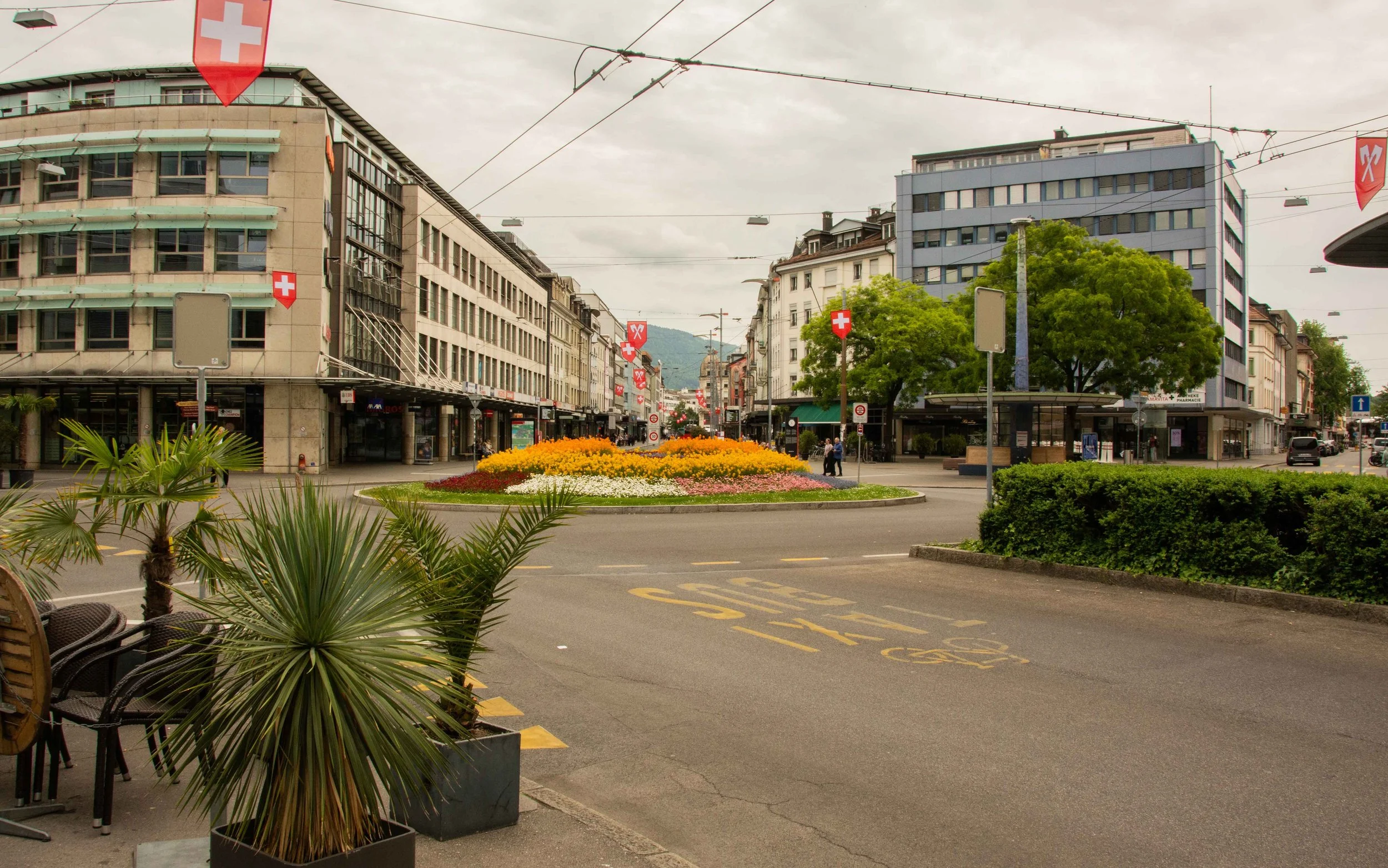
13. Biel is a town of wide streets and town squares.
The theme of the festival this year was VULNERABILITY. To quote the programme, “the festival places vulnerability at its core — not as an individual weakness, but as a shared social and political condition: a common good.”
I am not going to bore you with photos of a photographic exhibition, just accept that it was really impressive and stimulating. The interpretations of the theme were imaginative and varied widely from the more obvious to the almost abstract, forcing you to pause and consider.
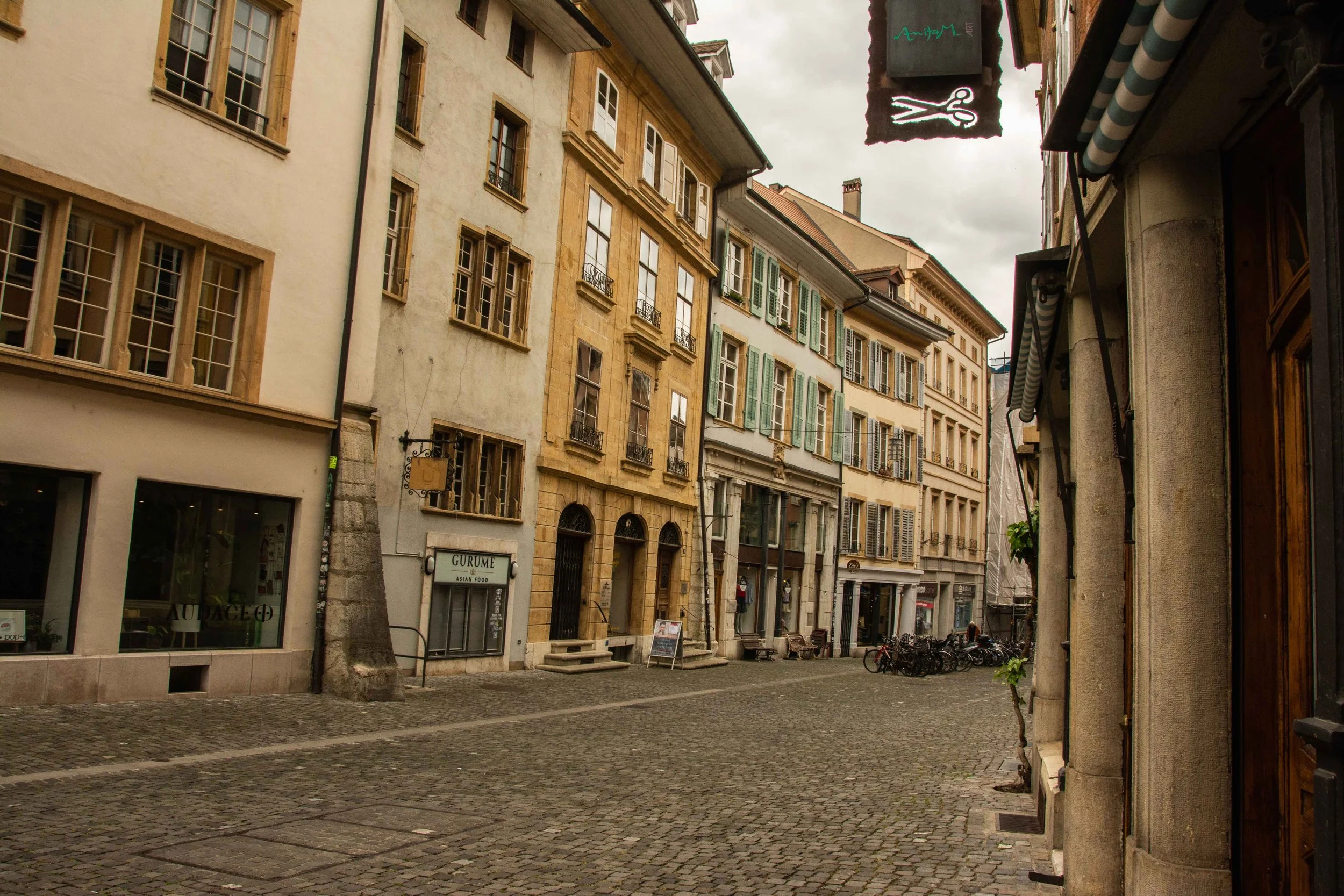
14 And narrow, cobbled, streets in the old town
The festival is spread across 14 or 15 venues throughout Biel, and the festival entry tickets give free public transport between the venues, if needed. We walked between them, Biel is not a huge city after all.
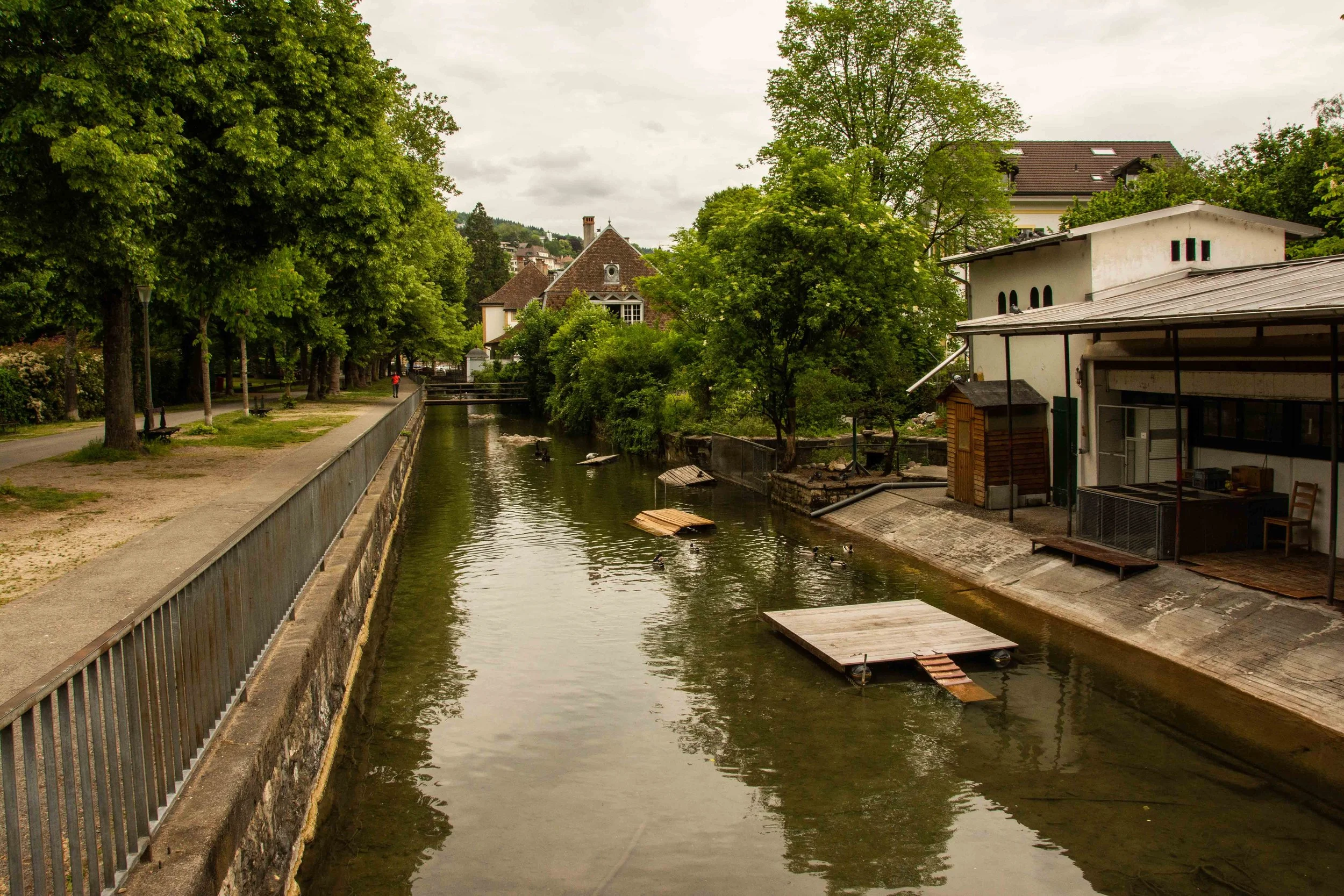
15. A river runs through it, the La Suze, unfortunately now canalized, an unfortunate word.
But, after all the walking, we did take a bus back to the railway station at the end of the afternoon
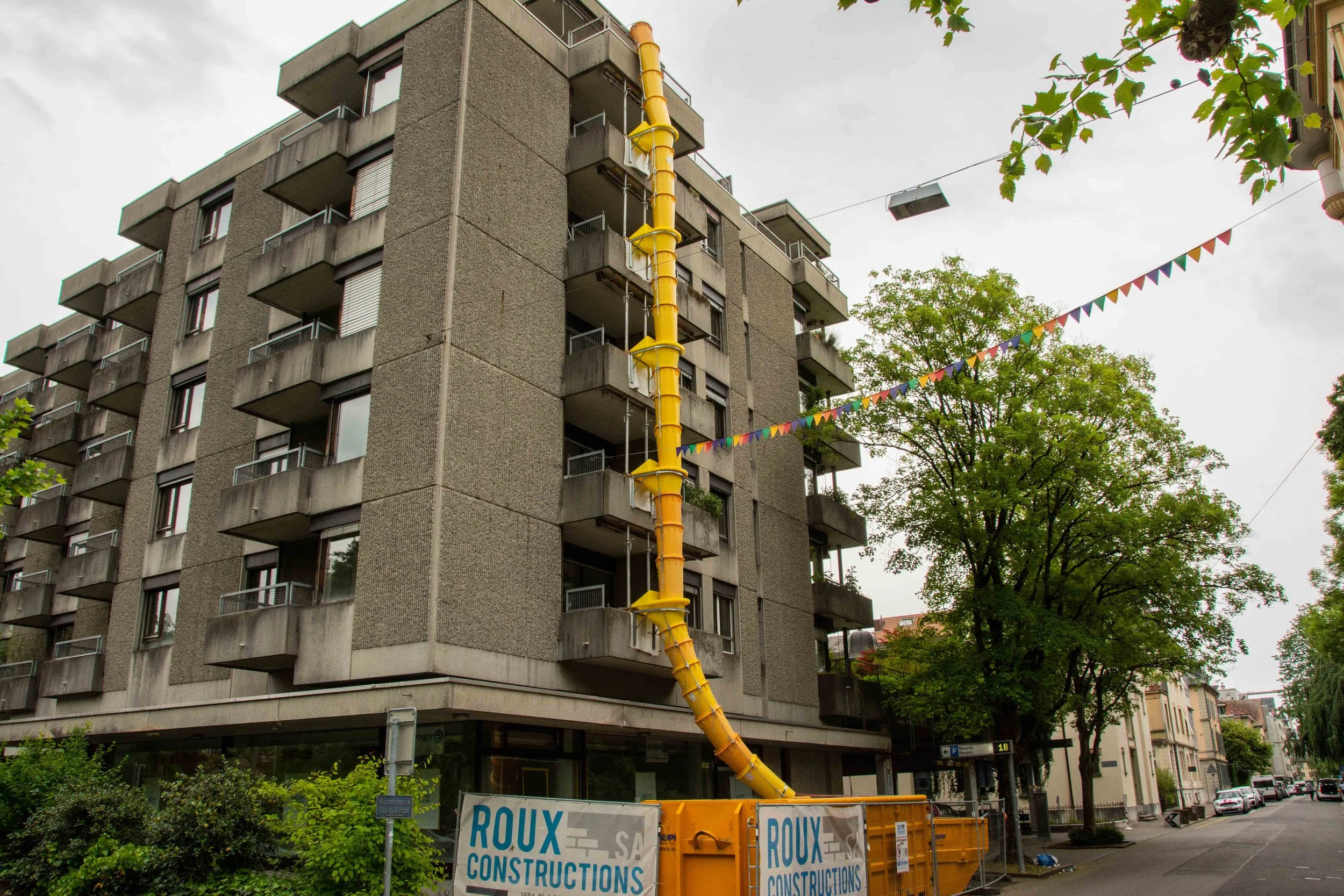
16. I just liked the colour and geometry.
BERLIN
At the end of May we travelled to Berlin to visit Ursula’s sister, Barbara, and her family. It was at least 2 years since we had last been there and easyJet “owed” us a flight, so we were able to fly from Basel to Berlin. We came back by train.
Berlin is a city of many lakes, and woods, and the family live on the shore of the Schlachtensee, in the south-east of the city.
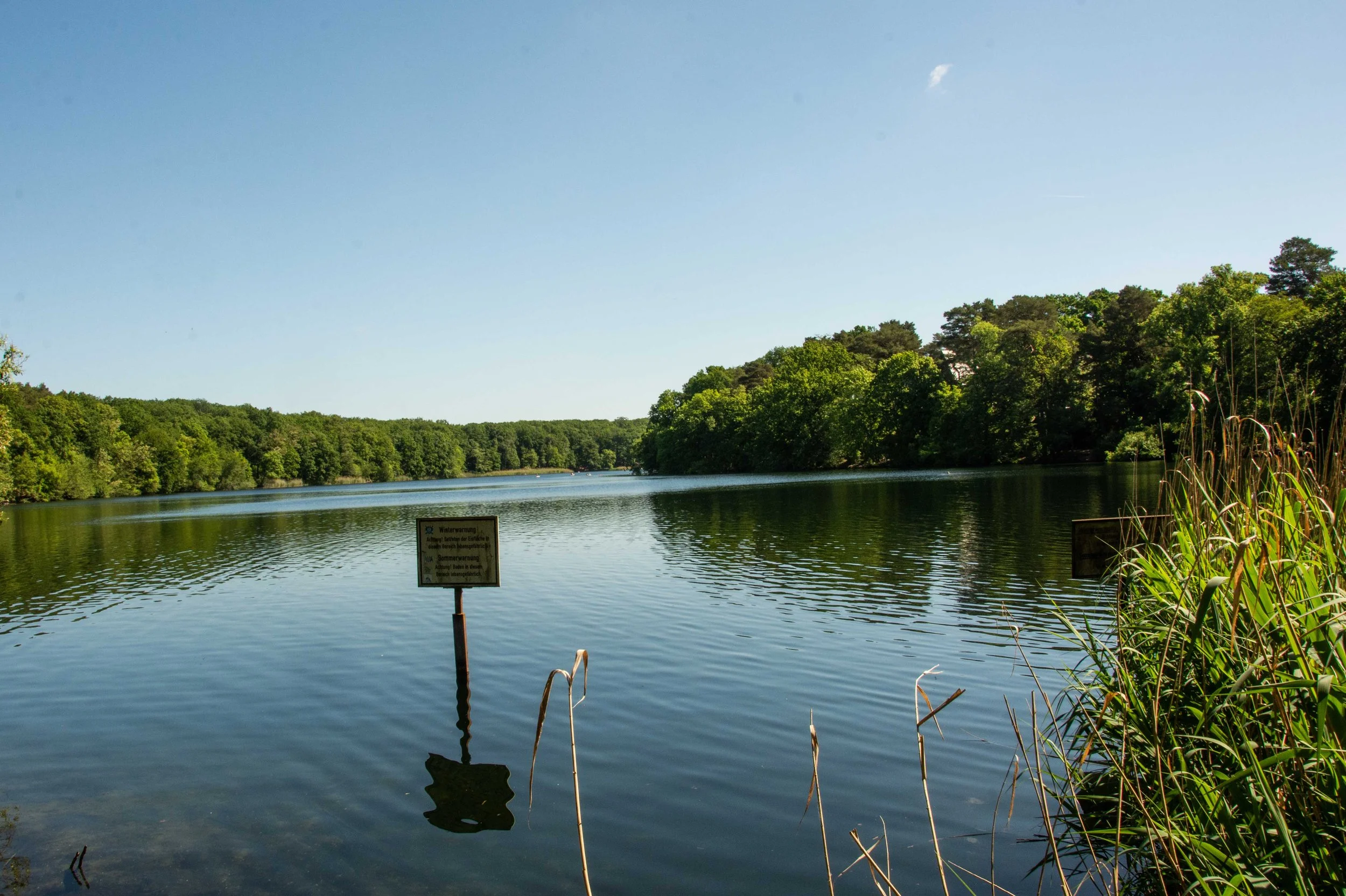
17. Schlachtensee from the southern end in the morning before the crowds arrive.
The weather was warm, it was a long-weekend, and Berliners took advantage of the weather to picnic around the lakes,
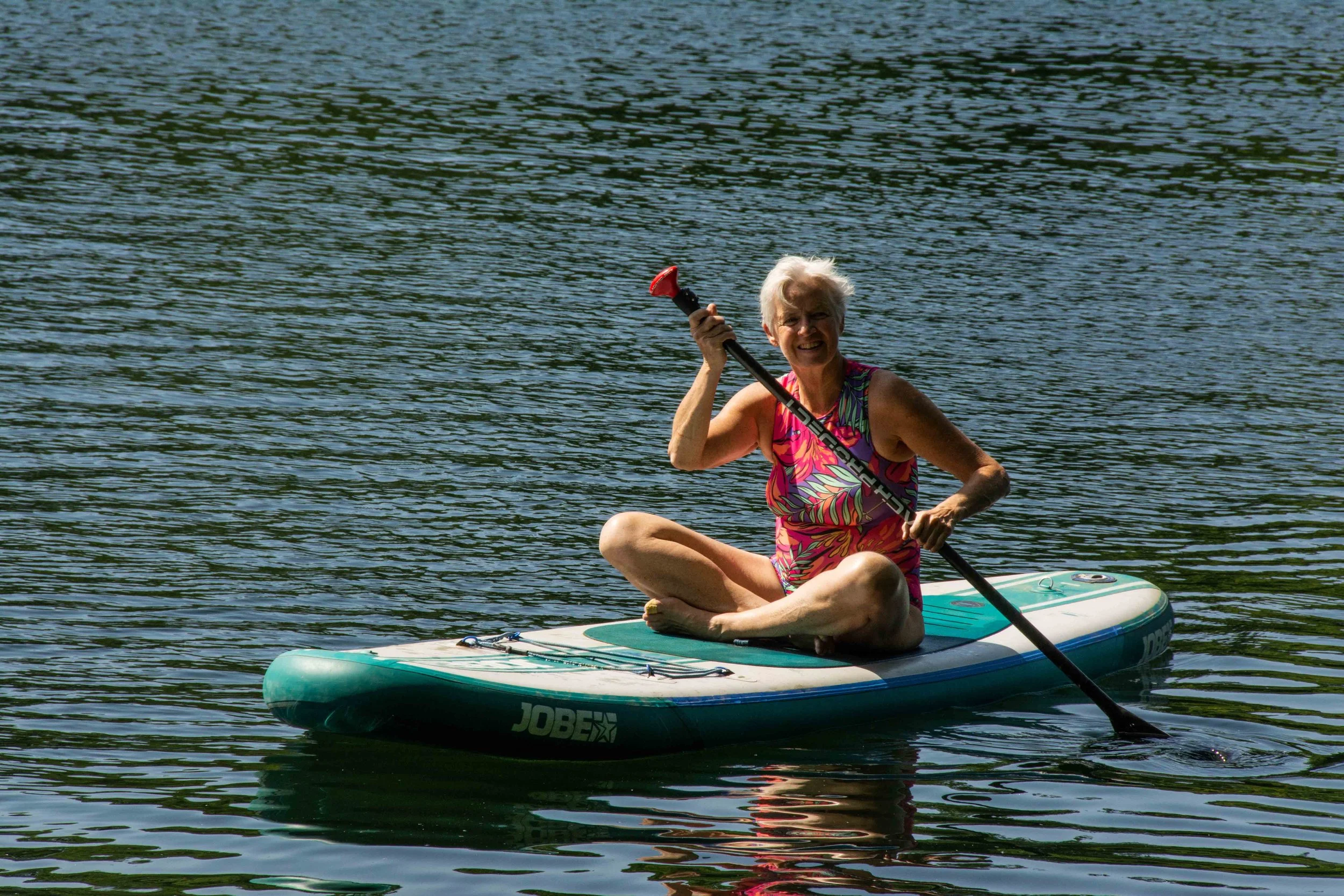
18. and Ursula took advantage of the summer sun to practice her SUP skills
With Barbara we visited other lakes in the area and the town of Caputh on the Schwielowsee, where Einstein had a summer house.
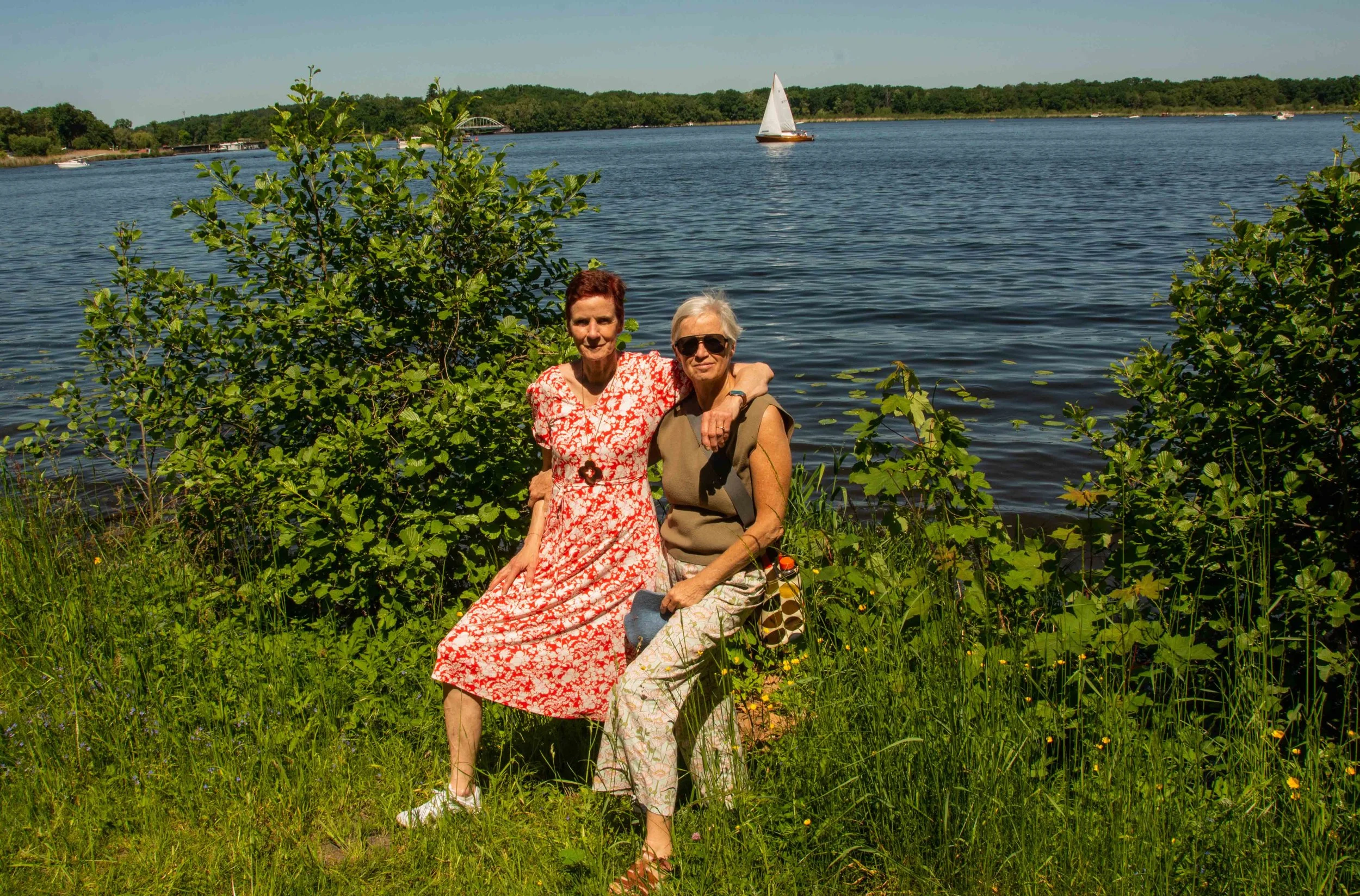
19. Barbara and Ursula at the Schwielowsee,
The New National Gallery, the Mies van der Rohe, is hosting an exhibition of Brancusi sculptures over the summer. We spent a lovely couple of hours there, a really interesting exhibition. I, for one, had never seen a Brancusi sculpture in real life. Only pictures on postcards or art books, so I was fascinated by the works on show.
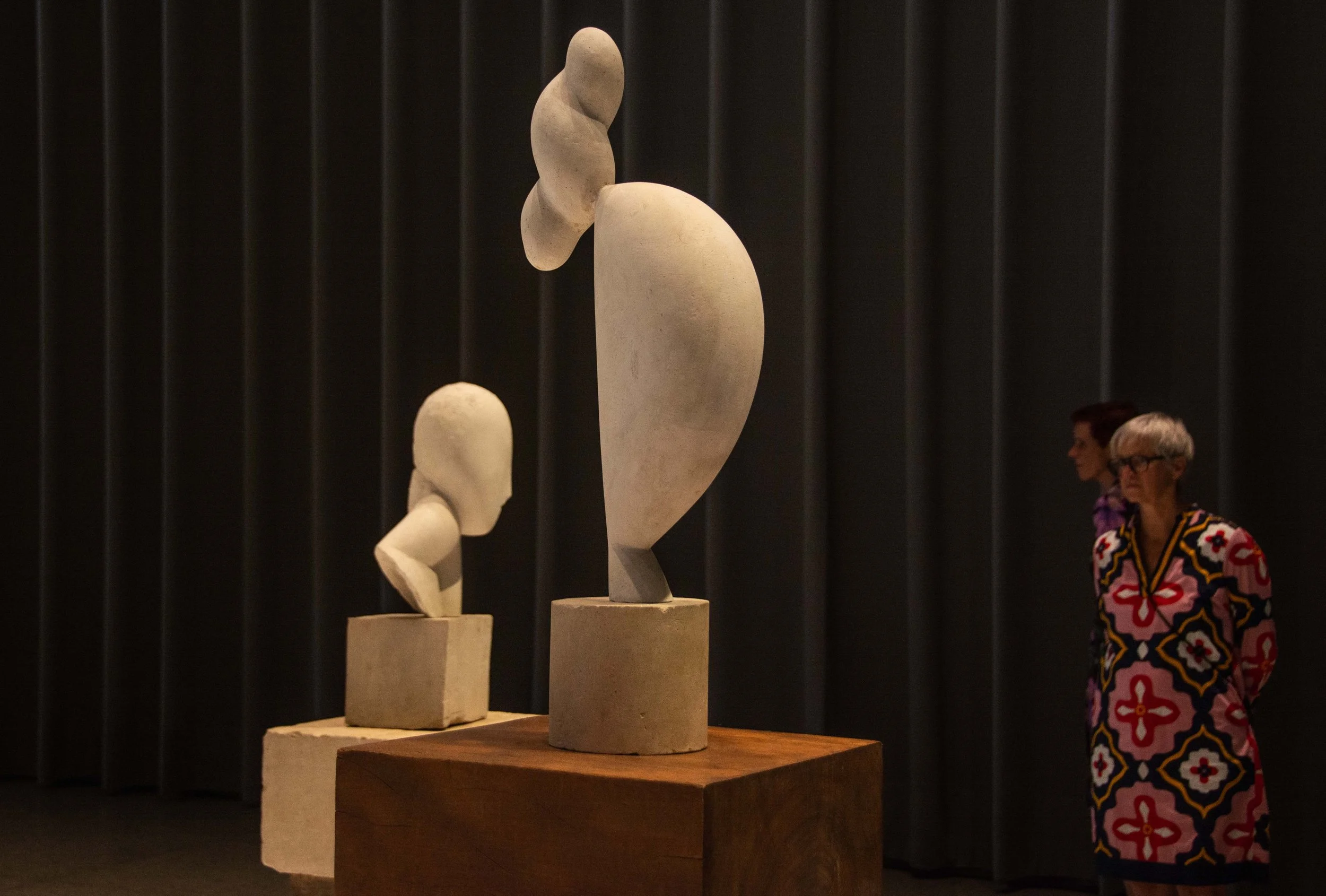
20. Brancusi 1
The curation allowed you to follow Brancusi’s development through time
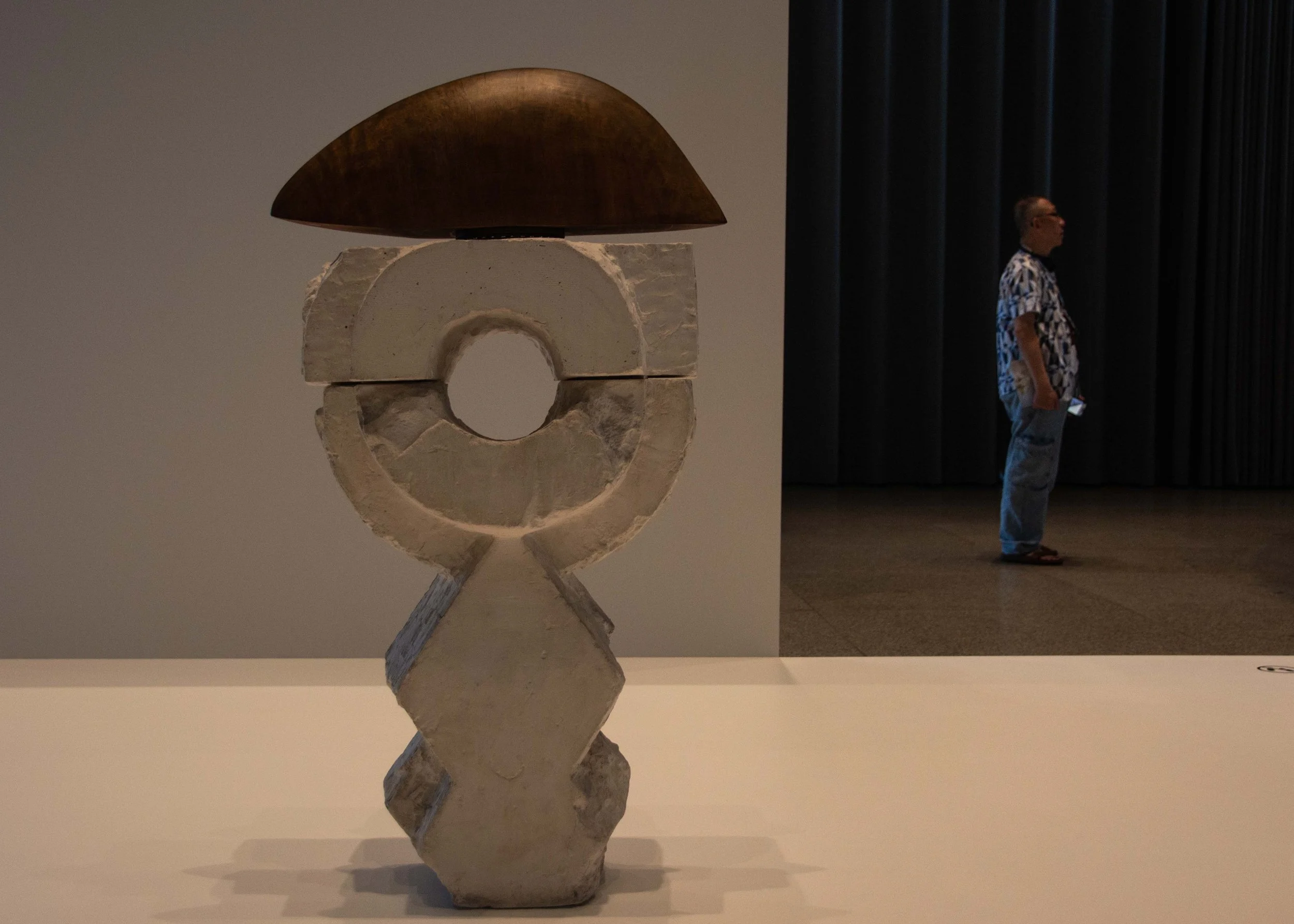
21. Brancusi 2
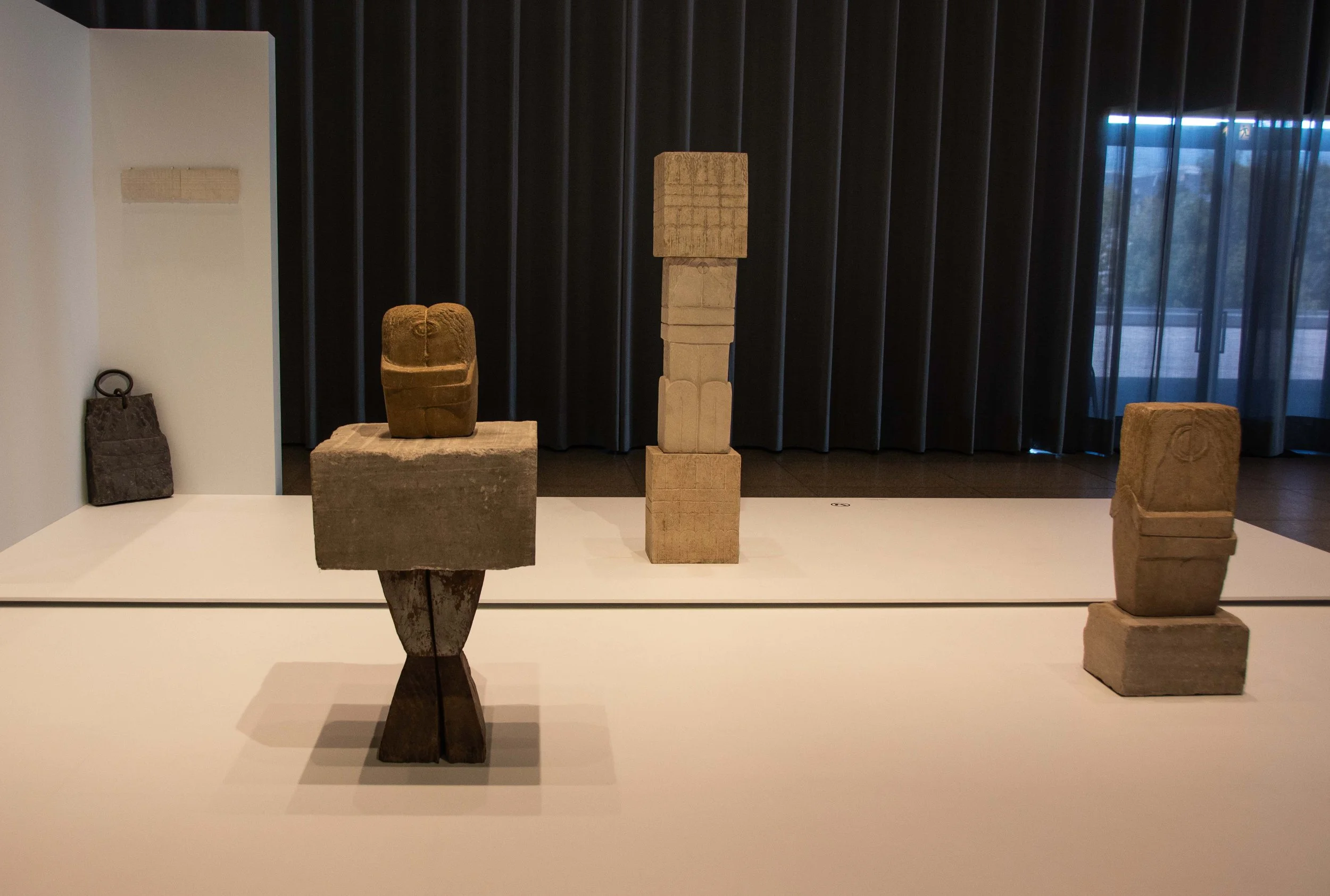
22. Brancusi 3
But we found the overall effect a bit static in comparison with the themed exhibitions we had experienced in Australia.
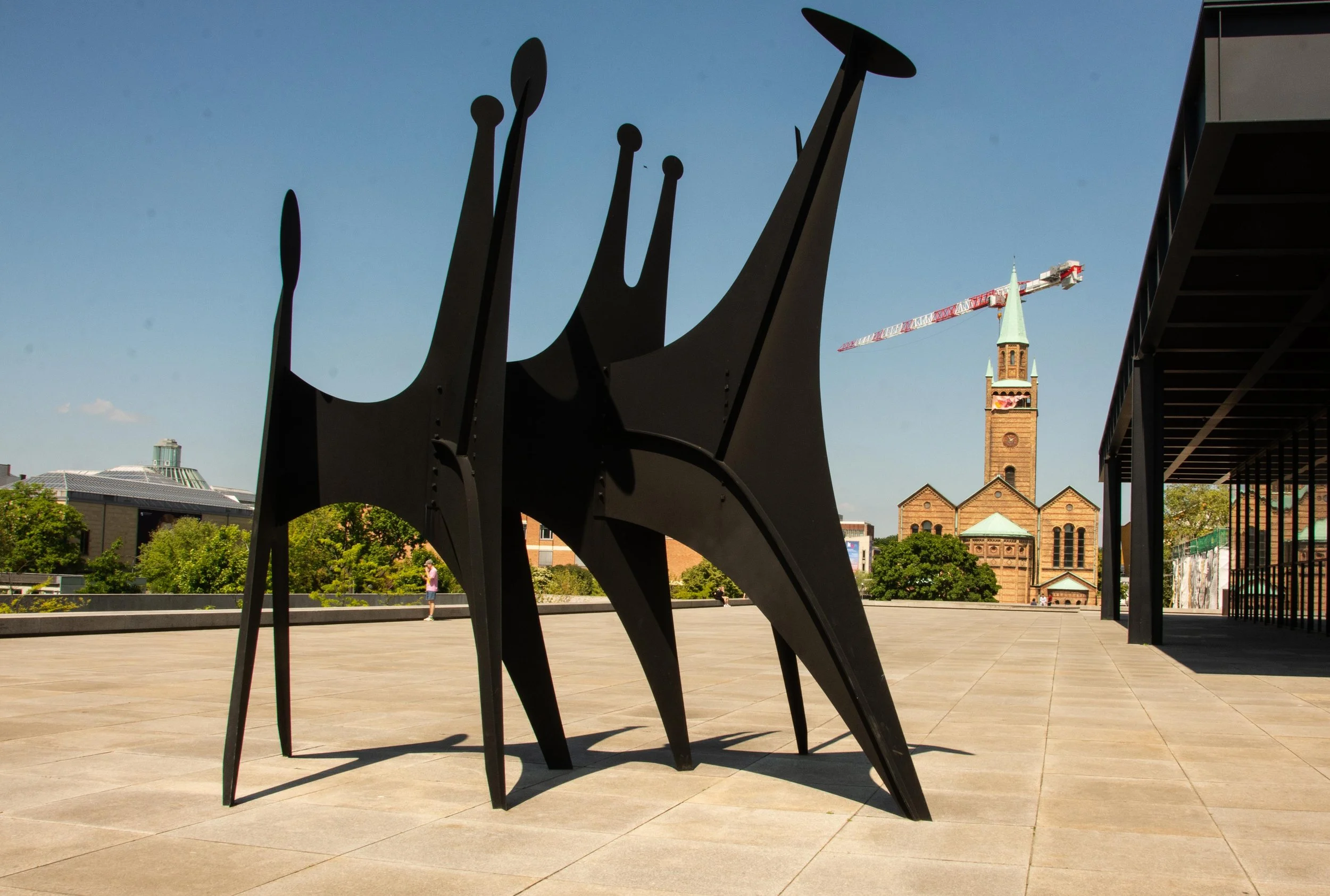
23. As we left the gallery I was impressed by this sculpture on the piazza, not a Brancusi.
The gorgeous weather, it was very hot, made walking in the woods, cool and with the green spring light filtering through the early leaves, a pleasure.
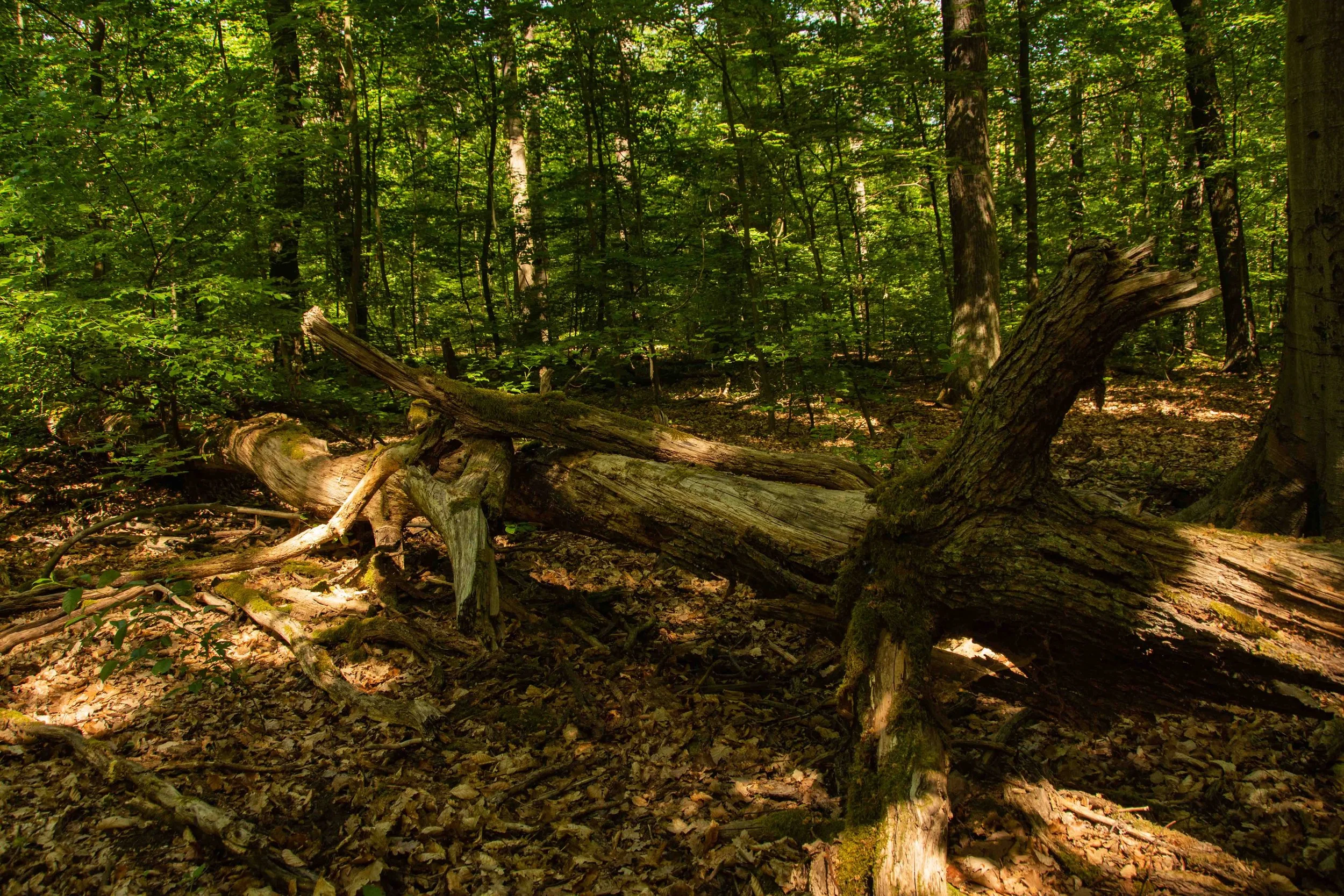
24. The woodland walk around the Schlachtensee
Where there are woods there are red squirrels and at the house the family put out nuts to attract them. There is one that comes almost every day to forage between the pot plants on the balcony where the nuts are hidden.
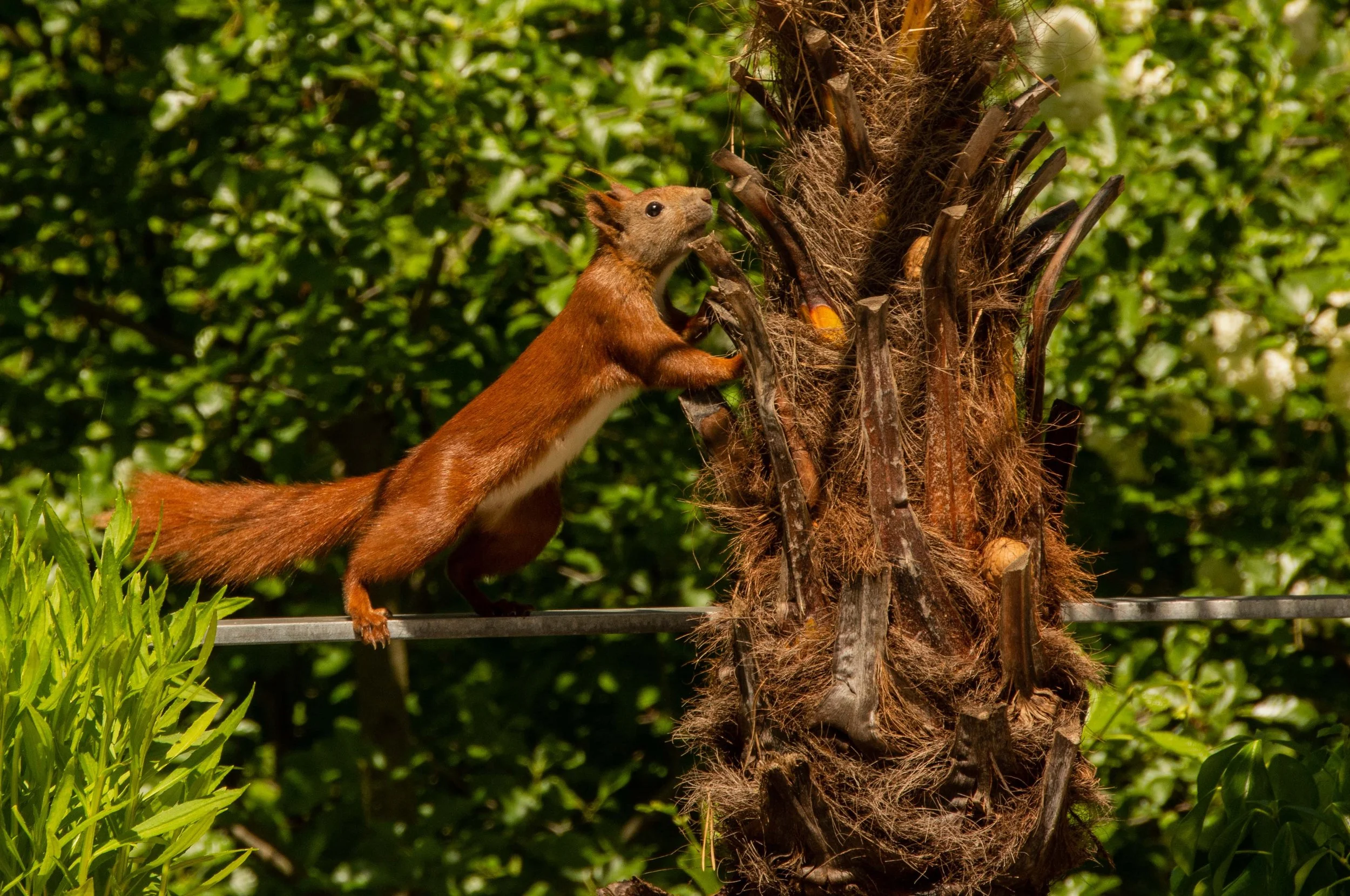
25. The red squirrel looking for a walnut in an unlikely place.
We spent too short a time in Berlin, such an exciting city, before we regretfully had to return to Switzerland. And thank you, Barbara.